Past Events

  • International Workshop on Food Security: “Advancing Knowledge and Innovation for Sustainable Food Security Systems”  

    Jointly Organized by OIC-COMSTECH and Benadir University, Somalia, in collaboration with IOFS.                                   

    Date: November 24-26, 2025
    Venue: Prof. Addow Campus, Benadir University, Somalia

    INTRODUCTION

    This theme emphasizes the critical role of research, education, and innovation in transforming food systems to be more resilient, inclusive, and sustainable. It highlights the need for interdisciplinary collaboration and innovative approaches to address food security challenges and ensure long-term food system sustainability.

    BACKGROUND OF FOOD SECURITY

    Food security is a pressing global issue with significant local implications. As the world grapples with challenges such as climate change, resource scarcity, urbanization, and population growth, academic institutions have a critical role to play in generating knowledge, fostering innovation, and preparing the next generation of leaders in sustainable food systems.

    Food security remains a critical global challenge, particularly in the face of climate change, population growth, conflict, and economic volatility. Millions of people around the world continue to lack reliable access to sufficient, safe, and nutritious food.

    This workshop seeks to bring together students, faculty, researchers, policy makers, and practitioners to explore solutions to food security through interdisciplinary research, education, and community engagement. It aims to bring the policy-based solutions that can enhance food security at the Institutions, national, and regional levels.

    OBJECTIVES

    – To increase awareness of food security challenges and opportunities among universities.

    – To promote interdisciplinary collaboration on food Security systems research.

     – To provide a platform for students and researchers to present innovative ideas and projects.

    – To build linkages between academia and government, NGOs, and private sector actors.

    THEMATIC AREAS

    A. Agricultural Production and Sustainability

    Focuses on promoting sustainable farming practices and climate-resilient agriculture to ensure long-term productivity and environmental health.

    B. Food Systems and Value Chains

    Aims to strengthen local food systems through improved food processing, distribution, and reduced post-harvest losses for better access and efficiency.

    C. Policy, Governance, and Institutional Frameworks

    Encourages the development of national and global food security policies, including strategies for emergency response and food aid, to enhance coordination and preparedness.

    D. Access and Equity

    Addresses food affordability, while promoting indigenous knowledge and food sovereignty to ensure inclusive and just food systems.

    E. Climate Change and Environmental Impact

    Explores the impact of climate change on food production, emphasizing water and soil management as key to resilience and sustainability.

    F. Innovation, Research, and Technology

    Highlights the use of digital tools in agriculture, such as AI and precision farming for crop improvement and pest management through evidence-based research.

    G. Trade, Economics, and Markets

    Focuses on global food trade and food subsidies to empower cooperatives and agribusiness, supporting economic growth and food system stability.

    WORKSHOP PARTICIPANTS

    The workshop will bring together a diverse group of participants, including faculty and researchers from key academic disciplines such as agriculture, public health, environmental science, and economics. It will also engage university students at both undergraduate and graduate levels, alongside government officials, policy makers, representatives from local and international NGOs, and private sector stakeholders involved in agri-food industries. This multi-stakeholder participation ensures a rich exchange of knowledge and perspectives on food security.

    FORMAT AND ACTIVITIES

    The workshop will be conducted in a hybrid format, allowing for both physical and virtual participation to ensure wider accessibility and inclusivity. The event will span 2 to 3 days, featuring a variety of sessions including lectures, discussions, and interactive activities designed to promote engagement and knowledge sharing.

    Registration Process:

    1. For Physical Participation (Somalia Only): Click Here
    2. For Virtual Participation: Click Here   

    Selected candidates will be notified through email hence; applicants are required to regularly check their emails.

    VENUE AND DATE

    The Food Security Workshop will be held during November 24-26, 2025, at Prof. Addow Campus, Benadir University, Somalia. The venue offers a conducive environment for learning, collaboration, and meaningful dialogue among participants.

    Workshop Coordinators:

    1. Mr. Muhammad Haseeb Ahmad
      Program Officer
      COMSTECH, Islamabad.
      Email: Haseeb.ahmad@comstech.org
    2. Mr. Mohamud Aweys
      Benadir University
      aweysagri@bu.edu.so  
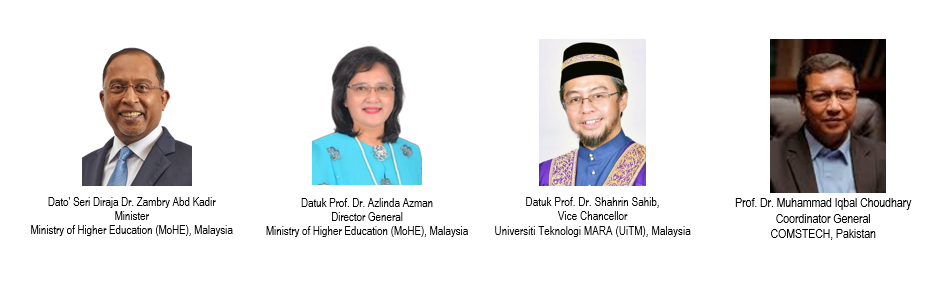
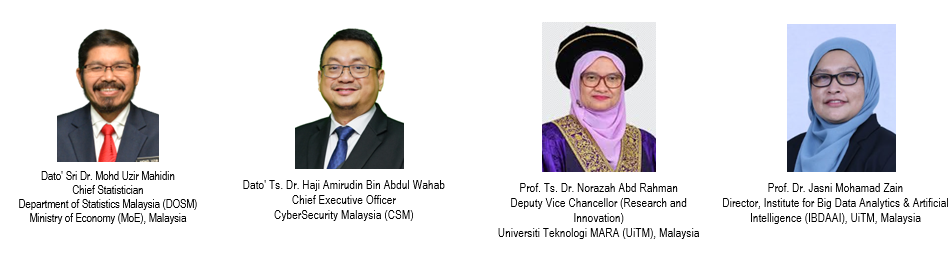
  • UiTM – COMSTECH International Workshop on“ARTIFICIAL INTELLIGENCE, CYBER SECURITY AND DISRUPTIVE TECHNOLOGIES”

    Date: 24-26 November 2025
    Location: Universiti Teknologi MARA (UiTM), Malaysia
    Jointly organised by:
    OIC-COMSTECH and Institute for Big Data Analytics & Artificial Intelligence (IBDAAI),
    Department of Research & Innovation,
    Universiti Teknologi MARA (UiTM), Malaysia.

    Collaborative Partners:
    CyberSecurity Malaysia (CSM), and OIC – Computer Emergency Response Teams (OIC-CERT)

    Flyer: Click Here

    INTRODUCTION

    In an era defined by rapid digital transformation, the convergence of Artificial Intelligence (AI), Cyber Security, and Disruptive Technology is not just an academic interest rather it is a critical imperative. Navigating the opportunities and challenges of this new landscape requires global collaboration, shared knowledge, and a commitment to ethical and secure innovation.

    Hence, OIC-COMSTECH and Universiti Teknologi MARA (UiTM) are jointly organizing an international workshop on “Artificial Intelligence, Cyber Security and Disruptive Technology” during November 24-26, 2025, at UiTM, Malaysia. Furthermore, this workshop is being conducted in collaboration with Cyber Security Malaysia (CSM) and the Organisation of the Islamic Cooperation – Computer Emergency Response Teams (OIC-CERT).

    This workshop is being organized to foster essential dialogue on the transformative impact of these technologies, addressing both their immense potential and their associated global security challenges. It will serve as a vital platform for knowledge exchange, strategic networking, and international partnership building.

    OBJECTIVES

    This workshop aims to:

    • Provide exposure to participants in the fields of Artificial Intelligence, Cyber Security, and Disruptive Technology, aligning with Malaysia’s commitment to developing a strong, innovative, and highly competitive digital ecosystem to become a leader in digital technology in the region.

    • Introduce Universiti Teknologi MARA (UiTM) and the Institute of Big Data Analytics and Artificial Intelligence (IBDAAI) as the center of excellence in the fields of data analytics, artificial intelligence, and digital innovation in Malaysia.

    • Strengthen networking and explore collaboration opportunities in the areas of science, technology, and innovation, aiming to foster joint capacity building and sustainable advancement among OIC member countries.

    Themes:

    1. Ethical & Responsible Artificial Intelligence
    2. Next-Generation Cyber Threat Landscape & Defense
    3. Quantum Computing: Impact & Implications
    4. Data Science, Analytics & Machine Learning
    5. Critical Infrastructure & National Security
    6. Disruptive Technologies: Blockchain, IoT & Metaverse
    7. Policy, Governance & International Cooperation
    8. Digital Transformation for Sustainable Development

    Target Audience

    • Academicians & Researchers: Professors, PhD scholars, and students in relevant fields.
    • Industry Professionals: IT leaders, cybersecurity experts, data scientists, and developers.
    • Government & Policy Officials: Representatives from OIC nations, regulators, and policy makers.
    • International Bodies: Members of OIC-CERT, and related organizations.

    Modalities: Local hospitality, including accommodation, meals and internal transportation will be provided to a selected number of international participants.

    Registration Process:

    Step 1: For Physical Participation, please register at: Click Here

    Step 2:  For Virtual Participation, please register at: Click Here

    Selected candidates will be notified through email hence; applicants are required to regularly check their emails.

    Tentative List of Resource Person & Guest of Honour

    Technical Focal Person:

    Prof. Dr. Jasni Mohamad Zain
    Director,
    Institute for Big Data Analytics & Artificial Intelligence (IBDAAI),
    UiTM, Malaysia

    Workshop Coordinators:

    Muhammad Haris Akram
    Program Manager, COMSTECH                               
    haris@comstech.org

    Muhammad Haseeb Ahmad
    Program Officer, COMSTECH
    Haseeb.ahmad@comstech.org

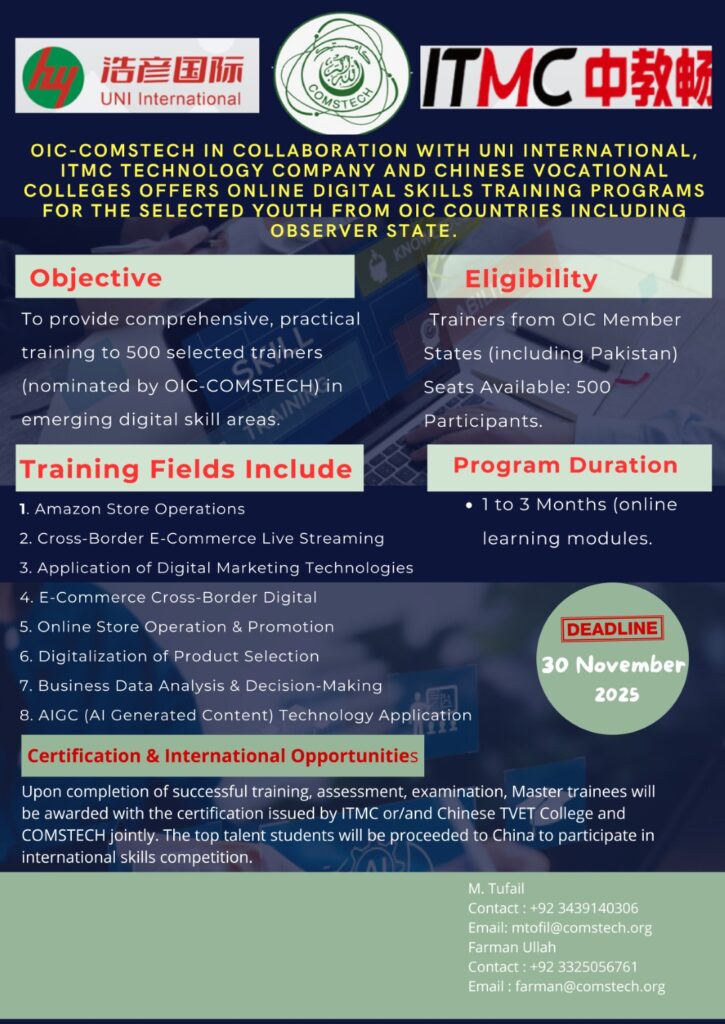
  • OIC-COMSTECH in collaboration with UNI International, ITMC Technology Company and Chinese vocational colleges offers Online digital skills training programs for the selected youth from OIC countries including OBSERVER STATE.

    Objective: To provide comprehensive, practical training to 500 selected trainers (nominated by OIC-COMSTECH) in emerging digital skill areas.

    Eligibility: Trainers from OIC Member States (including Pakistan) Seats Available: 500 Participants.

    Program Duration: 1 to 3 Months (online learning modules).

    Google registration form: Registration Closed

    Deadline: 30th November 2025

  • 8th ANRAP-COMSTECH Regional Seminar 2025 Plant Materials and their Clinical Validation in the Management of Diabetes and Metabolic Disorders: Challenges and Scope

    Flyer: Click Here

    18th – 20th November 2025

    COMSTECH secretariat, Islamabad, Pakistan

    Organizers: OICCOMSTECH – OIC Ministerial Standing Committee on Scientific and Technological Cooperation & Asian Network of Research on Antidiabetic Plants (ANRAP)

    Supported by: OIC – COMSTECH, ANRAP & International Program in the Chemical Sciences (IPICS), Uppsala University, Sweden

    Seminar Focus:

    This regional seminar aims to bring together experts, researchers, pharmacologists, and traditional medicine practitioners from the OIC region and beyond to discuss the current scientific and regulatory challenges, explore new research methodologies, and identify collaborative opportunities in the pharmacological validation of medicinal plant materials used in managing diabetes and metabolic disorders.

    Objectives:

    • To assess the scope and potential of indigenous plant materials in diabetes management
    • To identify gaps in pharmacological validation and research capacity
    • To discuss strategies for translating traditional knowledge into evidence-based therapeutics
    • To foster networking and collaboration among institutions in Asia and OIC countries

     Key Themes:

    • Traditional medicinal plants with antidiabetic properties
    • Pharmacological screening and standardization challenges
    • Role of ethnopharmacology in drug discovery
    • Integrative approaches combining traditional and modern medicine
    • Regulatory pathways for plant-based therapeutics
    • Collaborative research opportunities within the OIC member states
    • Pre-Clinical and Clinical on plant based antidiabetic agents

    Expected Outcomes:

    • Policy and research recommendations for integrating validated plant-based therapies into mainstream diabetes care
    • Strengthened collaboration between regional and OIC institutions working on medicinal plant research
    • Establishment of a regional working group or consortium to pursue joint studies and funding opportunities
    • A roadmap for capacity building and training in pharmacological validation and quality control
    • Compilation and publication of validated data on plant-based antidiabetic treatments as a regional reference resource
    • Identification of priority plants and candidate compounds for further development through pre-clinical and clinical research

    Target Audience:

    • Researchers & Scientists working in the area of Biochemistry, Pharmacology, Medicinal Plants, Metabolic Disorders, & Traditional Medicines.
    • From all OIC Member & Observer Countries.

    Registration link: Click Here

    Template for Abstract Submission: Attached here

    Deadline for Abstract Submission: 15th October 2025

    Last date to Register: 15th October 2025

    Contact Info
    For any query, Please contact on the below given Email address.
    Email: Khazima@comstech.org
    Khazima Muazim
    Programme Manager

  • OIC-COMSTECH in Collaboration with ICGEB Organize international workshop

    Flyer: Click Here

    Abstract

    Next-generation sequencing (NGS) has revolutionized genomics by enabling the mass production of high-resolution biological data. However, the enormous volume, complexity, and heterogeneity of this data pose major challenges in terms of storage, processing, and interpretation. The complexity of the field means that it is necessary to maintain an appropriate pace in the training of qualified personnel.  Artificial intelligence (AI), and more specifically machine learning and deep learning, is therefore an essential tool for meeting these challenges.

    Objectifs

    • Mastering bioinformatics tools and pipelines by training trainers;
    • Learning how to integrate AI algorithms for processing, aligning, and annotating genomic data;
    • Implement predictive models to identify variants, genes, or molecular signatures;
    • Know how to combine genomic data with other sources (transcriptomics, proteomics, clinical data);
    • Train participants to design and evaluate new algorithms for NGS analysis.

    Key Topics:

    1: AI on RNA-SEQ data 

    2: Local AI tools,

    3: AI on Variant Calling data 

    4: AI on Metagenomic data

    Target audiences: Bioinformaticians; PhD students; Researchers; Biotechnologists; and clinicians with a background in NGS Data analysis in OIC member states.

    Profil of trainers:

    Prof. Dr. Silvano PIAZZA

    Prof Silvano is a distinguished researcher, and devoted scientist; Group Leader, Computational Biology at International Centre for Genetic Engineering and Biotechnology (ICGEB, Trieste Italy). He carried on by the Bioinformatics research unit is focused on extensively using and interpreting High-throughput analysis of genomic profiles used to discover molecular patterns, both in normal biological processes and in disease states. The research unit together with external collaborators (from both Italian and international institutions), has demonstrated that the synergistic use of genomic data, biological experiments and bioinformatics analysis might not only further the understanding of the processes involved in several diseases and in particular in cancer progression, but also provide lists of molecules with the potential to be incorporated in clinical settings. Nevertheless, with the massive amount, diversity, and availability of genomic datasets, bioinformatics research faces the challenge to integrate all of these source of information. For these reasons, the unit is particularly interested in integrated approaches because they are the key to understanding the complexity underlying the diseases, thus leading to the development of new therapies and diagnostic tools.

    Dr Waseem Haider

    Dr. Haider is a Professor of Bioinformatics at COMSATS University Islamabad (Pakistan), where he leads the Next Generation Sequencing Research Group (NGSRG) within the Computational Biology and Bioinformatics Group (CBBG). With over two decades of distinguished service, he is recognized as an accomplished researcher and trainer in data analysis, Next-Generation Sequencing (NGS), and Machine Learning (ML).

    His research group works across diverse NGS domains including genome, exome, transcriptome (RNA-Seq), and metagenomics, as well as Artificial Intelligence applications involving Machine Learning, Deep Learning, Forecasting, and Language Models (LMs). Together with his students, Dr. Haider, also founded Next Gen Solutions (NGS), through which they have trained more than 2,000 researchers and students in hands-on data analysis workshops held at prestigious institutions in Pakistan and abroad. The proceeds from these training programs are dedicated to social welfare initiatives.

    Registration link: Click Here

    Deadline for application: November 7th , 2025

    Focal Person:

    Prof. Dr. Waseem Haider, CUI Islamabad.
    Email: haider.waseem@gmail.com

    Contact Person:

    Dr Akim Socohou Moutala
    Senior Program Manager (OIC-COMSTECH)
    Email: akim@comstech.org

  • Hybrid Course“Modern Nuclear Magnetic Resonance Spectroscopy (NMR) – Theory and Applications”

    Lecture Time: 10:30 am – 12:30 pm (2 hours)

  • COMSTECH-PCMD Training Course in Virology and Pandemic Preparedness

    October 15 to November 30, 2025

    Flyer: Click Here

    OIC – COMSTECH, in collaboration with the Dr. Panjwani Center for Molecular Medicine and Drug Research (PCMD), University of Karachi, is pleased to announce the COMSTECH – PCMD Training Course in Virology and Pandemic Preparedness.

    This intensive six-week program is designed to provide hands-on training and practical knowledge in the following critical areas:

    • Epidemiology of viral diseases
    • Biorisk assessment: identification of possible sources of viruses and prevention of new zoonotic diseases
    • Development of diagnostics and therapeutics against viral outbreaks
    • Dealing with viral infections: real-time data collection and preparation for future outbreaks

    Funding Support

    Selected participants will receive:

    • Free of cost supervised lab access and mentorship at PCMD
    • Free of cost accommodation and meals provided by PCMD
    • International travel support funded by OIC-COMSTECH

    Eligibility

    • Eligible Countries: All OIC member states
    • Minimum Qualification: M.S./Ph.D. in Biomedical/Health Sciences
    • Fields of Study: Virology, Molecular Biology, Infectious Diseases
    • Duration: 6 weeks
    • Age Limit: 35 years (graduate studies) | 45 years (post-graduate studies)

    How to Apply

    Interested candidates are encouraged to apply through the following link:
    Application Form : Click Here
    Program Details: Attached

    Application Deadline: 18th September 2025;  For further inquiries, please contact:
    📧 khazima@comstech.org | ☎️ (+92 51) 9220681-3

  • Climate Change in Action: Lessons from South Asia’s Extreme Flood Events

    Date: November 14, 2025  
    Time: 03:00-04:30 PM Pakistan Standard Time

    Abstract:
    OIC-COMSTECH cordially invites you to a thought-provoking webinar that delves into one of the most urgent issues of our time the escalating impacts of climate change across South Asia. This session aims to analyze the lessons learned from recent extreme flood events and explore ways to strengthen regional resilience, policy coordination, and community-based adaptation strategies.

    South Asia faces an increasing frequency of extreme flood events that disrupt lives, livelihoods, and ecosystems. These floods are stark reminders of the region’s vulnerability to climate change and the limitations of current disaster management systems. This webinar aims to examine major flood events in South Asia to extract key lessons on adaptation, resilience, and policy response. It will discuss socio-economic and environmental impacts, highlight successful community resilience practices, and propose ways to strengthen regional cooperation and early warning systems for future climate-induced disasters.

    Webinar Objectives:

    To analyze and highlight lessons learned from South Asia’s extreme flood events as a means to strengthen regional climate resilience, policy coordination, and community-based adaptation strategies.

    Target audiences: Young Scholars, Health Sciences, PhD students, Ecosystems Sciences, and Environmental sciences, Policymakers, and scientists with expertise in data analysis, including NGO, to strengthen evidence-based solutions across the OIC member states.

    Distinguished Speakers:

    Dr. Md. Sirajul Islam

    Professor & Director,

    Center for Infrastructure Research and Sustainable Development (CIRS)
    Department of Civil and Environmental Engineering, North South University

    Dr. Md. Sirajul Islam is a distinguished academic and researcher with over two decades of experience in water resources, environmental engineering, climate change, and disaster management. Since joining NSU in 2005, he has served in key leadership roles, including Dean of the School of Engineering and Physical Sciences and Founder Chair of the CEE Department. A Ph.D. graduate of The University of Tokyo and former Postdoctoral Fellow at JST, Dr. Islam has collaborated with leading global institutions such as UNFCCC, IPCC, ADB, UNDP, GIZ, and the World Bank. He currently serves on the Board of BAETE, contributing to engineering education reform in Bangladesh. Author of over 100 publications, Dr. Islam is also Editor of the Journal of Water Management Modeling (JWMM), Canada, and a frequent speaker at prestigious international conferences worldwide.

    Webinar Flyer: Click Here

    Registration link: Click Here

    Webinar Coordinator:

    Md. Rakibul Hasan
    Junior Program Manager
    Email:  jpmrakib@comstech.org

  • COMSTECH WEBINAR on “Building resilient research institutions to undertake impactful science: experiences from South Africa”

    Date: 12th nov, 2025 at 03:00 PM (PST)

    Guest Speaker: Prof. Dr. Quarraisha Abdool Karim, FRS
    President of The World Academy of Sciences

    Flyer: Click Here

    Abstract

    Resilient research institutions are vital to confronting today’s global health challenges and preparing for those of tomorrow.

    Local leadership driving solutions to local priorities, synergistic partnerships and collaborations, long-term investments in research, local infrastructure, human capacity and the next generation of science leadership is key for realising the transformative potential of science for social and economic well-being in low and middle-income countries that benefit everyone.

    Three decades of HIV and TB research illustrate the translation of science to policy and practice, benefitting the most vulnerable, and the rapid pivoting to respond to the more recent COVID-19 pandemic.

    In these unprecedented and volatile times, we need science that unites countries to ensure sustainable futures for this and generations to come.

    Objectives:

    1. To highlight strategies for building resilient research institutions capable of addressing current and emerging global health challenges.
    2. To share experiences and lessons learned from South Africa’s research ecosystem, particularly in HIV, TB, and COVID-19 responses.
    3. To promote local leadership and ownership in driving research agendas that address national and regional priorities.
    4. To emphasize the importance of sustainable investments in infrastructure, human capacity, and institutional development for long-term scientific impact.
    5. To foster partnerships and collaborations that strengthen knowledge exchange and innovation across low- and middle-income countries.
    6. To inspire policy and decision-makers to support science-driven solutions for social and economic development

    Target Beneficiaries:

    1. Researchers and scientists in low- and middle-income countries seeking models for institutional resilience and impactful research.
    2. Research institutions and universities aiming to strengthen capacity, leadership, and sustainability.
    3. Policy-makers and funding agencies interested in aligning national priorities with research investments.
    4. Public health professionals and practitioners benefiting from evidence-based policies and practices.
    5. Students and early-career researchers aspiring to become future science leaders.
    6. Communities and populations that ultimately benefit from improved health outcomes and socio-economic development driven by local science initiatives.

    Registration link: Click Here

    Contact Info
    For any query, Please contact on the below given Email address.
    Email: Khazima@comstech.org
    Khazima Muazim
    Programme Manager

  • International Training on Promoting Agricultural Knowledge and Information Systems (AKIS) and Precision Agriculture

    Registration Link-Click Here

    Registration Link-Click Here

Back to top button