Date: 16, February 2026
Flyer: Click Here
Abstract:
Sudan is facing one of the most severe humanitarian and public health crises in its history. Ongoing conflict has disrupted health services, displaced millions of people, and created conditions that significantly increase the risk of vector-borne diseases and neglected tropical diseases (NTDs). Weakening disease surveillance, interrupted control programs, population movement, and limited access to clean water and sanitation have further intensified these risks.
This webinar will examine how the conflict in Sudan is reshaping the landscape of vector-borne and neglected tropical diseases, placing already vulnerable populations at even greater risk. It will highlight the direct and indirect impacts of the crisis on health systems, disease prevention efforts, and outbreak preparedness, while drawing attention to urgent gaps that require coordinated action.
Bringing together leading global experts, researchers, and public health professionals, the webinar will provide evidence-based insights and practical approaches to mitigating disease risks in conflict and fragile settings. Discussions will focus on policy-relevant strategies, innovative responses, and collaborative solutions that can strengthen resilience, protect communities, and support continuity of essential health services despite ongoing challenges.
Above all, the webinar aims to move the conversation forward from crisis to action by identifying pathways that promote recovery, resilience, and sustainable public health responses in Sudan and similar contexts worldwide.
Participants Registration link: Click Here
Profile of Moderators:
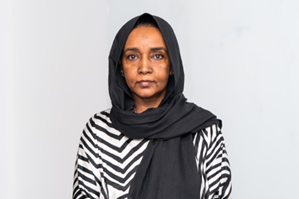
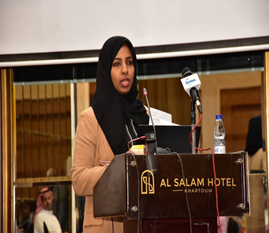
Dr. Rasha Siddig Azrag Ahmed
Founder and Director of Vector Genetics and Control laboratory
Faculty of Science, University of Khartoum, Sudan
Research fellow of the IIE-SRF and SAR,
Jacobs School of Medicine and Biomedical Science
University of Buffalo New York, USA
Dr. Rasha S. Azrag is the founder and Head of the Vector Genetics and Control Laboratory at the University of Khartoum, Sudan and currently a Research Fellow with the IIE–Scholar Rescue Fund and Scholars at Risk at the State University of New York at Buffalo, USA. Her research focuses on disease vector surveillance, the population genetics of mosquito vectors, and mosquito ecology in underdeveloped urban environments, with particular emphasis on adaptive traits that drive insecticide resistance and compromise the effectiveness of vector control interventions. A central aspect of her research is strengthening disease vector surveillance through an interdisciplinary One Health framework. Dr. Azrag has contributed peer-reviewed publications, led nationally funded research projects, and contributed significantly to capacity building through the training of public health professionals across Sudan.
Prof. Dr. Heather Ferguson,
Professor of Medical Entomology and Disease Ecology
School of Biodiversity, One Health & Veterinary Medicine
University of Glasgow, UK.
Professor Dr. Heather M. Ferguson is an infectious disease ecologist at the University of Glasgow with over 20 years of experience in mosquito-borne diseases, particularly malaria. She holds a BSc from the University of Toronto, an MSc from the University of British Columbia, and a PhD from the University of Edinburgh, where she studied malaria vector–parasite interactions. After postdoctoral research in the UK and Tanzania, she joined the University of Glasgow in 2006 as a BBSRC David Phillips Research Fellow. Her research focuses on malaria vector ecology, mosquito surveillance and control, environmental change and disease transmission, and emerging vector-borne disease risks, with strong collaborations in Africa and the UK. She also evaluates the risks of emerging vector-borne diseases in Scotland and actively supports strengthening vector control capacity in endemic regions. Professor Ferguson maintains a longstanding collaboration with the Ifakara Health Institute as a Visiting Scientist and leads research groups in Infectious Disease Ecology and Host–Parasite Interactions, contributing significantly to evidence-based disease control strategies.
Profile of Speakers:
Dr. Sara Azhari Hassan,
Director of the Communicable Disease Control Directorate,
Primary Healthcare Directorate,
Federal Ministry of Health, Sudan
Dr. Sara Azhari Hassan the Director of the Communicable Disease Control Directorate (DCD) at Sudan’s Federal Ministry of Health. In this pivotal role, she provides strategic oversight for national programs targeting Malaria, HIV, TB, and Neglected Tropical Diseases (NTDs).
With 8 years of specialized expertise in communicable disease and 3 years in programs management and a foundational tenure in primary healthcare setting and Sudan health system, Dr. Sara is a distinguished expert in disease-fighting strategies, strategic planning, and large-scale intervention management. Her academic credentials include an MPH (master degree in public health), specialized training through the Intermediate Field Epidemiology Training Program (IFETP/EMPHNET), and a bachelor’s degree in medicine and surgery (MBBS) from Ahfad University for Women.
Dr. Hamoda Toto,
Directorate General of Global Health
&
Deputy Manager of GF-PMU
Federal Ministry of Health
&
Former director of IVM department,
Federal Ministry of Health Sudan.
Dr. Hmooda Toto Kafy is a medical entomologist and vector control specialist with a BSc in Public and Environmental Health from the University of Khartoum (1999), an MSc in Biology and Control of Disease Vectors from the London School of Hygiene and Tropical Medicine, United Kingdom (2008), and a PhD in Medical Entomology from Universiti Sains Malaysia (2019).
Since November 2022, he has served as Deputy Manager of the Global Fund Project Management Unit (GF–PMU) in the Directorate General of Global Health, FMoH. From 2013 to 2019, he headed the Integrated Vector Management Department, FMoH. Previously, from 2009 to 2012, he served as Head of the Integrated Vector Management Unit and Deputy Manager of the National Malaria Control Programme (NMCP), FMoH. From 2004 to 2007, he was Head of the Integrated Vector Management Unit, NMCP, FMoH, and from 2001 to 2003, Head of the Vector Control Unit, NMCP, FMoH. He began his career as a Field Supervisor with the Malaria Control Programme, State Ministry of Health, Khartoum State, from 1999 to 2001.
Since 20 May 2020, Dr. Hmooda Toto Kafy has been a Technical Support Senior Specialist with the Country & Regional Support Partner Committee (CRSPC), RBM Partnership to End Malaria, working on a home-based arrangement with significant travel responsibilities. He has been a member of the Technical Advisory Group on the Global Integrated Arboviruses Initiative at WHO Headquarters since 2021. He is a member of the American Society of Tropical Medicine and Hygiene (ASTMH) since 2014, the Pan-African Mosquito Control Association (PAMCA) since 2013, and the Roll Back Malaria Vector Control Working Group (RBM-VCWG) since 2006.
Dr. Hmooda Toto Kafy has published extensively in peer-reviewed journals on medical entomology and vector control. Since 2022, he has been a co-investigator of the project “Controlling Emergent Anopheles stephensi in Ethiopia and Sudan (CEASE)” and is leading the entomology component of the CEASE project in Sudan.
Prof. Dr. Ahmed Fahal,
Founder & Director of the WHO
Collaborating Centre on Mycetoma
Professor Dr. Ahmed Hassan Fahal, MBBS, FRCS, FRCSI, FRCS(G), MD, MS, FRCP (London), FRCPath. Professor Fahal, is a distinguished Professor of Surgery at the University of Khartoum, Sudan, and a global authority on mycetoma and tropical surgery.
Prof. Fahal is the founding Director of the WHO collaborating Centre on Mycetoma (MRC) at the University of Khartoum, which has grown into a leading international center for mycetoma clinical care, research, education, and advocacy. Under his leadership, mycetoma has been recognized as a neglected tropical disease by the World Health Organization, a major milestone in global health. Prof. Ahmed Hassan Fahal has received numerous prestigious national and international awards and honors in recognition of his outstanding contributions to surgery, tropical medicine, mycetoma research, and scientific leadership. His honors include the Donald Mackay Medal from the Royal Society of Tropical Medicine and Hygiene for excellence in tropical health, the Knighthood of Palmes Académiques from the Republic of France and the Knighthood of Merit from the Republic of Italy, and election as a Fellow of the Third World Academy of Sciences and the African Academy of Sciences. At home, he has received multiple awards from the University of Khartoum.
He has held influential leadership roles in medical education and research administration, including Director of the Educational Development Centre, Founding Director of the Self-Evaluation and Quality Enhancement Administration, Academic Secretary of the University of Khartoum, President of the Scientific Research and Innovation, Ministry of Higher Education (Sudan), and advisor to the Minister of Higher Education and Scientific Research.
Prof. Fahal has an extensive publication record with hundreds of peer-reviewed articles in international journals, book chapters, clinical guidelines, and educational materials that have shaped the field of tropical surgery and mycetoma research worldwide. He is widely recognized for his contributions to clinical care, policy, and capacity building, and he serves on multiple national and international scientific committees and editorial boards.
Prof. Dr. Maowia M. Mukhtar
Bioscience Research Institute Sudan
&
EDCTP Senior Fellow
Prof. Maowia Mohamed Mukhtar (PhD, Cornell University, USA) is a distinguished Professor of Immunology and a leading expert in immunology and molecular biology of tropical diseases at the Bioscience Research Institute, Sudan. He has held several senior academic and leadership positions, including Director of the Institute of Endemic Diseases (2003–2006) and long-standing Head of the Department of Molecular Biology, where he has guided research strategy, postgraduate training, and laboratory development.
He is a member of the technical advisory committee World Health Organization/ Tropical Diseases Research (WHO/ TDR) for Capacity Research Strengthening and a senior Fellow, European Developing Countries Clinical Trial Partnership (EDCTP).His research spans leishmaniasis, tuberculosis, malaria, onchocerciasis, schistosomiasis, measles, and emerging and re-emerging infections, with particular emphasis on host–pathogen interactions, immune correlates of protection, molecular epidemiology, and the development and evaluation of diagnostics biomarkers of neglected tropical diseases. Prof. Mukhtar has played a pivotal role in field-based and laboratory-based studies that directly inform public health policy and disease control programs in Sudan and East Africa.
Prof. Mukhtar has led or co-led numerous internationally funded research projects, supported by organizations such as WHO/TDR, NIH, EDCTP, FIND, ICGEB, DFID, and the European Union. He has extensive clinical trial experience, including Phase I–III evaluations of diagnostics and therapeutics for visceral leishmaniasis and other endemic diseases. His work has contributed to the validation of point-of-care tests and improved access to diagnosis in resource-limited settings.
In addition to his research achievements, Prof. Mukhtar is highly regarded for his commitment to capacity building and mentorship. He has supervised many MSc and PhD students, many of whom now hold academic, clinical, and leadership positions in Sudan and internationally. He has also served on national ethical committees and global health advisory boards, contributing to research governance, policy development, and regional research strengthening.
Prof. Mukhtar has published extensively in high-impact peer-reviewed journals and continues to advocate for equitable access to research outputs, particularly for communities most affected by neglected tropical diseases.
Contact Information:
Md. Rakibul Hasan
Junior Program Manager,
Email: jpmrakib@comstech.org
Phone No. : 92 51 9220681-3
Fax : 92 51 9211115, 9220265, 9205264
COMSTECH Secretariat, 33-Constitution Avenue, G-5/2, Islamabad, Pakistan