Past Events

  • COMSTECH Announces 2019 Award Winners

    COMSTECH Awards are conferred biennially in ‘Basic Sciences’ and in ‘Excellence in Science and Technology’ to recognize the outstanding research work carried out by scientists who are citizens of, and working in, OIC member states. Each award carries a certificate, shield of honor and a cash prize.

    BASIC SCIENCES

    These awards are given in four basic sciences; Biology and Chemistry alternating biennially with Mathematics and Physics. Each award carries a cash prize of US$5000. So far twenty two (22) scientists from Arab Republic of Egypt, Islamic Republic of Iran, Hashemite Kingdom of Jordan, Kingdom of Morocco, Islamic Republic of Pakistan, Republic of Sudan, and Republic of Turkey have received these awards.

    Following scientists have been selected by the jury of international experts for 2019 awards:

    I- COMSTECH Award in Mathematics 2019 (Shared)

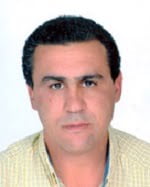
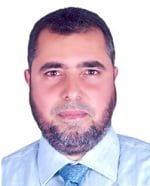
    Prof. Khalil Ezzinbi
    Professor
    Cadi Ayyad University
    Kingdom of Morocco

    Khalil Ezzinbi received his PhD in mathematics from Cadi Ayyad University in 1997. He became a full professor in 2001. His research interests are evolution equations, operator theory, partial functional differential equations, dynamical systems and integrodifferential equations. He serves as an editor-in-chief and/or an associate editor for several mathematical journals. He has been visiting professor at numerous universities at African, Asian, European and North American Universities.  He is a member of the African Academy of Sciences since 2009. Professor has had several PhD students in many countries including Morocco, Senegal, Tchad, Nigeria, Cameroun, Burkina Faso, Tunisia and Algeria. He was member of several doctoral dissertation committees in Africa. His works have inspired many researchers and influenced many publications worldwide. Over 190 papers and 3091 citations of Professor Ezzinbi are indexed in MathSciNet and his recent h-index is 31 with Google Scholar. Professor Ezzinbi supervised 27 PhD students from Africa. These are outstanding achievements for a mathematician working and living in Africa.

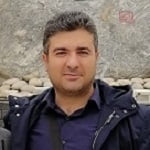
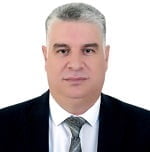
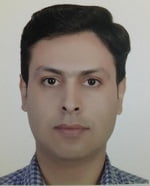
    Dr. Sajad Jafari
    Assistant Professor
    Amirkabir University of Technology
    Islamic Republic of Iran

    Sajad Jafari was born in Kermanshah, Iran, in 1983. He received his BSc, MSc, and PhD degrees in biomedical engineering in 2005, 2008, 2013 from biomedical engineering department, Amirkabir University of Technology (Tehran Polytechnic), Tehran, Iran. He is currently an assistant professor in there (since 2013). His research interests include nonlinear and chaotic systems and signals, and mathematical biology. Also he is interested in complex networks and collective behaviours in them, such as synchronization, Chimera states, and spiral waves. He serves as editor in International Journal of Bifurcation and Chaos, International Journal of Electronics and Communications, and Radioengineering. He has been one of the highly cited researchers in 2019 and 2020 according to Clarivate Analytics.

    II. COMSTECH Award in Physics 2019

    Prof. Amer Iqbal
    Professor
    GC University Lahore
    Islamic Republic of Pakistan

    Amer Iqbal has a doctorate in theoretical physics from Massachusetts Institute of Technology. He was the Academic Director of the Abdus Salam School of Mathematical Sciences responsible for all research and academic aspects of the school. He was a postdoctoral fellow at Harvard University and a faculty member in the mathematics department at the University of Washington (Seattle). He was given the Abdus Salam prize for physics in 2009 for his work on supersymmetric gauge theories and topological strings.
    Dr. Iqbal is primarily known for his work on mirror symmetry, topological strings, and supersymmetric gauge theories in various dimensions. In recent years Dr. Iqbal has worked on little string theories engineered using M5-branes in M-theory and double elliptically fibered Calabi-Yau threefolds in F-theory.

    EXCELLENCE IN SCIENCE AND TECHNOLOGY

    Introduced in 2009 and modified in 2017, these seven (7) awards have so far been given to nineteen (19) scientists from Arab Republic of Egypt, Islamic Republic of Iran, Malaysia, Kingdom of Morocco, Islamic Republic of Pakistan, Kingdom of Saudi Arabia, Republic of Turkey, and Republic of Uzbekistan. The Young Researcher Award, Best Scientific Book and Patent Award carries cash prize of US$3000 each. The Best Research Paper Award given in each of the four basic sciences (Biology, Chemistry, Mathematics and Physics) carries cash prize of US$2000 each.
    The details of 2019 winners under this category are given below:

    I. Young Researcher Award 2019

    Dr. Shafaqat Ali
    Associate Professor
    GC University Faisalabad
    Islamic Republic of Pakistan

    Shafaqat Ali received the Ph.D. degree from the Zhejiang University, China, in 2010 after winning Cultural Exchange Fellowship. He completed his post-doctoral studies from the Key Laboratory of Soil Environment and Pollution Remediation, Institute of Soil Science, Chinese Academy of Sciences. Dr. Ali is currently serving as Tenured Associate Professor and Chairman at Department of Environmental Sciences and Engineering, Government College University, Faisalabad. He is also a Visiting Scientist at the Key Laboratory of Soil Environment and Pollution Remediation, Institute of Soil Science, Chinese Academy of Sciences and Visiting Professor at Department of Biological Sciences and Technology, China Medical University Taichung, Taiwan. His research interests include phytotoxicity and phytoremediation of metals, stress physiology, emerging pollutants in soil and water and biochar applications in environment. He is the author of more than 350 refereed publications and 40 books/book chapters with cumulative impact factor more than 1042 and more than 13400 citations. He won eight research projects as a Principal Investigator and Co-Principal Investigator from different national and international funding agencies. He also serves on the editorial board of many international well reputed research journals.

    II. Best Scientific Book

    Prof. Ali Akhaddar
    Professor
    Avicenne Military Hospital of Marrakech
    Mohammed V University
    Kingdom of Morocco

    Ali Akhaddar is a Professor of Neurosurgery at Medical School of Rabat -from Mohammed V University- and the Head of the department of Neurosurgery at Avicenne Military Hospital of Marrakech. He is an International Fellow of the American Association of Neurological Surgeons, member of the American Congress of Neurological Surgeons, the French speaking society of Neurosurgery, the American Association for the Advancement of Science, and the Russian Academy of Natural History. His fields of interests include central nervous system infections, spinal surgery, stereotactic surgery, neurosurgical complications, and history of medicine. He has received many awards during his career including from the World Federation of Neurosurgical Societies (Nagoya-2007, Boston-2009, and Seoul-2013), French Society of Hospital History (Paris-2014), and Mohammed V University (2011/2017). He is the Associate Editor-in-Chief of the journal Surgical Neurology International/Infection. He has published 9 books (one translated into Chinese), 15 book chapters, 175 papers indexed in PubMed, and he has 210 publications in Scopus.

    III. Patent Award (Shared)

    Prof. Salman Alrokayan
    Professor
    King Saud University
    Kingdom of Saudi Arabia

    Salman Alrokayan is an eminent scientist and academician from Saudi Arabia. He was graduated from Nottingham University, UK. Currently, he is serving as a Senior Professor of Biochemistry at King Saud University, Riyadh. He was the founder Dean of King Abdullah Institute for Nanotechnology, the first nanotechnology research establishment in the Arab world. Prof. Alrokayan promoted the policy of scientific innovation and knowledge sharing by establishing research collaborations with prestigious institutions from different countries including UK, Germany, and Malaysia. Several of his scientific discoveries have been patented by US and European patent offices. Besides being the Principal Investigator of many research projects, he also headed a collaborative project with SPIMACO (the largest pharmaceutical company in Saudi Arabia) to produce therapeutic proteins. Academically, he served as a Visiting Professor at Leeds University and played an active role in establishing several masters and doctoral programs at King Saud University.

    Prof. Sepideh Khoee
    Professor
    University of Tehran
    Islamic Republic of Iran

    Sepideh Khoee is currently a Professor of the Polymer Department at the College of Science, University of Tehran. She earned her PhD in Polymer chemistry from the Isfahan University of Technology, Iran, in 2003. Dr. Khoee research is focused on the design, synthesis and characterization of novel polymeric structures via various polymerization techniques. She is co-author of more than 130 original research papers, national and international patents, and several book chapters and supervised 22 Ph.D. and 63 M.Sc. theses. She is the recipient of several awards, including the selected executive director of applied research in the 22nd Research Festival of UT (2013) and the outstanding researcher in the 7th Iran Nano Festival by Iran Nanotechnology Initiative Council (INIC), 2013.

    IV. Best Research Paper in Biology

    Dr. Hammad Naveed
    Associate Professor
    National University of Computer & Emerging Sciences
    Islamic Republic of Pakistan

    Hammad Naveed is an Associate Professor of Computer Science and the Director of the Computational Biology Research Lab at the National University of Computer & Emerging Sciences, Islamabad Pakistan. He received his PhD in Bioinformatics from University of Illinois at Chicago (2012). He was a Research Assistant Professor at the Toyota Technological Institute at Chicago, University of Chicago from 2014-2017. He received his postdoctoral trainings at the CAS-MPG Partner Institute for Computational Biology, Shanghai China (2012-2013) and at the King Abdullah University of Science and Technology, Saudi Arabia (2013-2014). He has published 35+ research papers in leading journals and conferences. He is particularly interested in computational identification of novel drug targets, drug re-purposing, computational characterization of membrane proteins, pharmacovigilance, protein function prediction and disease identification using various imaging techniques. He is currently exploring avenues to convert research into products for the betterment of the society.

    V. Best Research Paper in Chemistry

    Prof. Farid Harraz
    Professor
    Najran University
    Kingdom of Saudi Arabia

    Farid Harraz is currently a Professor at the Advanced Materials and Nano-Research Centre, Najran University, Saudi Arabia and a Professor (on leave) from the Advanced Materials Department, Central Metallurgical R&D Institute, Cairo, Egypt. He got his Ph.D. in Physical Chemistry from Kyoto University, Japan in 2003. Prof. Harraz was a JSPS fellow at Kyoto University during 2003-2005 and visiting scholar to Department of Materials Science & Engineering, Univ. of Delaware (2011) and Univ. of Florida, USA (2009). He was awarded the Encouragement State Prize in Advanced Technology Science (2009) and Environmental Science Award (2012) and the award of Prof. Osama El-Khouly in Environmental Science (2016) from the Academy of Scientific Research and Technology, Egypt. He also received the first award of Federation of Arab Scientific Research Councils for Outstanding Scientific Research in Nanotechnology (2014) and the Publication Award from Misr El-Kheir Foundation, Egypt on 2010 and 2012. Prof. Harraz is a master in electrochemistry, physical chemistry, materials chemistry and Nanotechnology. He has extensive experience in managing R&D projects funded from international and national funding agencies. Prof. Harraz has distinguished scholarly work and publications record in prestigious, peer-reviewed International Journals. He is the author of around 230 papers (104 peer review academic articles, 77 abstracts and proceedings in international conferences and 50 national conferences, 3 book chapters and one US Patent with an h-index 33, total citations 2672 according to Scopus.

    VI. Best Research Paper in Mathematics

    Prof. Utkir A. Rozikov
    Professor
    V.I. Romanovskiy Institute of Mathematics
    Republic of Uzbekistan

    Utkir Rozikov is an internationally renowned expert in probability, mathematical physics and analysis. He has made significant contributions to Gibbs measures of statistical mechanics; real and p-adic dynamical systems. Rozikov has published over 150 papers in top journals including Jour. Stat. Phys.; Lett. Math. Phys.; Comm. Math. Phys.; J. Stat. Mech. Theory Exp.; J. Math. Anal. Appl.; Jour. Math. Biol. He published 3 authoritative research monographs in World Scientific, 2013, 2019, 2020. Rozikov was a visiting professor in France, Germany, Italy, Spain, UK, Switzerland etc. His SCOPUS impact factor is 21 and international awards include: Japan Embassy prize; TWAS Prize for Young Scientists; Springer Nature TOP Author Award. Currently, Rozikov is working on real and p-adic Gibbs measures for spin systems of statistical mechanics. He is developing theory of (termo) dynamical systems and evolution algebras of population biology.

    VII. Best Research Paper in Physics

    Dr. Seyed Hossein Hendi
    Assistant/Associate Professor
    Shiraz University
    Islamic Republic of Iran

    Seyed Hossein Hendi is an Iranian physicist, specializing in general relativity and electrodynamics. His work focuses on the models of gravity, black holes, wormholes, solitons, neutron stars, and related stuff. Dr. Hendi obtained his B.Sc. degree in Physics from Isfahan University of Technology, Iran, 2001. He obtained his M.Sc. and Ph.D. degrees in Theoretical Physics, Gravitation, and Cosmology (2004, 2007). He became an Assistant Professor at Yasouj University (2007-2012) and subsequently a faculty member of Shiraz University as an Associate Professor to date. Dr. Hendi is author and/or co-author of more than 150 scientific articles published in international peer-reviewed specialist journals, which have received over 4500 citations. Besides, awarded grants from Iran’s Scientific Elites Foundation (ISEF) for three consecutive years of 2018, 2019, and 2020, he also have an ICTP grant for participating in an activity of the Abdus Salam ICTP, Trieste, Italy, 2019. As a researcher, he spent two short visits at the University of Oldenburg in Germany, 2018, and Charles University in the Czech Republic, 2019. .


  • COMSTECH-ICYF Essay Competition on Artificial Intelligence

     
    • Winners of the competition will receive a certificate of honour and cash prize as mentioned below:

    Student Category

    Professional Category

    Prize

    Award

    Prize

    Award

    1st Prize

    US$500

    1st Prize

    US$500

    2nd Prize

    US$300

    2nd Prize

    US$300

    3rd Prize

    US$200

    3rd Prize

    US$200


    i:  Introduction to the Competition:

    Objective: To promote the awareness of AI as a leading technology of the contemporary era and its potential in varied areas of economy and society. To further identify outstanding talent in OIC countries that has both deeper understanding as well as innovative ideas on how AI can be used to address the multitude of problems being confronted by OIC countries as well as the potential pitfalls, challenges and the rules, regulations and guidelines, both legal and moral, that need to be considered to make the use of AI compatible with concerns of human privacy and dignity.

    ii:  Rules and procedures:

    1. Essay Competition shall be open to participants from OIC countries.
    2. It will consist of competition for students and young professionals in two categories:
      1. Undergraduates (18 to 25 years);
      2. Advanced students and Professionals (25 to 35 years)
    3. Undergraduates would be defined as those students currently enrolled in an Undergraduate (BS) program in a higher education institution or those having completed their BS but not yet enrolled in an MS or PhD program.
    4. Advanced students and Professionals would be defined as those who are either enrolled in a Graduate Program (MS, PhD) in AI or employed in the field of AI
    5. The essays may not be of less than 1300 words nor more than 1600 words (Font size 12) and each applicant may not submit more than one essay.
    6. The essays must be submitted electronically in any of the 3 official OIC languages viz. Arabic, English or French.
    7. The essays may not have been published either electronically or in print form prior to the competition.
    8. The essays would be assessed for originality and practicality of the ideas proposed besides the clarity of expression and language.
    9. The essays will be checked for plagiarism using standard software and those found to have high similarity index with published material would be automatically disqualified.
    10. There would be a scrutiny to determine the eligibility of the submitting authors as per their respective categories as well as the anti-plagiarism test on each submission. The qualifying essays would be evaluated by an international Jury of 4 persons.
    11. The 3 best essays selected in each category would be awarded suitable prizes. The ten best essays would be included in an ICYF-COMSTECH publication arranged specifically for this purpose.

    iii:   Shortlisting of Applications

    All applicants will be required to submit a brief introductory Write-up (abstract) for initial scrutiny (150 to 300 words).

    iv:   Criteria for Evaluation

    The following main evaluation criteria will be followed by the international jury:

    • Structure and organization of Essay
    • Technical mastery of the selected topic
    • Novelty of the idea being proposed
    • Application potential of the proposed theme

    v:   Outline/Structure of Essay

    The submitted essay should have the following indicators addressed

    • Introduction and Background of Selected Topic (up to 250 words)
    • Current State of Technology (up to 300 words)
    • Proposed Idea and its Novelty Idea (up to 550 words)
    • Implementation of Idea (up to 300 words) (stakeholders, target audience etc)
    • Expected Impact on Society (up to 200 words)

    vi:   Essay Topics

    • AI in Health/Education

    Medical imaging and diagnostics, Telehealth, Drug Creation, Therapeutics, Medical Treatment, Rehabilitation, Health Monitoring, e-learning, Learning Management, Personalized learning experience, Evaluations and assessments etc.

    • AI for Technology Frontiers

    ICT, Robotics, Mining, Smart Cities, IoT, Business, Marketing, Media, Chat-bots, Manufacturing, Customer Services, e-commerce etc.

    • AI in E – Governance

    Finance, Security, Justice, Crime fighting and prevention, Public policy, Informed decision making, Emergency response, Defence and National Security, Immigration etc.

    • Ethical & Regulatory Issues in Applications of AI

    Data privacy, digital crime fighting, AI – human co-existence, Robot rights, Biases in data, Liabilities for autonomous systems, AI weaponization etc.

    • AI for Social Development

    Equality and Inclusion, Hunger management, Economic empowerment, Gender equality, Environment, Infrastructure planning and development etc.

    For Online Registration & Submission

    https://docs.google.com/forms/d/e/1FAIpQLScQHPYqNqcAZbY3QvchdJ-L0QT1BSpb40WUe_rTs-5KwrBHlQ/viewform

    For Queries

    Muhammad Haris Akram
    Programme Manager
    COMSTECH Secretariat, Islamabad, Pakistan
    Tel: +92-51-9220681-3
    Fax: +92-51-9205264, +92-51-9220265
    Email: events@comstech.org

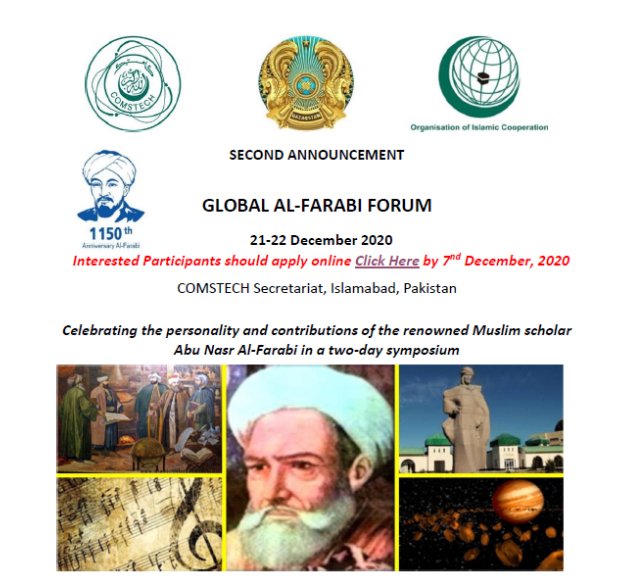
  • GLOBAL AL-FARABI FORUM

    • Interested Participants should apply online Click Here by December 07, 2020.
    • For Online participation, please contact:
      Mr. Muhammad Jamil
      mjamil@comstech.org
    • For queries, please contact:
      Prof. Dr. Syed Khurshid Hasanain,
      Adviser COMSTECH, (Mobile No. +92 300 5382170)

  • Deceptions in Psychology

    Deceptions in Psychology

    This is for the information to all that the online hands-on training workshop entitled “Deceptions in Psychology” will be conducted by Dr. Ansar Haroun (Professor of Forensic Psychiatry, USA).

    The workshop will be organized by Department of Psychology, University of Karachi in collaboration with Sindh Innovation, Research, and Education Network (SIREN) as per following schedule:

    Dates: September 19 – October 10, 2020

    Days:Every Saturday

    Time: 06:00 PM – 07:00 PM

    Registration fee: Free

    Available Seats: 100

    Registration last date: September 17, 2020

    Kindly register online for the workshop using below link:

    http://bit.ly/wdinp

    All registered participants can attend this online workshop through ZOOM video conferencing software (connection details will be shared through email to the shortlisted participants after the last date of registration).

    Note: Successful participants will receive a digital certificate upon completion of the workshop.

    WHO SHOULD ATTEND

    Individuals with Master in any field of Psychology are invited to attend this informative workshop.

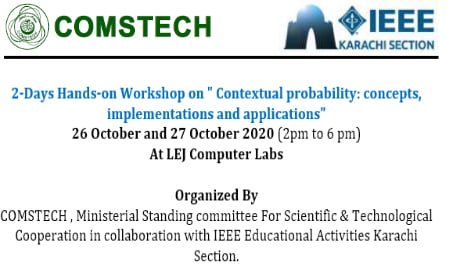
  • Contextual probability: concepts, implementations and applications

    Flyer

    ABSTRACT: 

    Contextual probability is a method for nonparametric probability estimation without using any model assumption. If we can estimate probability for any data instance, we can classify the instance in a Bayes optimal way. Contextual probability is also a method for reasoning with uncertainty, so it can be used for decision making and potentially general problem solving.

    Neighbourhood counting is a methodology for measuring data similarity. which applies to any type of data as long as neighbourhood can be defined. For a given set of data instances, the neighbourhood counting similarity is the number of all neighbourhoods that cover all data instances in the given set. Neighbourhood counting has been applied to multivariate data, sequence, tree and graph, resulting in elegant similarity measures. 

    This lecture will cover the concept of contextual probability, its relationship with the frequentist probability, how to calculate contextual probability for different types of data through neighbourhood counting. An outlook for future work will also be given.

    BIOGRAPHY:

    Professor Hui Wang obtained his BSc in Computer Science and MSc in Artificial Intelligence from Jilin University (China), and his PhD in Artificial Intelligence from the University of Ulster. He is currently Professor of Computer Science. His research interests are knowledge representation, reasoning, learning and enumerative combinatorics, and applications in multimodal video search and spectral data analytics for food authentication and virus detection. He has over 270 publications in these areas. 

    He played a principal role in the development of an algebraic framework for machine learning, Lattice Machine. He proposed the original concept of contextual probability, which can be used for reasoning with uncertainty, probability estimation and machine learning. He also proposed a generic similarity measure, neighbourhood counting, and its specialisations on multivariate data, sequences, tree and graph structures. The contextual probability and neighbourhood counting similarity bear strong similarity to kernel methods.

     He is an associate editor of IEEE Transactions on Cybernetics, and an associate editor of The Computer Journal. He is the Chair of IEEE SMCS Ireland Chapter since 2009, and a member of IEEE SMCS Board of Governors (2010-2013). He is principal investigator of a number of regional, national and international projects in the areas of virus detection (EPSRC funded VIPIRS 2020-2022), image/video analytics (EPSRC funded MVSE 2021-2023, EU Horizon 2020 funded ASGARD 2016-20, Horizon 2020 funded DESIREE 2016-19, EU FP7 funded SAVASA 2011-14, Royal Society funded VIAD 2014-16), text analytics (Invest Northern Ireland funded DEEPFLOW 2010-14, Royal Society funded BEACON 2009-11), and intelligent content management (EU FP5 funded ICONS 2002-05); and is co-investigator of several other funded projects.

    Venue:

    LEJ Computer labs (for physical participants)

    Registration deadline: 20th October 2020

    Registration Link: https://docs.google.com/forms/d/e/1FAIpQLSdeYpsZXV1G7LKYXdtWuLdT2IcBC0szwfCj8DIooPgjZ4aWxQ/viewform

    Zoom Details:

    Oct 26, 2020

    Topic: Contextual probability: concepts, implementations and applications
    Time: Oct 26, 2020, 02:00 PM Islamabad, Karachi, Tashkent

    Join Zoom Meeting

    https://us02web.zoom.us/j/89297334635?pwd=eG5iWDlYUUhJdTl0cmtWbXpiRHJXZz09

    Meeting ID: 892 9733 4635
    Passcode: 370623

    Oct 27, 2020 

    Topic: Contextual probability: concepts, implementations and applications
    Time: Oct 27, 2020, 02:00 PM Islamabad, Karachi, Tashkent

    Join Zoom Meeting

    https://us02web.zoom.us/j/84239405514?pwd=cmV5TEZBdzNFY09xTm50YkU3UUhzZz09

    Meeting ID: 842 3940 5514
    Passcode: 620276

    Coordinated By

    Prof Dr M Sadiq Ali Khan ,
    Chair IEEE Educational Activities Karachi Section
    msakhan@uok.edu.pk
    03002334578

    Dr. Hina Siddiqui
    Assistant Professor
    ICCBS, Karachi, Pakistan
    hinahej@gmail.com

    Ms Khazima Muazim
    Program Manager
    khazima@comstech.org
    0092519220681-3

  • COMSTECH Webinar on Sustainable Water Management in Developing Countries

    Click here to watch the recording.

    COMSTECH has arranged webinar to discuss challenges posed by climate change and growing economic development on Water Resources. Speaker will also delve into case study of Water resource management in Bangladesh.

    Target Audience: This webinar is open to science policy makers, academicians, scientists and general public from all the member OIC states.

    Speaker’s Profile: Attached

    Poster of webinar:  Attached:

    Abstract of talk: Attached

    Link for registration and E- certificate:

    https://docs.google.com/forms/d/e/1FAIpQLSc8ESonCY864Diz3tLUSv4nrzIjgC8BSgD_zcLdVuUcb8EtLA/viewform

    Procedure to join:

    Topic: Sustainable Water Management in Developing Countries
    Time: Oct 5, 2020, 03:00 PM Islamabad, Karachi, Tashkent
    Join Zoom Meeting
    https://us02web.zoom.us/j/87037385480?pwd=RjU5blJzSjllQ2FrcVA2VzBSVFo3dz09
    Meeting ID: 870 3738 5480
    Passcode: 472082

     Contact Information: 

    Address: COMSTECH Secretariat, 33-Constitution Avenue, G-5/2, Islamabad 
    Phone No. : 92 51 9220681-3
    Email: Khazima@comstech.org ; comstech@comstech.org

  • INTERNATIONAL CENTER FOR CHEMICAL AND BIOLOGICAL SCIENCES L.E.J. NATIONAL SCIENCE INFORMATION CENTER UNIVERSITY OF KARACHI

    Click here for Flyer
    Click here for Curriculum

  • INTERNATIONAL CENTER FOR CHEMICAL AND BIOLOGICAL SCIENCES

    L.E.J. NATIONAL SCIENCE INFORMATION CENTER

    UNIVERSITY OF KARACHI

    This is for the information to all that the online hands-on training workshop entitled “Deceptions in Psychology” will be conducted by Dr. Ansar Haroun (Professor of Forensic Psychiatry, USA).

    The workshop will be organized by Department of Psychology, University of Karachi in collaboration with Sindh Innovation, Research, and Education Network (SIREN) as per following schedule:

    Dates: September 19 – October 10, 2020

    Days:Every Saturday

    Time: 06:00 PM – 07:00 PM

    Registration fee: Free

    Available Seats: 100

    Registration last date: September 17, 2020

    Kindly register online for the workshop using below link:

    http://bit.ly/wdinp

    All registered participants can attend this online workshop through ZOOM video conferencing software (connection details will be shared through email to the shortlisted participants after the last date of registration).

    Note: Successful participants will receive a digital certificate upon completion of the workshop.

    WHO SHOULD ATTEND

    Individuals with Master in any field of Psychology are invited to attend this informative workshop.

  • A virtual Seminar on Saline Agriculture-Solution to Global Food Security

    Click here  to watch the recording.

    COMSTECH has arranged a virtual seminar on Saline Agriculture -Solution to Global Food Security on 29th September 2020.  This 2-hour seminar brings together a panel of distinguished scholars in the field of Soil salinity, soil health, water & irrigation, innovative crops, livestock and aquaculture, policy across the globe.Salinity posing increasing threat to global good security affecting soil and water contamination making it not suitable for drinking and agriculture. Farmers are unable to use their lands, which causes famine, poverty and social disruption. The world population is growing tremendously, and so is the demand for food. But the reality is that the amount of land suitable for agriculture continues to reduce. Large areas of agricultural lands are lost every day due to salinity, land that is much needed for food production to feed the growing world population and address the climate change threats. This event is open to science policy makers, academicians, students, scientists working in field of Agriculture from all the member OIC states

    This event is part of continuous efforts of COMSTECH to promote sustainable agriculture and nutritious food security in the OIC region. COMSTECH has 2 active projects at the moment related to Agriculture.

    • Development of Regional Gene Banks for plant Genetic Resources
    • New Breeding Technologies for Food and Nutritional Security
    • Download poster from here.
    • Download Scientific program from here.

    Below are names of our panelists.

    Welcome Chair

    Chair: Dr Khalid Mahmood, UPSIGN/Rothamsted Research, UK

    Khalid is an innovation lead at Impact Lab- Rothamsted Research in the UK and UPSIGN Agrifood lead.  Rothamsted is the oldest agri research institute in the world. For over 177 years, we have been leading cutting-edge science and high-impact innovation.  He is leading Agritech sector in Environment Futures Impact Lab with a consortium led by University of Exeter, Met Office, University of Plymouth. He is involved in developing new solutions to food security, sustainability, use of digital agriculture including IoT and data visualization. He is very keen in adopting interdisciplinary approaches to address sustainable food system challenges. He is advocating sustainable solutions to water, soil health, plants, and biodiversity. Khalid is trained as an Agriculture Economist with PhD from University of Gottingen Germany and MBA from a leading business school. He has previously worked with Royal Agricultural University and various other industry organizations in the UK and Germany.

    Prof. Dr. Iqrar Ahmed Khan (Pakistan Academy of Sciences).

    Prof Khan is former Vice Chancellor of University of Agriculture Faisalabad. He is a distinguished National Professor (2017). He is Ela Bhatt Professor-Germany (2019). He was awarded Ordre des Palmes Académiques (Civil Award, French Government-with the grade of Officer) (2015). He also got the Pakistan’s highest civil award, Sitara-E-Imtiaz (Civil Award, Government of Pakistan) (2012). He is Fellow-Pakistan Academy of Sciences (2007);Senior Research Fellow-Pakistan Institute of Development Economics (2020).

    Dr. S. Khurshid Hasanain, Adviser COMSTECH

    Dr. S. Khurshid Hasanain is an Adviser at COMSTECH Secretariat, Islamabad and has previously served as a Professor of Physics and Dean of Science Faculty at Quaid-i-Azam University, Islamabad. He has been deeply involved in developing the STI Agenda 2026 of the OIC and is engaged with implementation of COMSTECH programs in various areas of food security in OIC countries.

    Dr. Ismahane Elouafi, Director General International Center for Biosaline Agriculture, the United Arab Emirates.

    Dr. Elouafi is a global thought leader in science for sustainable development, food security and nutrition. She has been consistently ranked among the most influential women in science in the Arab world. Her contributions to science and policy have been recognized with a number of awards, including the National Reward Medal by His Majesty Mohamed VI, the King of Morocco (2014), and the Excellence in Science Award from the Global Thinkers Forum (2014).Throughout her career spanning more than two decades, Dr. Elouafi has initiated and led major science and partnership programs, developed strategies, and advised governments and international research and development institutions. She has extensive on-the-ground experience in agricultural research and development, stakeholder engagement, resource mobilization and partnership-building in Asia, Africa, and the Middle East.

    Prof. Dr. Ragab Ragab, UK Centre for Ecology & Hydrology, Hydrologist and Water Resources Management Specialist, Vice President, International Commission on Irrigation and Drainage (ICID).

    Prof Ragab is the UKCEH Fellow, hydrologist and water resources management specialist. Long experience of being employed by both universities and research centres. Expert in catchment hydrology, irrigation, drainage, soil hydrology, soil physics, soil-water-plant –atmosphere relations, impact of land use and climate, change on water resources, water& food security and drought management. Vice President (2010-2013) of the International Commission on Irrigation & Drainage, ICID (www.icid.org), the Chairman of the Permanent Committee on Strategy and Organization, PCSO of ICID (2010-2014), Chairman of the Working Group on Water & Crops, ICID and was the Chairman of the British National Committee on Irrigation and Drainage, ICID-UK (2007-2011), founder of the WG on the use of poor quality water for food production, ICID. International Adviser to the Brazilian National Institute of Salinity studies and to King Saud University, Saudi Arabia, and UNDP. Lecturer and external examiner to various Universities in and outside the UK.

    Dr. Kate Negacz , Vrije Universiteit (VU) Amsterdam, Netherlands Dr Kate Negacz is a Postdoctoral Researcher in the Department of Environmental Policy Analysis at the Institute of Environmental Studies (IVM), Vrije Universiteit Amsterdam. She is involved in the Interreg North Sea SALFAR project as an editor of ‘Climate Change and Sustainable Agriculture in a Saline Environment’ book. Kate holds a PhD in the field of environmental economics. Her research focuses on mapping the socio-economic potential of saline agriculture and conducting a quantitative and qualitative analysis of related data. Dr Negacz also works on the international biodiversity governance in the BioSTAR project in cooperation with the PBL Netherlands Environmental Assessment Agency. Before joining IVM, she was involved in several sustainability projects in Poland, Switzerland, Taiwan, Spain, Germany and the Netherlands.

    Dr Abdelaziz Hirich, Biosaline Agriculture, Mohammed VI Polytechnic University, Ben Guerir, Morocco.

    Dr Abdelaziz Hirich  is Assistant professor of Biosaline agriculture in Mohammed VI Polytechnic University, African Sustainable Agriculture Research Institute in Laayoune, Morocco since January 2020. Prior to his current position he was scientist at the International Center for Biosaline Agriculture, Dubai from 2017 to 2020 and Postdoctoral fellow from 2014-2016. He has PhD in agricultural sciences (IAV HASSAN II, Morocco), MSc in land and water resources management (CIHEAM-IAMB, Italy) and Engineer diploma in Horticulture (IAV HASSAN II, Morocco). His expertise is focusing on Biosaline agriculture, salinity management, horticulture, irrigation management, alternative crops, fertigation.

    Prof. Redouane Choukr-Allah, Environmental-Horticulture , IAV Hassan II University

    Dr. Choukr-Allah is a senior fellow at ICBA. He is a horticultural, hydroponic and water expert with extensive experience in coordinating and managing field-based projects and technical teams involved in protected agriculture production. His most recent research focus is on water and energy use efficiency of greenhouse and net-house systems. He has extensive experience in use of saline water and of pre-treated sewage in agriculture, and soil and groundwater pollution prevention. He designed and implemented numerous experiments on crop water requirements and water scheduling and global water requirements to save water and maintain crop yields. As a project manager, he worked extensively on evaluating the use of treated sewage water in agriculture. He holds a Ph.D. degree in environmental horticulture from the University of Minnesota, USA. He is a professor for over 39 year at IAV Hassan II Morocco.

    Prof. Steve McGrath Rothamsted Research, UK

    Prof McGarth’s research interests are in increasing understanding of the factors affecting the bioavailability, ecotoxicology and mobility of nutrients and toxins in soil-crop systems. He is skilled in using stable and radioisotopes to trace the movement and sources of nutrients and contaminants in soils and plants; and in LC-ICP-MS, synchrotron and NanoSIMs to identify the speciation and localisation of trace elements. His latest research focuses on developing rapid techniques for the analysis of soils and plants to predict the transfer of nutrients, including micronutrients, into the food chain, to improve crop yields, human and animal health and nutrition.

    Prof Dr Arifa Tahir,

    Lahore College for Women University

    Dr Tahir is a leading scientist and scholar in the field of Industrial Biotechnology, Applied Microbiology, especially renowned for her research in the various areas relating to Environmental Microbiology, food microbiology, Nanotechnology, and Climate Change. Currently she is working as a chairperson of Environmental Science department, LCWU. She has extensive teaching and applied research. She is keen to promote hydroponic solutions for food production.

    Dr. Fatou Bojang, National Agriculture Research Institute (NARI), Head Cereals Program, The Gambia

    Dr. Fatou Bojang is a Gambian by birth.  She recently completed her PhD on crop modelling from the University of Bamako in Mali, under West African Science Service Centre on Climate change and adapted land use (WASCAL). This is a regional program comprising of ten countries with one participant from each country. She was employed at the national agricultural research institute of the Gambia in 2007. During this period she hold various positions at the institute, as a research assistant, research officer, senior research officer and currently principal by research officer and Head cereals program, upon completion of her degree.

    Dr Munawar Kazmi, Country Manager for ACIAR in Pakistan

    Dr Munawar Kazmi is Islamabad based Country Manager for ACIAR in Pakistan. His background in plant diseases and he is a trained facilitator, worked extensively on the Farmer Field School approach, collaborating with national organizations and international agencies in Vietnam, Bangladesh, China, Thailand and Kyrgyzstan.


    Link for registration and E- certificate:

    https://docs.google.com/forms/d/e/1FAIpQLSf1W-OqncRdqUAL30DBm8_UID_qxM_VMJTkc_6o0mPxZqetgg/viewform

    Procedure to join:

    Join Zoom Meeting

    https://us02web.zoom.us/j/87426686840?pwd=YzZiQ0N3TWluWUhHNnhXVlRNMWFuZz09

    Meeting ID: 874 2668 6840

    Password: 159753

    Contact Information: 

    Address: COMSTECH Secretariat, 33-Constitution Avenue, G-5/2, Islamabad 
    Phone No. : 92 51 9220681-3
    Fax : 92 51 9211115, 9220265, 9205264
    Email: Khazima@comstech.org ; comstech@comstech.org ;

  • Online Certificate Course on A comprehensive outlook on Serological Testing of SARSCOV2: Sample Collection, Testing and Result Interpretation

    Click here  to watch the recording.

    Target Audience:

    The workshop is targeted to benefit scientists and research scholars from different fields of biological sciences including Molecular Biology, Biochemistry, Genetics, Immunology, and Biotechnology.

    Workshop Agenda (Pakistan Standard Time):

    12:00-12:10   Opening Session

    12:10-12:40   Lecture 1: Serological testing: Methodology and principals of various serological tests

    12:40-13:10   Practical: videos demonstrating the principals

    13:10-13:20   Question & Answers

    13:20-13:30   Break

    13:30-14:00   Lecture 2: samples selection and collection for serological testing: Dos and Don’ts

    14:00-14:30   Practical: videos how to collect various samples

    14:30-14:40   Question & Answers

    14:40-15:10   Lecture 3: serological tests available for SARSCoV2 a comprehensive comparison

    15:10-15:40   Practical: videos demonstrating the procedures

    15:40-15:50   Question & Answers

    15:50-16:00   Closing Session

    VENUE

    Zoom Meeting

    REGISTRATION PROCESS

    Please submit the online registration form before September 20, 2020. Registered participants will receive e-certificates..

    CONTACT PERSON

    Khazima Muazim, Programme Manager, COMSTECH Secretariat, Islamabad

    Tel: +92-51-9220681-3 / Fax: +92-51-9205264, +92-51-9220265 

    Email: Khazima@comstech.org

Back to top button