Past Events

  • A virtual Seminar- One Health

    17th Decemeber2020- (14-15 PST/9-10 AM UK)

    COMSTECH, Islamabad, Pakistan

    COMSTECH is hosting a webinar on One Health together with UP SIGN and the Pakistan Academy of Sciences. The event will be highlighting the need for taking immediate actions to protect our health through protecting our food system. The entire developing world and Pakistan facing an increasing threat from the vector-borne diseases spreading in both farm animals and humans, which are caused, by bacteria and viruses and are transmitted by various vectors (Mosquitoes, Ticks, Flies, Fleas, etc.). The uncertainty in weather with increasing temperatures, changing rainfall patterns, and increased use of pesticides have made a lot of such species resistant. Climate change is providing favorable conditions for the breeding and survival of various vectors and arthropods. This phenomenon of global warming will change the current geographical map of vector-borne diseases and will boost the emergence and re-emergence of various diseases to regions, which lack either population immunity or strong public health infrastructure. A Health emergency is needed to be declared to combat those colossal problems, created by extreme weather, drought, storms, and hurricanes. Food safety has become the biggest global challenge. Establishing and maintaining food safety in today’s global markets has been characterized as a complex problem that lacks easy or straight forward solutions and one that will require a One Health approach. Unsafe food poses global health threats, endangering everyone. Infants, young children, pregnant women, the elderly, and those with an underlying illness are particularly vulnerable. Unsafe food containing harmful bacteria, viruses, parasites, or chemical substances, causes more than 200 diseases – ranging from diarrhea to cancers. Foodborne diseases impede socioeconomic development by straining health care systems and harming national economies, tourism, and trade. Food supply chains now cross multiple national borders. Good collaboration between governments, producers, and consumers helps ensure food safety.

    Food security is highly dependent on livestock productivity, which can directly affect the trade and food supply chain. According to the 1996 Rome Declaration on World Food Security and World Food Summit Plan of Action, “Food security exists when all people, at all times, have physical and economic access to sufficient, safe and nutritious food to meet their dietary needs and food preferences for an active and healthy life”. While global demands for safe and sustainable sources of food are greater now than they were in 1996 when this declaration was developed, the problems associated with achieving safe and secure food supplies remain extremely complex. The large variety of diverse factors that impact production and distribution of safe food supplies including the availability of natural resources, healthy ecosystems, market globalization, climate change, political instability, and poverty all underscore the need to address these issues using a One Health approach.

    Prof Fiona Tomley, Professor of Experimental Parasitology and Director of the UKRI GCRF One Health Poultry Hub

    Fiona is Professor of Experimental Parasitology at the Royal Veterinary College and Director of the UKRI GCRF One Health Poultry Hub. She has BSc (Microbiology) and PhD (Virology) degrees from the University of Manchester and spent several years as a researcher in avian virology before moving into parasitology where she leads research into protozoan parasites of chickens.  

    As Director of the One Health Poultry Hub she has oversight and responsibility for an international and interdisciplinary impact-driven programme that seeks to ensure that escalating global demand for chicken meat and eggs can be met in a safe, sustainable and equitable manner.  The Hub is committed to collecting, analysing and disseminating evidence to stakeholders on the risks of public health hazards emanating from production, marketing and consumption of poultry products, as well as to evaluating approaches to reduce zoonotic disease, and improve food safety and animal health.

    Prof Munir Iqbal, Pirbright Institute

    Professor Munir Iqbal is head of the Avian Influenza Virus (AIV) group at The Pirbright Institute and Visiting Professor at the Royal Veterinary College, London. Munir obtained Veterinary Medicine and MPhil degrees in Pakistan and a PhD in Biotechnology at Imperial College London in 1991. He worked as postdoctoral researcher at the University of Liverpool and the University of St Andrews, before joining the Institute in 1996. Currently, he is leading a number of research projects aimed to define the impact of evolutionary molecular changes on AIV antigenicity, pathogenicity and cross-species transmission and the development of new vaccines and diagnostics for better control of avian respiratory viruses (including avian infleunza, Newcastle, avian adenovirus, Avian metapneumoviruses… )

    Dr Osman Dar , Public Health England

    Osman A Dar is a fellow of the Royal College of Physicians (Edinburgh) and a fellow of the Faculty of Public Health at the Royal College of Physicians (London).At Chatham House, he is director of the Global Health Programme’s One Health project, an umbrella term referring to the programme’s work on zoonotic diseases, emerging infections, antimicrobial resistance, and food security. Osman has helped build the EDCTP-PANDORA partnership which aims to strengthen weak health systems across Africa by developing research collaborations to improve the prevention, preparedness for, and response to emerging infectious disease outbreaks.

    He also leads a project to support the operationalisation of One Health initiatives in national and regional settings with partnerships across a range of national and international agencies and institutions including the WHO, OIE, FAO, the African Union CDC, the World Bank, and the B&M Gates Foundation.

    In his role at Public Health England, Osman is a medical consultant in global public health where he works to support low and middle income countries build core capacities under the International Health Regulations and in the design and implementation of their broader Health System Strengthening initiatives.

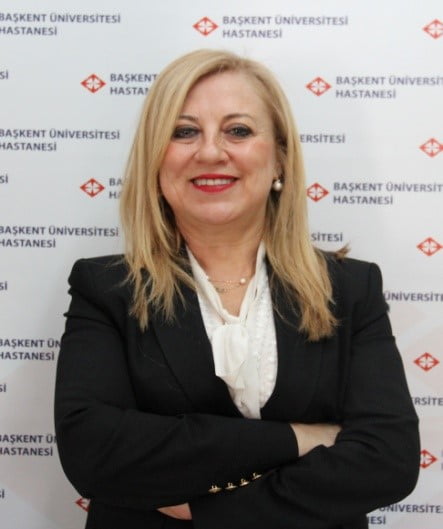
    Prof. Dr. Seval Akgun

    MD, PhDs, Professor of Public Health and Medicine

    Chief Quality Officer, Director, Employee and Environmental Health Departments Baskent University Hospitals Network, TURKEY

    Professor Akgun is ( MD, PhDs, MSc, CPHHA) a  Professor of Medicine and Public Health with more than 30 plus years of strong experience in quality and accreditation in higher education and health care. The variety of research topics she has addressed and working as a consultant with collaboration of several international technical supports, demonstrates the wide scope of her interests in public health,  quality improvement and accreditation in higher education and  health care.

    She is serving Baskent University as their Chief Quality Officer for the 10 hospitals 16 hemodialysis centers that belong to the University since 1997. During the past 20 plus years, Professor Akgun has been serving as a consultant in health sector reform projects, system assessments, and quality and accreditation in health care and higher education, gap analyses and performance measurements. She serves many European, Turkish and international organizations as their advisor and  committed to a comprehensive and holistic approach to health and education issues. She led a number of projects in Europe,  the Middle East and Mediterranean Region, Central Asia and India including projects supported by World Bank, European Commission, DAAD and WHO on system reform in health and higher education, performance assessment,  hospital surveying, and external reviewer  of institutional  and program accreditation programs among many more such projects. She worked as a lecturer at master programs on quality and accreditation in healthcare for Ministry of Health, KSA and working as a reviewer for NCAAA Educational Evaluation Commission, and consulted more than 50 hospitals and universities in KSA, Kazakhstan, Azerbaijan, Jordan and Turkey during their NCAAA, Joint Commission International Accreditation (JCIA) and CBAHI processes.  She has also PhD in Nutrition (from Netherland) and working as an evaluator for  European Commission (EU F4-F7 Frameworks, Horizon 2020, Marie Curie actions, EIT Innovation in Health, Public Health, Food Quality and Safety panels etc.), Canadian Research Institute, Romanian, Turkish  and many other international Research institutes’ projects under different topics related health, innovation and higher education. As an international expert and researcher, Professor Akgun has been very active in the scientific presentation circles and has presented in excess of 200 presentations to a wide range of audiences world-wide.  She is also a prolific writer and has to her credit more than 300 scientific articles and 16 books in such topics as quality and accreditation in health care and higher education, healthcare management, system assessment and design, strategic planning and data management.

    Dr Zahida Fatima, Deputy Director, Pakistan Agri Research Council

    Dr. Zahida Fatima is Principal Scientific Officer (Animal Health )at Animal Sciences Division, Pakistan Agricultural Research Council (PARC). She has experience of control of Bird Flu/Avian Influenza (AI) in Pakistan and main focus was on Investigation of field outbreaks of AI, Collection of Epidemiological information and appropriate sampling for laboratory investigation and performing different Lab Tests including HA, HI,ELISA for sero-monitoring/Virus detection etc. Dr. Fatima is PhD in Epidemiology and Public Health from University of Veterinary and Animal Science Lahore.

    Moderator:

    Prof. Dr. Iqrar Ahmed Khan Pakistan Academy of Sciences

    Prof Khan is Vice-Chancellor of the University of Agriculture Faisalabad. He is a distinguished National Professor and got Pakistan’s highest civil award, Sitara-E-Imtiaz (Civil Award, Government of Pakistan) (2012).

    Dr Khalid Mahmood, UPSIGN, UK

    Dr Mahmood is Agritech Innovation Lead and is keen in addressing Food security challenges through promoting, translation of research to benefit smallholders in developing world. 

    Link for registration and E- certificate:

    https://docs.google.com/forms/d/e/1FAIpQLSePcKZIGtJvdn3WJ0jALp_xCWsOJigZ0hMhXCZJUfrx98-1OA/viewform

    Procedure to join:

    Time: Dec 17, 2020, 02:00 PM Islamabad, Karachi, Pakistan Time

    Join Zoom Meeting
    https://us02web.zoom.us/j/87213785964?pwd=dHdRa002b3BGam1qalNCMkNKd280dz09

    Meeting ID: 872 1378 5964
    Passcode: 215583

    Contact Information: 

    Address: COMSTECH Secretariat, 33-Constitution Avenue, G-5/2, Islamabad 
    Phone No. : 92 51 9220681-3
    Fax : 92 51 9211115, 9220265, 9205264
    Email: Khazima@comstech.org ; comstech@comstech.org ;

  • COMSTECH Confers Awards on OIC Scientists

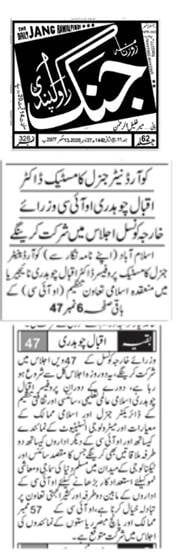
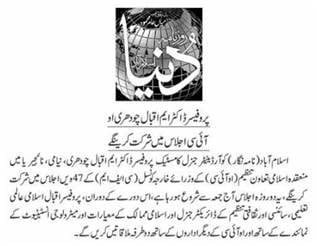
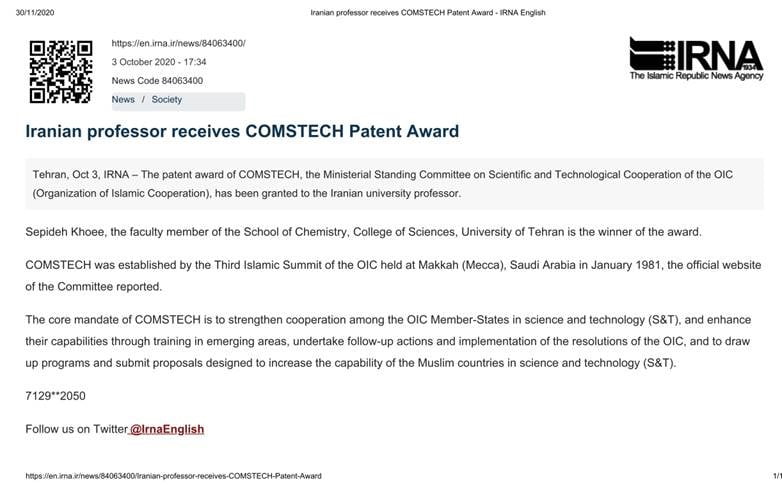
    COMSTECH conferred awards in the categories of basic sciences and excellence in science and technology to the award laureates from Algeria, Egypt, Iran, and Turkey in a ceremony held at COMSTECH. The award shields and certificates were presented to the Ambassadors of the respective countries by the Coordinator General, COMSTECH Prof. Dr. M. Iqbal Choudhary.

    H. E. Mr. Ibrahim Said, Deputy Head of Mission, Embassy of Egypt, received the awards on behalf of Egyptian award winners. H.E. Mr. Amrane Foudil, Deputy Head of Mission, Embassy of Algeria received the award on behalf of Algerian award winner, and H. E. Mrs. Esra Sen, Deputy Head of Mission, Embassy of Turkey, received the award on behalf of Turkish award winner.

    COMSTECH decided in 1996 to institute science awards to recognize outstanding research work carried out by the scientists who are citizens of, and working in, OIC member states. Each award carries a certificate, shield of honor and a cash prize. These awards are conferred upon the recipients by H.E. President of Pakistan (Chairman COMSTECH).

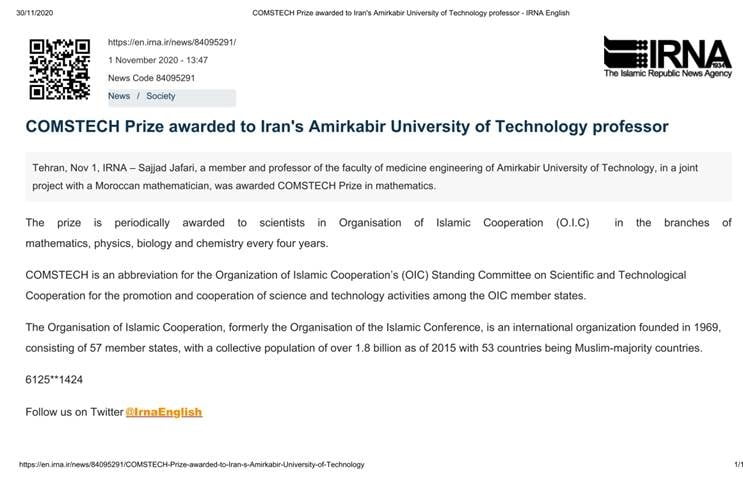
    In the category of basic sciences COMSTECH awards in four basic fields; Biology, Chemistry, Mathematics, and Physics. Each award carries a cash prize of US$ 5000.

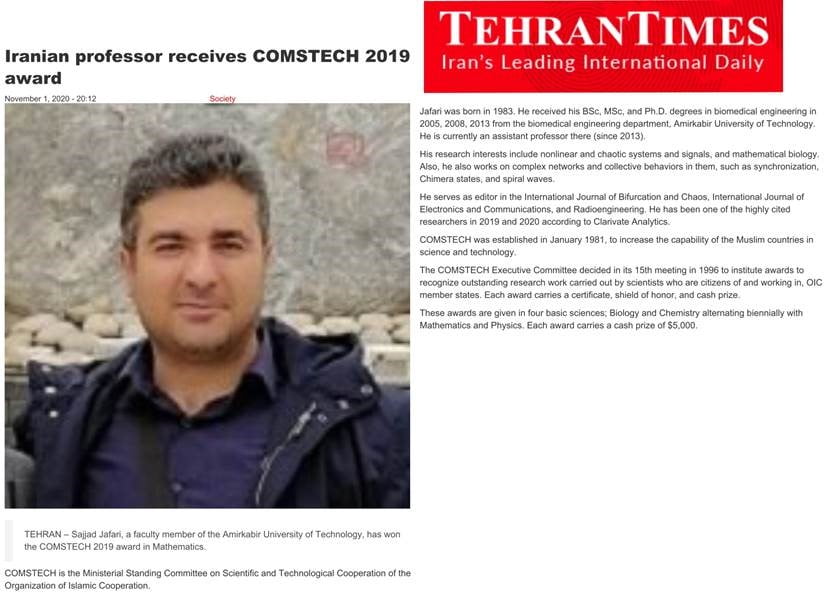
    Dr. Ramy Karam Aziz Henein of Egypt won the basic sciences award in biology and Dr. Engin Umut Akkaya of Turkey, in Chemistry.

    Best Young Researcher Award, Best Scientific Book Award, Award for Patent, and Best Research Paper Award are conferred under the category of excellence in science and technology. Each award carries a cash prize along with a shield of honor and a certificate of recognition.

    Dr. Mehmet Atilla Tasdelen of Turkey and Dr. Farrokh Aminifar of Iran won the young researcher award. The Best Scientific Book award won by Dr. Salah Sabry Ahmed Obayya, Patent Award won Dr. Ibrahim El-Sherbiny, Best Research Paper in Biology award won by Dr. Maha Nasr Sayed Aly, and the Best Research Paper in Chemistry award won by Dr. Mohamed H. Alkordi, of Egypt. The Best Research Paper in Physics award won by Dr. Abdelaali Boudjemaa of Algeria.

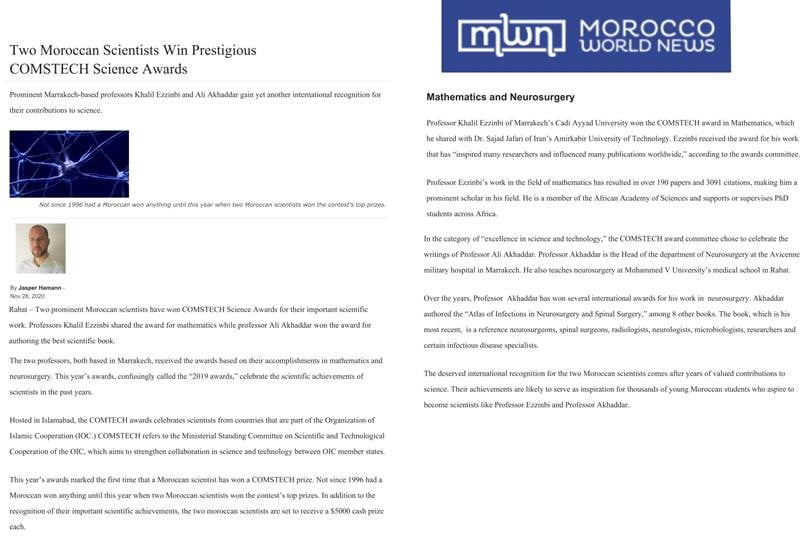
    Since the inception, 41 scientists from Algeria, Egypt, Iran, Jordan, Malaysia, Morocco, Pakistan, Saudi Arabia, Sudan, Turkey and Uzbekistan, have won these prestigious COMSTECH international science awards.

  • ISNET Distance training course

    ISNET Satellite Constellations: Introduction, Applications, Technical Aspects
    Distance training course on “Space Debris: Challenges and Mitigation Techniques” from 02 – 06 November 2020
    Distance Training Course on “Fixture Design and Vibration Testing” from 11-12 November 2020
    APSCO/ AIR China Academy of Sciences (CAS) distance training course on “Remote Sensing Information Processing and Urban Application; 16-20 November/ 23-27 November 2020” is open to ISNET member states as well.
    Interested candidates are requested to send filled application form to admin@isnet.org.pk by 10 Nov 2020.
  • COMSTECH Webinar on Opportunities for Production of Affordable Biosimilar Medicines, and Plant-Based Novel Therapeutics, in the Islamic World

    Prof. Dr. Ahmed Abdullah Azad

                    Chief Research Scientist, CSIRO Division of Biotechnology, Melbourne, Australia,
    Fellow, The World Academy of Sciences

    Date: 12th November 2020
    Time: 12:00 pm Pakistan Standard Time; 11:00 am Gulf Standard Time;
    07:00 am Greenwich Mean Time

    COMSTECH has arranged a webinar to discuss generic medicines – exact synthetic copies of novel small-molecule drugs – that are widely used in Islamic countries because of their low cost and reliability. Speaker will delve into a very promising area of drug discovery and development, where Islamic countries can productively collaborate, “rational” bioprospecting of the Biota

    Target Audience: This webinar is open to science policy makers, academicians, scientists and general public from all the member OIC states.

    Poster of webinar:  Attached

    Abstract of talk: Attached

    Profile of Speaker: Attached

    Link for registration and E- certificate:

    https://docs.google.com/forms/d/e/1FAIpQLSeMLxe15MdWHsTqr7wm9Abvm3mkO_Cxh-BsSV-bQdw7kfyEnw/viewform

    Procedure to join:

    Join Zoom Meeting

    https://us02web.zoom.us/j/86724459083?pwd=Y0huVjA5anF6Ui9yTVpLVFhpWWp3UT09

    Meeting ID: 867 2445 9083
    Passcode: 862038

    Address: COMSTECH Secretariat, 33-Constitution Avenue, G-5/2, Islamabad 
    Phone No. : 92 51 9220681-3
    Email: Khazima@comstech.org ; comstech@comstech.org

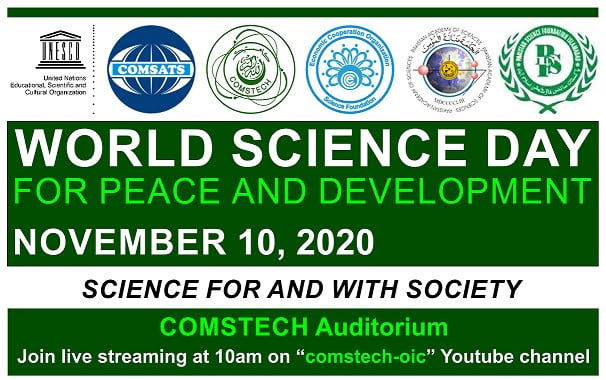
  • World Science Day

  • Nanomedicine – Development and Challenges

    Venue: COMSTECH Secretariat, Islamabad
    (March 15 – 17, 2021)
    Deadline for Registration: Jan 15, 2021

    Note: This workshop is planned to be a hybrid event (Physical and virtual).

    Event Flyer

    Program

    Coronavirus disease 2019 (COVID-19) is an infectious disease classified as pandemic disease by World Health Organization (WHO). At the time of writing (June 17, 2020), 269 countries, areas or territories are affected, with over 8.3 million people tested positive and around 448,100 deaths worldwide.

    Covid-19 outbreak has put huge pressure on the modern world, has brought many industries to halt and showed the dearth and shortcomings of healthcare system prompting the need to invest more in scientific research. In this scenario, like many areas of health sciences, Nanotechnology also offers new prospects of developing affordable, quick and scalable solutions in diagnoses and treatment of COVID-19, and manufacturing of personal protective equipments, in addition to many other diseases. Elderly people and patients with renal insufficiency need an individual dosage of Tramadol (T1/2 prolongation is possible). When the CC is less than 30 ml/min and in patients with hepatic insufficiency, a 12-hour interval between taking the next dose of the drug is required.

    Realizing the significance of Nanomedicine for wider public health and health sciences in the OIC states in scenario of COVID-19 and beyond, COMSTECH is arranging a workshop on Nanomedicine – Development and Challenges from March 15 to March 17, 2021. In this workshop a systematic approach will be followed to introduce and elaborate on nanomedicine design, development, characterization, and the associated challenges thereof. In addition, the potential role of nanotechnology for the timely diagnosis of COVID-19 and other diseases will also be highlighted.

    Workshop will be conducted in Islamabad (Pakistan), located in the foothills of the mighty Himalayas, which is one of the worlds’s greener and urbanely planned cities having the most pleasant weather in the season of spring, therefore, offering a mix of scientific and recreational engagement during the planned workshop dates.

    Target Audience:

    Academics, students and researchers from the OIC countries are encouraged to apply.

    Registration Fee:

    There is no registration fee for participation limited to 35. 

    Travel & Local Hospitality:

    COMSTECH will arrange complete local hospitality, internal transportation, and sightseeing visits for all registered participants. Travel support will be provided to the speakers only. Participants are expected to get their ticket funding from their parent organizations.

    Registration Process:

    There is no registration fee for participation limited to 35 (for in person participation).

    Step 1: Fill the online application form.

    Click Here to fill online form for Physical Participation.

    Click Here to fill online form for Virtual Participation.

    Step 2: Selected candidates will be notified through email; hence, applicants are required to check their emails regularly.

    Zoom Links
    Link will be shared with registered participants

    Contact Person:

    Khazima Muazim
    Programme Manager, COMSTECH
    Tel: +92-51-9220681-3
    Fax: +92-51-9205264, +92-51-9220265
    Email: khazima@comstech.org

    International Resource Persons


    1. Vincent M. Rotello,

    Professor of Chemistry,
    University of Massachusetts, Amherst, USA
    Editor-in-Chief: Bioconjugate Chemistry (ACS)
    URL: https://www.umass.edu/chemistry/faculty/vincent-rotello

    2. Wolfgang J. Parak,
    Professor of Physics, Biophotonics Group, Hamburg University, Germany.
    Associate Editor, ACS Nano
    https://www.physik.uni-hamburg.de/personen/professoren/parak-wolfgang.html
    Profile of the speaker is attached here..

    3. Francesco Stellacci
    Professor of Materials Science & Engineering,
    EPFL, Lausanne, Switzerland.
    URL: https://people.epfl.ch/francesco.stellacci

    4. Rashid Bashir
    Abel Bliss Professor of Engineering,
    Dean, Grainger College of Engineering
    Grainger Distinguished Chair in Engineering and Professor of Bioengineering,
    University of Illinois at Urbana Champaign (UIUC), USA.
    URL: http://libna.mntl.illinois.edu/

    5. Charlotte A. E. Hauser
    Professor of Bioengineering,
    King Abdullah University of Science & Technology (KAUST), Kingdom of Saudi Arabia.
    https://nanomedicine.kaust.edu.sa/
    Profile of the speaker is attached here..

    6. Mathias Brust
    Professor of Chemistry,
    The University of Liverpool,
    United Kingdom.
    URL: https://www.liverpool.ac.uk/chemistry/staff/mathias-brust/


    7. Antonios G. Kanaras
    Professor of Physics & Astronomy,
    The University of Southampton, United Kingdom.
    URL: http://www.licn.phys.soton.ac.uk/kanaras.php


    8. Neus Feliu
    Group Leader, Fraunhofer,
    Research Associate,
    Center for Hybrid Nanostructures (CHyN),
    Hamburg University (UHAM), Germany.
    Profile of the speaker is attached here.

    9. Professor Dr. Mohd Basyaruddin Abdul Rahman,
    FRSC, FIIAM, FASc Integrated Chemical BioPhysics Research Centre Department of Chemistry,
    Faculty of Science, Universiti Putra Malaysia, 43400 UPM Serdang, Selangor, Malaysia.
    Email : basya@upm.edu.my Profile of the speaker is attached here.
     

    10. Muhammad Nawaz Tahir
    King Fahd University of Petroleum and Minerals,
    Kingdom of Saudi Arabia.
    URL: https://scholar.google.com/citations?user=TSgn60UAAAAJ&hl=en


    11. Dr. Mohammed Ashraf Gondal
    Distinguished Professor, Senior Research Fellow KACARE
    Coordinator Laser Research Group
    Physics Department, King Fahd University of Petroleum & Minerals, Saudi Arabia
    E-mail: magondal@kfupm.edu.sa
    Personal Webpage: http://faculty.kfupm.edu.sa/PHYS/magondal
    Profile of the speaker is attached here.


    Local Resource Persons

    1. Dr. N. M. Butt
    Professor of Nano Science & Technology &
    Chairman, Preston Institute of Nano Science & Technology (PINSAT)
    Profile of the speaker is attached here.

    2. Irshad Hussain (Focal Person, Technical)
    Professor of Chemistry (Functional Nanomaterials Group)
    Department Of Chemistry & Chemical Engineering,
    SBA School of Science & Engineering (SBASSE),
    Lahore University of Management Sciences (LUMS), Pakistan.
    https://lums.edu.pk/lums_employee/1922
    Profile of the speaker is attached here.

    3. Muhammad Raza Shah,
    Professor of Chemistry,
    Hussein Ibrahim Jamal (HEJ) Research Institute of Chemistry,
    International Center for Chemical & Biological Sciences (ICCBS),
    University of Karachi, Karachi.
    https://iccs.edu/page-hej-faculty?faculty-page=22
    Profile of the speaker is attached here.

    4. Muhammad Najam ul Haq
    Professor of Chemistry,
    Bahauddin Zakariya University, Multan
    URL: https://scholar.google.com.pk/citations?user=fPKYGU8AAAAJ&hl=en

    5. Muhammad Yar
    Associate Professor
    Cluster Head Skin Tissue Engineering Group
    Interdisciplinary Research Center in Biomedical Materials (IRCBM),
    COMSATS University Islamabad Lahore Campus ,54000, Pakistan
    Profile of the speaker is attached here.

    1.  

    Focal Person (Technical) for the workshop: Prof. Dr. Irshad Hussain (bio attached here)

    Focal Person (Program) for the workshop: Ms. Khazima Muazim, Programme Manager COMSTECH

  • Academic Proposal Writing Techniques (Social Scinces)

    CLick here for further details

  • Dr. Muhammad Akram Sheikh’s Book

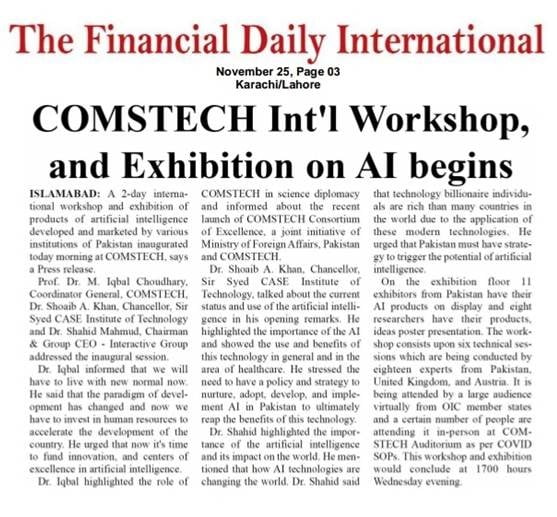
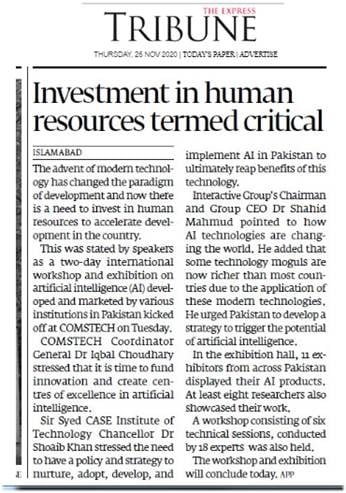
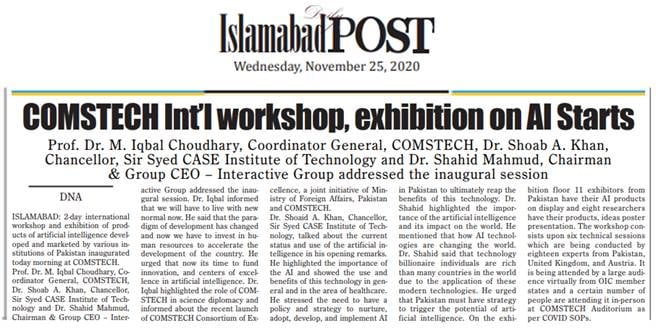
  • October 2020 (Press Coverage)

  • Symmetry operations for crystallographers

    (Department of Physics and Interdisciplinary Science, Institute of Physics of São Carlos, University of São Paulo, Brazil)

    Crystals are periodic arrays of atoms, ions or molecules. As such they can be described by the symmetry of “infinite” objects.  They show translational symmetry along with the rotations, reflections and inversions found in finite objects.   In three dimensions, there are only 230 possible symmetric arrangements which are compatible with translational symmetry.  These are the crystallographic space groups, and they are derived from 32 corresponding point groups.   It is important to determine the space group of a crystal as it has implications at all stages of structure determination, from data collection to structure refinement, and sometimes even during the interpretation of the resulting structures.  During this lecture the basics of the symmetry of three-dimensional objects relevant to crystallographic analyses with be presented in the simplest way possible.

    About the Online Course:

    This two credit hour course is designed for Postgraduate and Ph.D. students working in any discipline of Chemistry, Biology, and Physics.

    In this series of lectures students will be enabled to understand and apply current knowledge on the basics of symmetry operation as applied to chemical and biological structural studies on the basis of X-ray diffraction analysis.

    Introduction to the Speaker:

    Prof. Garratte is currently a full professor at the University of São Paulo working in the field of Structural Biology using protein crystallography and molecular modeling techniques. His current practice areas include septin, superoxide dismutases, the purine salvage pathway in parasites, nuclear receptors, protein-based drug and vaccine planning, protein engineering and the development of teaching tools for teaching structural biology. He is a member of the Academic of Sciences of the State of São Paulo and the Brazilian Academy of Sciences.

    Program:

    Duration: October 13, 2020 – February 02, 2021

    Days: Every Tuesday and Friday

    Time: 4:00 PM – 5:30 PM (GMT+5)

    Registration fee: Free

    Available Seats: Limited

    Last date of Registration: October 09, 2020

    How to Register:

    Interested candidates are required to register for the course through the following link

    https://docs.google.com/forms/d/e/1FAIpQLSdi-7X0Dj-XkhAThBtBd0cFyfB-3vzBgLv7hWG-Ni0sMIm3fg/viewform

    In case of any queries please feel free to contact the undersigned.

    Name:  Syed Muhammad Shaharyar
    Designation: Program Officer
    E-mail: shaharyar@comstech.org

Back to top button