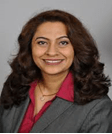
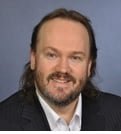
H.E. Prof. Dr. M. Iqbal Choudhary, Coordinator General COMSTECH met with Mr. Shoaib Ahmed Siddiqui, Federal Secretary, Ministry of Information Technology and Telecommunications of Pakistan on Thursday, 4th June, 2020 in his office. The proposals of joint collaborative activities were discussed including;
National Exhibition on AI and IT Products for Health Care
Internet of Things (IoT) in Health Care – Digital Information
Telemedicine to Combat Future Pandemics
The Federal Secretary, Ministry of IT & Telecommunication expressed his keenness in the proposal and assured the Coordinator of his support.
Title: “Pakistan Randomized and Observational Trial to Evaluate Coronavirus Treatment (PROTECT)” By Prof. Dr. Ghazna Khalid
Date and Time: 5th June 2020, 3:00 pm PST
Coronavirus disease or Covid-19 is an infectious disease caused by a novel Coronavirus i.e. Severe Acute Respiratory Syndrome Coronavirus 2 (SARS-CoV-2). Coronaviruses are a large family of viruses, causing illness in humans and circulate among animals such as bats. The disease spreads primarily from person to person contact, through small droplets which are expelled when a person with Covid-19 coughs, sneezes, or speaks.
The disease was first identified in December 2019 in Wuhan, China and has since spread globally, resulting in the ongoing 2019–20 Coronavirus pandemic. Robust response and scientific efforts are underway to curb this menace. These efforts are centred around conducting clinical trials to evaluate drugs and vaccines against this disease. In Pakistan, only a handful of clinical trials are underway. Pakistan Randomized and Observational Trial to Evaluate Coronavirus Treatment (PROTECT) is one of them.
COMSTECH has arranged web based seminar to discuss clinical trial PROTECT and its significance for wider Public Health and Health Sciences in Pakistan. COMSTECH is exploring ways to extend this trial to other OIC member states, as a strategy to help with the humanitarian fight against Covid-19.
Professor Dr. Ghazna Khalid, member of Scientific Task Force established by the Federal Ministry of Science & Technology, Government of Pakistan on PROTECT trial is invited to deliver this talk. This Task Force is mandated to plan, conduct, and disseminate findings of PROTECT in scientific interest to reduce the impact of devastating pandemic of SARS-Cov-2 in Pakistan.
Speaker’s Profile:
Professor Dr. Ghazna Khalid is a Pakistani technocrat, social activist, an internationally acclaimed gynaecologist and health expert. She is advisor on maternal and child health to the KPK Department of Health. She is a technical advisor to the Federal Ministry of National Health Regulations and Services in Islamabad. She is serving as a member on the Covid-19 task force in the Federal Ministry of Science and Technology.
Dr. Ghazna Khalid brings more than 20 years of experience working with development organizations and international donor agencies to improve health, maternal and newborn health, and pregnancy outcomes in developing countries.
Dr Ghazna has a double doctorate. She holds a Medical degree (MBBS) from Imperial College London and PhD Doctorate in Research from University College London UK. She is a member of the Royal College of Obstetricians and Gynaecologists MRCOG London UK.
Organized by: COMSTECH Secretariat, Islamabad in Collaboration with the International Center for Chemical and Biological Sciences (ICCBS) Karachi, Pakistan.
December 14-15, 2020
Cell culture is one of the major approaches used in cellular and molecular biology, providing an excellent model system for studying the physiology and biochemistry of living cells.
Cell culture entails to the removal of cells from an animal or plant and their successive growth in a favorable artificial environment. The cells may be removed from the tissue directly, or they may be derived from a cell line and disaggregated by enzymatic or mechanical means before further in vitro cultivation.
The workshop will provide a solid basis for the understanding of the growth of animal/human cells, with formal lectures and laboratory exercises. Through integrated learning methods, utilizing hands-on training to reinforce lecture material, participants will learn the biological basis and relevance of the process of cell culture techniques. The training program will facilitate the trainees to translate these techniques according to their specific research needs.
WHO SHOULD ATTEND?
The workshop is designed to address the interest of scientists and research scholars from different fields of biological sciences including molecular biology, biochemistry, genetics, and biotechnology.
WORKSHOP CONTENT
The program includes a series of online lectures and hands-on sessions on the following topics:
Preparation and types of media
Maintenance of cells in culture
Cell passaging and seeding in plate
Cryopreservation
RESOURCE PERSONS
Dr. Sumbla Farooq Sheikh: Dr. Sheikh is currently working at the Institute for Virology und Epidemiology of Viral diseases, University Hospital, Tübingen University, Germany. Her research primarily focuses on the design and development of contrast agents for the early detection of cancer with special focus on; glioblastoma and prostate carcinoma. She has a wide experience in the field of cellular and molecular studies involving cell culture-based assays.
Dr. Alexander Sturzu: Dr Sturzu is working at the Department of Neuroradiolgy, University Hospital, Tübingen University, Germany. His main research interests are design of novel imaging compounds for tissue specific imaging and novel anticancer agents. He is well versed in foundational molecular biology and his expertise is widely based on cell culture and cell culture based assays.
12:10-12:20 Welcome Address by Prof. Dr. M. Iqbal Choudhary
12:20-13:30 Lecture 1 entitled, “Introduction to mammalian cell culture and cell passaging” by Dr. Sumbla Farooq Sheikh, University of Tübingen, Tübingen, Germany
13:30-14:30 Practical Session (Cryo-revive, trypsinization and passaging)
Tuesday, December 15, 2020
12:00-13:00 Lecture 2 entitled, “Treatment of cells, management of contamination and troubleshooting” by Dr. Alexander Sturzu, University of Tübingen, Tübingen, Germany
13:00-14:30 Practical Session 2 (Cell counting, plating and cryo-preservation)
His Excellency the Secretary-General of OIC, Dr. Yousef bin Ahmad Al-Othaimeen visited COMSTECH Secretariat Islamabad on August 9, 2017. His delegation was received by the COMSTECH team led by Dr. Shaukat Hameed Khan, Coordinator General COMSTECH.
Secretary General was briefed on COMSTECH’s activities and programs. Federal Minister for Science and Technology Mr. Rana Tanveer Hussain and Secretary for Ministry of Science and Technology Mr. Fazal Abbas Maken, also attended the event.
Later the Secretary General along with Minister and other dignitaries attended dinner hosted by Coordinator General Dr. Shaukat Hameed Khan.
June 19, 2020: Dr. Abdur Rashid, Director, DRAP and Dr. Ghazna Khalid Siddiqui MNA and Member, Task Force of Ministry of Science and Technology of Pakistan on COVID-19 had meeting with Coordinator General COMSTECH Prof. Dr. M. Iqbal Choudhary, today morning in his office.
“Sustainable Development Of Drylands In The Post 2015 World”
August 21-24, 2016
Alexandria, Egypt
The 12th International Dryland Development Conference with the theme “Sustainable Development of Drylands in the Post 2015 World” was held from 21 to 24 August 2016 in the Alexandria Library, Alexandria, Egypt. It was co-sponsored by the Arid Land Agricultural Graduate Studies & Research Institute (ALARI), Egypt, Arid Land Research Centre (ALRC), Japan, International Center for Agricultural Research in the Dry Areas (ICARDA), Centre International de Hautes Etudes Agronomiques Méditerranéennes (CIHEAM), Cold and Arid Regions Environmental and Engineering Research Institute of Chinese Academy of Sciences(CAREERI), China, the Agricultural Research Center (ARC), Egypt, JICA (Japan International Cooperation Agency), JIRCAS (Japan International Research Center for Agricultural Research), and Desert Research Center (DRC), Egypt. The International Fund for Agricultural Development (IFAD), Food and Agriculture Organization of the United Nations (FAO), Commission on Science & Technology (COMSTECH), ECO Science Foundation (ECOSF), and other international and national organizations supported the Conference.
Themes of the Conference:
Application of new technologies for the improvement of stress (drought, heat, cold and salinity) resistance of crops for dry areas.
Sustainable management of scarce water resources.
Agronomic and crop improvement interventions for sustainably enhancing agricultural productivity of small-holder farmers in dry areas.
Soil health and land use constraints for agricultural productivity in dry areas and their management.
Soil erosion and desertification processes and control.
Biodiversity conservation, and prevention of deforestation.
Sustainable management of productivity of rangeland and livestock in dry areas.
Arid lands communities, their indigenous knowledge and heritage, and socio-economic studies. Poverty alleviation, creation of job opportunities and minimizing outmigration.
Renewable energy resources (wind, solar, biogas) for sustainable arid land community settlement.
There were six plenary sessions, three specialized group sessions, and eleven concurrent sessions on nine themes. The Conference was attended by 201 participants from 25 different countries.
Contact Person
Prof. Abdel El-Beltagy
Chair of the International Dryland Development Commission (IDDC)
Egyptian Academy of the Scientific Research & Technology
This conference was the first major event in the history of the University of Malakand marking a first step towards institutional growth and maturity. A large number of delegates both national and international participated in this conference. International participants were from Turkey, China, Sweden, Jordan, Malaysia, USA and Qatar. It provided a really good opportunity for extensive discussions leading to new ‘social contracts’ for chemistry.
The participants looked through where chemistry stands today and where they are heading, what their social impact has been and what society expects from them.
They also discussed what efforts should be invested to make chemistry advanced as far as expectations and the challenges posed by human and social development are concerned.
It provided an opportunity to the participants for collaborations extending to both national and international levels. Some of the research papers presented during this conference were selected for publication in the special issue of “The Journal of the Chemical Society of Pakistan”.
The University of Malakand is situated in a conflict zone which has been severely affected and people were scared to visit the area. This conference broke the ice of disconnection and made it possible to bring national and foreign delegates to witness the prevailing peace in the area.
List of speakers for Plenary and Invited/Keynote lectures
Prof. Dr. Muhammad Rasul Jan
Vice Chancellor, University of Peshawar, Pakistan
Nanomaterials and Modified Materials as A Tool for Signal Amplification and Detection
Prof. Dr. Mustafa Soylak
Faculty of Sciences, Department of Chemistry, Erciyes University, 38039, Kayseri-Turkey.
Modern Trends in Solid Phase Extraction of Trace Elements: Preparation and Characterization of Nanosized Materials
Prof. Dr. Hesham R. El-Seedi
Division of Pharmacognosy, Department of Medicinal Chemistry, Uppsala University, Biomedical Centre, Box 574, SE-75 123, Uppsala, Sweden.
The Traditional and Prophetic Medicines Are Unraveling Another Mystery of the Mother-Nature
Calcium Supplements: As an Additional Source of Lead Contamination and Mineral Contents
Prof. Dr. Tufail Hussain Sherazi
National Centre of Excellence in Analytical Chemistry, Univ. of Sindh, Jamshoro, Pakistan
Application of Nuclear Magnetic Resonance Spectroscopy for Edible Oils Analysis
Dr. Syed Ghulam Musharraf
International Center for Chemical and Biological Sciences, University of Karachi, Karachi-75270, Pakistan
Untargeted Metabolomics Snapshot of Cancer Samples for Biomarker Search
Dr. Muhammad Imran
Biochemistry Section Institute of Chemical Sciences University of Peshawar, Peshawar-25120 KP Pakistan
Nuclear Factor-κappa B activation switches all-trans-retinoic acid-induced granulocytic differentiation of promyelocytic leukemia cells to macrophages
Prof. Dr. Jianlong Wang
Collaborative Innovation Center for Advanced Nuclear Energy Technology, INET, Tsinghua University, Beijing 100084, P. R. China
Adsorption of Co(II) by zero valent iron/graphene nanocomposite
Dr. Sami Ullah
Lecturer, School of Physical and Geographical Sciences, William Smith Building WS1.39, Keele University, Staffordshire ST5 5BG, UK
In Situ Denitrification: Methodological Challenges and Spatial Variability in Terrestrial Ecosystems
Prof. Dr. Tariq Yasin
Deputy Chief Scientist, Department of Metallurgy and Materials Engineering, PIEAS, PO Nilore, Islamabad, Pakistan
Radiation Processed Materials and their Applications
Dr. Naila Siddique
Principal Scientist, Chemistry Division, Directorate of Science, PINSTECH, PO Nilore Islamabad 45650, PAEC, Islamabad Pakistan
Essential, Toxic, Rare Earth and High Field-Strength Elements in Multani Mitti Clay Using Instrument
Prof. Dr. Muhammad Makshoof Athar
Director, Institute of the Chemistry, University of the Punjab, Lahore Pakistan.
Modified Carbon Paste Electrode for Detection of Hg(II) in Industrial Effluents
Prof. Dr. Zahid Hussain
Department of chemistry Abdul Wali khan Mardan 23200 Pakistan
Effect of pretreatment on the product distribution of two step catalytic pyrolysis of biomass
Prof. Dr. Mir Munsif Ali Talpur
Director, Institute of Chemistry, Shah Abdul Latif University Khairpur
Dandralenes-Synthesis and Characterization
Dr. Bushra Naseem
Department of Chemistry, Lahore College for Women University, Jail road, Lahore 54000; Pakistan
Interaction between Nitroimidazoles and alcohols: physico-chemical study
Dr. Bushra Munir
Assistant Professor, Applied Chemistry and Biochemistry, GCUF 38000, Pakistan
Total Antioxidant Status and Oxidative Stress in Rheumatoid Arthritis
Dr. Iqbal Hussain
Associate Professor, Department of Chemistry, Islamia College Peshawar 25000: Pakistan
Synthesis, Characterization, Anti-oxidant and Biological Activities of Schiff base Alkylhydrazone
Prof. Dr. Yousaf Al-Hiari
Faculty of Pharmacy University of Jordan, Jordan
Novel heterocyclic carboxamide derivatives as potential antihyperlipidaemic Agents: Indole-2-carboxamides as Model
Prof. Dr. Mansoor Ahmad
Research Institute of Pharmaceutical Sciences, Department of Pharmacognosy, University of Karachi, Karachi-75270
Pakistani Phytomedicines and Their Role in Cuurent Medical System
Dr. Muhammad Raza Shah
ICCBS (H. E. J. Research Institute of Chemistry and Dr. Panjwani Center for Molecular Medicine and Drug Research) University of Karachi, Karachi-75270, Pakistan
Nano-Pores and Supramolecular Chemistry
Prof. Dr. Shazia Anjum
Department of Chemistry, The Islamia University of Bahawalpur, Bahawalpur 63100, Pakistan
Standardization of Anti-Diabetic Medicinal Plants of Cholistan Desert
Dr. Asma Ejaz
Research Scientist III, Joslin Diabetes Research Center/Harvard Medical School, 1 Joslin Place, Boston, MA‐02115
Curcumin; Scientific Description of a Traditional Healing Agent
Prof. Dr. Mohammad Ilyas
NCE in Physical Chemistry, University of Peshawar
Green and Sustainable Catalysis
Prof. Dr. Hasan Mahmood Khan
NCEPC University of Peshawar, Peshawar 25120.
Advance Oxidation Processes (Aops) For the Treatment of Some Pesticides and Persistant Organic Pollutants (Pops) In Water
Prof. Dr. Muhammad Nasiruddin Khan
Department of Chemistry, University of Karachi, Karachi 75270, Pakistan
Feasibility studies to replace the synthetic surfactant with bio-surfactant for green environment
Prof. Dr. Haq Nawaz Bhatti
University of Agriculture, Faisalabad, Pakistan
Green and sustainable technologies for remediation of dyes containing wastewater
Dr. Muhammad Akhyar Farrukh
Associate Professor, Nano-Chemistry Lab 54000, Organization: GC University Lahore, Pakistan
Evaluation of optical, catalytic and thermodynamic properties of metal oxides nanocomposites
Contact Person
Prof. Rashid Ahmad
Chief Organizer of the Conference
Vice President
Chemical Society of Pakistan
Dept. of Chemistry
University of Malakand, Chakdara, Dir (L), Khyber Pakhtunkhwa
The 6th International and 15th National Conference on Dynamic Trends in Plant Sciences: Fostering the Environment and Food Security was held from 9 to 11 May 2017 at SBK Women’s University, Quetta, Pakistan. It was co-sponsored by COMSTECH.
The conference was a milestone in the history of Baluchistan as being the first one ever to be conducted on this topic. It offered an occasion for the eminent scholars and researchers to present their work. It proved to be a good platform for interaction and collaboration among scholars from various disciplines related to plant sciences and at the same time provided an opportunity of networking and scholarship from renowned experts from multiple fields in the realm of botanical sciences.
A number of international scholars as well as Pakistani scientists from different parts of the country attended this event. In all about 500 scholars, researchers, scientists and students participated. The conference comprised four sessions with three sessions of plenary lectures which covered five themes (listed below). There were 31 plenary lectures, 2 online lectures from UK, and oral and poster presentations in the fields of Biotechnology, Botany, Chemistry, Environmental Sciences and Microbiology. Eleven speakers from Japan, Malaysia, Nigeria, Turkey and UK delivered their lectures along with twenty renowned scientists from Pakistan.
This event provided an excellent opportunity to the participants to share knowledge and exchange their research findings, ideas, experiences and views on different topics in biological sciences. It also introduced the first women’s university in Balochistan at international and national level and acquaint the participants with its current work for advanced research and studies.
THEME- 1: Agriculture and Plant Physiology
Agronomy
Horticulture
Abiotic and Biotic Stresses
Nutrients and Biofertilizers
Plants and Livestock
Food Safety and Security
Plant Breeding and Genetics
Organic Farming and Hydroponics
Plants for Livestock
THEME- 2: Plant Biotechnology, Biochemistry
Bioinformatics and molecular Biology
Tissue Culture
Cell and Molecular Biology
Enzymology
Plantomics
Data Mining, NGS, Algorithm, Database
Phytochemistry and Biotransformation
THEME- 3: Plant Pathology, Microbiology and Disease Management
Mycology
Bacteriology
Virology
Plant Nematology
Plant Disease
Biological and Chemical Control
THEME- 4: Plant Ecology and Environment
Sustainable Development and Applied Ecology
Population, Community, Ecosystem
Ecophysiology
Environmental Pollution
Global Warming
Green Chemistry
Biosafety
THEME- 5: Plant Systematics, Ethnobotany and Biodiversity
Conducted at the National Center for Physics (NCP), QAU, Shahdara Campus
August 01-19, 2017
Summary: The second module was in continuation of the 1st Refresher Courses conducted by NCP in August 2016. The First Module had covered three of the basic areas of M.Sc. or the Senior Level of 4 year BS program. The second module covered the 3 remaining core areas, viz. Quantum Mechanics, Thermal Physics and Mathematical Physics (II). The emphasis of the program was on reviewing main concepts and techniques that students are expected to be familiarized with at the M.Sc. or Senior BS level but unfortunately the trend in most institutions is to derive results and ask for reproduction in the tests and examinations. This course was designed with lectures and tutorials with a heavy bias towards learning how to elucidate concepts and how to apply them to solving problems. The participants consisted of College and young university teachers from all over the country while the teaching faculty comprised experienced and highly dedicated young faulty from QAU, COMSATSIIT, NUST and NCP.
Directors of the Program:
Prof. S. K. Hasanain, Senior Expert COMSTECH and Dr. Mohsin Siddiq, Director Theoretical Physics Directorate NCP
Teaching Faculty:
Mathematical Methods (II)
Dr. Mohsin Siddiq (NCP)
Dr. Waqas Masood (CIIT)
Dr. Abdul Rahman (NCP)
Dr. Ishtiaq Ahmad (NCP)
Quantum Mechanics
Dr. Rizwan Khalid (NUST)
Dr. Muhammad Junaid (NCP)
Dr. Shahin Iqbal (NCP)
Dr. Abid Mujtaba (CIIT)
Thermal Physics
Dr. Syed Khurshid Hasanain
(COMSTECH)
Dr. Naeem Shahid (NUST)
Dr. Mansoor-ur-Rahman (QAU)
Mr. Usman Hassan (NCP).
Summary of Academic Program:
Each working day consisted of 3 lectures each of 1½ hour duration, and one tutorial session of same duration.
Each subject was covered in 30 hours of lectures and tutorials during the three weeks entailing a total of 90 hours of academic work in the course.
The lecture contents were based on the standard texts used for the M.Sc. program at QAU and other local universities.
Assignments were given and feedback provided to participants.
Performance in each subject was assessed by conducting two tests of 45-minute duration each.
Success certificates were awarded to those participants who had obtained 50% marks in the course, on the aggregate.
Participation level:
The activity was adequately attended where the total number of registered participants was fifty (50), with twenty-eight (28) being male and twenty-two (22) females. Additionally, a number of students from QAU and NCP Faculty attended though not on a regular basis.
All the registered participants were teachers at the BS or M.Sc. level
All the out-station participants were provided boarding and lodging at NCP
The demographic distribution of participants was as under:
Punjab 24
Khyber Pakhtunkhwa 10
Sindh 02
Balochistan 04
Azad Jammu and Kashmir 05
Federal Capital 05
Total 50
Contact Person
Manager (Scientific Event Management)
Collaborations & Academic Activities Department (CAAD)
National Centre for Physics
QAU Campus, Shahdra Valley Road, Islamabad, Pakistan
Summary: There were about 50 lectures and about 100 poster presentations with over 170 participants. Twelve eminent international scientists delivered 24 plenary and research lectures. Participants from Russia, Georgia, Iraq, Poland, Germany, Switzerland, Tunisia, China, Canada, UK, France, India, USA, Japan, Korea, Taiwan and Iran attended this conference.
The lecture of Nobel Laureate Prof. K. Von Klitzing was highly appreciated by the participants. One important event in the conference was the recognition given to young scientists and to poster presentations. Young Researcher Awards were given to two young researchers one in magnetism and the other in superconductivity and four Best Poster Awards to two each in magnetism and superconductivity. The Awards Committee also awarded one distinction to a highly accomplished young scientist.
Two highly regarded invited speakers, Prof. Lu Yu from Chinese Academy of Sciences and Prof. Michael Farle from University of Duisburg, Essen, Germany accepted to become Adjunct Professors of the Department of Physics at Sharif University of Technology starting from January 2018.
COMSTECH was one of the supporters of the conference.
Details of Keynote Speakers:
1. K. Von Klitzing
Max-Planck-Institut für Festkörperforschung, D-70569 Stuttgart, Germany
Plenary: A New International System of Units in 2018! How my Nobel Prize Contributed to this Development?
Research: Exciton Condensation in Quantum Hall Bilayer – A Superfluid Ground State
2. K. Shimizu
KYOKUGEN, Center for Science and Technology under Extreme Conditions, Osaka University, Toyonaka, Osaka 560-8531, Japan
Plenary: Superconducting Elements under High Pressure
3. F.S. Razavi
Department of Physics, Brock University, St. Catharines, ON L2S 3A1, Canada
Plenary: Rare Earth Chromium Oxides Revisited, Special Case: Structural, Magnetic and Thermal Studies of Ce1-xEuxCrO3 Nano-Powders
Research: Isotope Effect on Superconductivity and Optical Properties of Pyrochlore Cd2Re2O7
4. L. Yu
Institute of Physics, Beijing, China
Plenary: Metal-Insulator Crossover and Non-BCS Superconductivity in Underdoped Cuprates
Research: Relation between Exchange (Braid) and Exclusion Statistics in Low-Dimensional Systems
5. M.I. Eremets
Max Planck Institute of Chemistry, Mainz, Germany
Plenary: High Temperature Conventional Superconductivity
Research: Phase Diagram of Hydrogen at Pressures up to 470 GPa and Low Temperatures
6. H.M. Ronnow
Laboratory for Quantum Magnetism, Institute of Physics, EPFL, Switzerland
Plenary: Quantum Magnetism – Neutrons in the Quasi-particle Zoo
Research: Magnetism with a Twist – Magneto-Electric Skyrmions
7. M. Farle
University of Duisburg-Essen, Germany; Immanuel Kant Baltic Federal University, Russia
Plenary: Functionalized Hybrid Nanomagnets: New Materials for Innovations in Energy Storage and Medical Theranostics
Research: Magnetic Skyrmions in Confined Geometries
8. G. Baskaran
The Institute of Mathematical Sciences Chennai 600 113, India; Perimeter Institute for Theoretical Physics, Waterloo, Ontario, Canada
Plenary: Resonating Valence Bond Theory of Superconductivity-Support from Systems beyond CupratesResearch: Theory of Ultra Low Tc Superconductivity in Bismuth – Tip of an Iceberg?
9. Kh. Zakeri
Heisenberg Spin-dynamics Group, Physikalisches Institut, Karlsruhe Institute of Technology, Karlsruhe, Germany; Max-Planck Institute of Microstructure Physics, Halle, Germany
Plenary: Terahertz Magnonics: Feasibility of Using Terahertz Magnons for Information Processing
Research: Phonon Spectrum of Single-Crystalline FeSe (001)
10. M.K. Wu
Institute of Physics, Academia Sinica, Taipei, Taiwan
Plenary: An Overview of the FeSe-based Superconductors
Research: Modification of Iron d-orbitals in Superconducting FeSe Crystal
11. Sh. Deemyad
Department of Physics and Astronomy, University of Utah, Salt Lake City, UT 84112, USA
Plenary: The Many Faces of the Lightest Metal “LITHIUM” under Pressure
Research: Light Compounds at High Densities: Carbon and below
12. H. Aubin
LPEM, ESPCI Paris, PSL Research University; CNRS; Sorbonne Universités, UPMC University of Paris 6, 10 rue Vauquelin, F-75005 Paris, France
Plenary: Hybrid Semiconducting-Superconducting Systems and Superconductivity at the Anderson Limit
Research: Nernst Effect by Gaussian Superconducting Fluctuations
COMSATS Institute of Information Technology (CIIT) Islamabad in collaboration with the Technical University of Dortmund (TUD), Dortmund, Germany organized an International Mini-School from 4th to 6th October 2017 in Islamabad. List of eminent speakers included those from Canada, Germany, Singapore, Iran, Taiwan, Azerbaijan, China, Turkey and Pakistan. Complete list of speakers is available here
COMSTECH funded travel of the following three speakers from OIC states;
Prof. Kerim R. Allahverdiyev,Azerbaijan National Aviation Academy (ANAA), Bina, Baku, Azerbaijan
Dr. Mehmet Emre Tasgin, Institute of Nuclear Sciences, Hacettepe University, Turkey
Dr. Alpan Bek, Middle East Technical University (METU), Physics Department & GÜNAM, Ankara, Turkey.
Brief profiles of the above three speakers are available here.