Past Events

  • COMSTECH-NTD NETWORK JOINT LECTURE SERIES “Structure-based drug design: Towards new anti-infectives”

    Professor Dr.  Ehmke Pohl

    Biophysical Sciences Institute at Durham University

    Durham, United Kingdom

    Date: February 2nd, 2022

    Time:  3:00 PM Pak time

    Flyer attached

    Our Programme

    NTDs (neglected tropical diseases) are a major health and economic burden in Organisation of Islamic Cooperation (OIC) member states. The control and elimination of NTDs requires both a scale-up and integration of global mass treatment programmes, along with new tools and technologies to tackle these diseases.  COMSTECH, in collaboration with A Global Network for Neglected Tropical Diseases (known as the NTD Network, https://ntd-network.org/), is launching a virtual lecture series.  for researchers across the Moslem world and beyond.  Our programme draws upon expertise from both networks, and offers opportunities to gain or enhance researcher knowledge, skills and connections, all of which help to grow our shared global capacity to tackle these rapidly growing NTDs. 

    • The NTD Network, funded by UKRI’s Global Challenges Research Fund (GCRF), is a consortium of academic researchers from South America, Asia, and the UK, seeking new therapeutic solutions to leishmaniasis and Chagas disease
    • Both COMSTECH and the NTD Network aim to promote global scientific cooperation and build researcher capacity to find new and better therapeutic solutions for NTDs

    This online programme is the first of many COMSTECH-NTD Network joint activities via the COMSTECH platform. 

    Target Audience:

    This webinar is open to academics, scientists and the general public from all OIC member states.  The content is most relevant to scientists interested in NTDs research, and specialised in Microbiology, Genetics, Genomics, Molecular Biology, Molecular Medicine, and Pathology. 

    Speakers Introduction:

    Professor Ehmke Pohl graduated in Chemistry (Diplom) at the University of Göttingen, and finished his PhD in 1994 with a thesis on bioactive peptides with Prof. G.M. Sheldrick. He continued his training in protein crystallography as Ernst-Schering Fellow at the University of Washington in Seattle, USA. In 1999 he joined the EMBL Outstation in Hamburg as independent scientist and Team leader. In 2004 he took up a post as principal beam line scientist at the Swiss Light Source responsible for the Max-Planck Society/Novartis/Hoffmann La Roche beam line. In 2007, he moved back to academia to take up a position as Reader in a joint appointment by the Departments of Chemistry and Biosciences at Durham University. In 2015 he become Co-Director of the Biophysical Sciences Institute at Durham University where he pursues his interests in combining biophysical and structural methods with structure-based drug design to combat infectious diseases.

    Register with us to attend this meeting:
    Register at: https://forms.gle/ppVtofLdn4GzvBca7

    Contact us for further details:
    khazima@comstech.org;  comstech@comstech.org
  • COMSTECH Webinar on “Epigenetics, The immortal kiss of our grandparents”

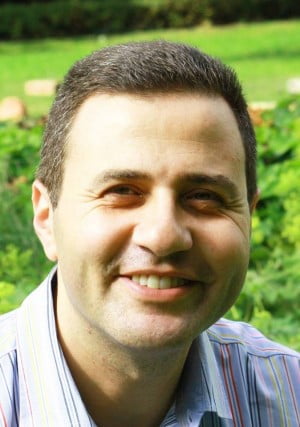
    Prof. Dr. Rana Dajani

    Professor of Biology and Biotechnology at Hashemite University, Jordan

    Date: 25 January 2022

    Time: 3:00 pm Pakistan Standard Time

    Abstract

    This talk is about the intricate relationship between trauma and resilience from a biological point of view. Theory and practice of conducting research within the humanitarian context of refugees in Jordan will be shared. Outlining a journey of discovery from basic surveys to bio markers and beyond.

    Target Audience

    The webinar is open to students, researchers, young scientists, and academicians from the OIC member states and other countries.

    Profile of the Speaker:

    Palestinian-Jordanian molecular biologist, professor of biology and biotechnology at Hashemite University.

    Member of the United Nations Women Jordan Advisory Council

    Recipient of the Jordan’s Order of Al Hussein for Distinguished Contributions of the Second Class.

    Recipient of Library of Congress Literacy Award Best Practices

    Recipient of A Stars Impact Award,

    Recipient of The Synergos Arab World Social Innovators award 2009

    Recipient of A WISE Award

    Flyer of webinar:  Attached

    Register at : https://forms.gle/wyod85b3TtVmZjRm6

    Zoom link for participation will be shared selected participants. Address: COMSTECH Secretariat, 33-Constitution Avenue, G-5/2, Islamabad 
    Phone No. : 92 51 9220681-3
    Email:Khazima@comstech.org ; maham.yamin@comstech.org ;comstech@comstech.org

  • 1st COMSTECH International Virtual Conference of Neuroscience

    Date: February 9-10, 2022

    Venue: COMSTECH Secretariat, Islamabad, Pakistan.

    Introduction to the Field of Neuroscience:

    Neuroscience is one of the most important components of science which covers structure and functioning of the whole nervous system. The field of neuroscience includes basic scientists, neuro-immunologists, neurologists, neurosurgeons, psychiatrist, neuropsychologists, neuro-radiologists, neuro-rehabilitation, and so forth. There are more than 5 million neuroscientists across the globe, mostly located in developed countries. Furthermore, neurosciences contribute to 10% of all research and 20% of all health sciences research; hence, making it a key area of focus.

    Objective:

    The OIC region is vast and diverse, comprising of many developing and under-developed countries which are still in need of skills and knowledge in scientific research for the healthcare sector. This international conference of Neuroscience aims to build capacity of health professionals in neurological care, and to promote networking among experts of OIC countries especially the least developed African countries.

    Target Audience:

    Scientists, researchers, academicians, graduate students, neuroscientists, neurologists, neurosurgeons, psychiatrist, neuro-psychologists, neuro-radiologists from the OIC countries are encouraged to participate.

    Key topics to be covered:

    The workshop will cover the following thematic areas:

    1. Stroke
    2. Epilepsy
    3. CNS infections
    4. Environment and brain
    5. Diagnosis and approach to neurological diseases
    6. OIC collaboration for research network

    Registration Process:

    1. Registration for virtual participation: https://forms.gle/M4neTYtg9wjjtneg8  
    2. Read instructions in the application form carefully and submit a properly filled form.
    3. Selected candidates will be notified through email; hence, applicants are required to check their emails.

    List of Speakers:

    The tentative list of speakers will be uploaded shortly.

    Technical Focal Person:

    Prof. Dr. Muhammad Wasay

    Section of Neurology, Department of Medicine

    Agha Khan University

    Karachi, Pakistan.

    Workshop Coordinators:

    Muhammad Haris Akram

    Program Manager, COMSTECH

    Tel: +92-51-9220681-3

    Email: haris@comstech.org

    Muhammad Haseeb Ahmad

    Program Officer, COMSTECH

    Tel: +92-51-9220681-3

    Email: haseeb.ahmad@comstech.org

  • COMSTECH-ICCBS International Seminar on “Improving Stroke Care in Low and Middle Income Countries”

    Date and Time: January 24, 2022, from 14:00-16:30 (Pakistan Standard Time)

    Venue: International Center for Chemical and Biological Sciences (ICCBS), University of Karachi, Pakistan.

    Overview

    Low and middle income countries comprise 70% of the global population. Whereas, these countries countribute to 80% of world stroke population with stroke being one of the most important causes of death and disability. Importantly, majority of the OIC countries especially the African region falls in this category. However, stroke outcomes could be improved by awareness, training, research and advocacy. This seminar will discuss strategies on decreasing stroke burden, improving stroke care and outcomes in low and middle income countries.

    Target Audience:

    This seminar is open to students, researchers, young scientists, neuroscientists, healthcare personel, and academicians from the OIC member states, and other countries.

    Registration Process:

    1. Registration for Physical Participants: Registration is closed for physical participants.
    2. Registration for Virtual Participants: https://forms.gle/7bMYjxoGGBtCnn4C9
    3. Read instructions in the application form carefully and submit a properly filled form along with your CV. Foreign participants must submit a scanned copy of passport.
    4. Selected candidates will be notified through email; hence, applicants are required to check their emails regularly

    Travel & Local Hospitality:

    Travel support will be provided to the speakers/resource persons only. Participants are expected to get their travel funding from their parent organizations/country of origin. Please note that no accommodation will be provided at ICCBS for the said event.

    Venue:

    The seminar will be held at the International Center for Chemical and Biological Sciences (ICCBS), (www.iccs.edu), in the business hub of Karachi, the largest city of Pakistan along the beautiful coast of Arabian Sea.

    Tentative List of Speakers:

    1. Prof. Dr. Mohammad Wasay
      Professor
      Section of Neurology, Department of Medicine
      The Agha Khan University, Pakistan.
      Title of Talk: Burden of stroke in low and middle income countries
    2. Prof. Dr. Arshad Majid
      Professor of Neurology
      Sheffield, UK.
      Title of Talk: Antiplatelet and anticoagulation therapies in stroke prevention
    3. Prof. Dr. Ashfaq Shuaib
      Professor
      University of Alberta
      Canada.
      Title of Talk: Strategies to promote stroke care in LMIC
    4. Dr. Maria Khan
      Rashid Hospital
      Dubai, UAE.
      Title of Talk: Stroke in women

    Seminar Coordinators:

    1. Muhammad Haris Akram
      Program Manager
      COMSTECH, Islamabad.
      Email: haris@comstech.org
      Phone: +92 51 9220681
    2. Muhammad Haseeb Ahmad
      Program Officer
      COMSTECH, Islamabad.
      Email: Haseeb.ahmad@comstech.org
      Phone: +92 51 9220681
  • International Workshop on “Research Integrity in Clinical trials – Challenges and Solutions in low-middle income countries”

  • COMSTECH Webinar On “Metabolomics Gateway for Milestone Discoveries in the Prehistoric and Post Genomic Era”

    Prof. Dr. Mohamed Ali Farag
    Alexander von Humboldt Fellow
    TWAS fellow from Africa
    Professor, Faculty of Pharmacy,
    Pharmacognosy department
    Cairo University, Egypt.

    Date and Time: 7th January, 2022 from 16:00-17:30 Pakistan Standard Time

    Overview:

    The ability to sequence the whole plant and human genomes has established that our knowledge with respect to gene function is rather limited. Functional genomics analyses include investigations at the level of gene expression (transcriptomics), protein translation (proteomics) and more recently the metabolite network (metabolomics). Metabolomics is the study of global metabolite profiles in a system (cell, tissue, or organism) under a given set of conditions. The analysis of the metabolome is particularly challenging due to the diverse chemical nature of metabolites in a cell and the massive number of molecules detected which warrants the use of bioinformatics for its analysis.

    The lecture will provide an overview of metabolomics and will discuss its complementary role within system biology. It will highlight how metabolome analyses are being conducted using different spectroscopic techniques, and how the highly complex data generated are analyzed using bioinformatics tools. Specific examples will then be presented to illustrate how metabolomics can lead to valuable information relative to natural products biosynthesis, herbal medicines quality control analysis and  lastly analysis of ancient Pharaonic food.

    Target Audience:

    The webinar is open to students, researchers, scientists, and academicians  from the OIC member states, and other countries.


    For Registration please visit: https://forms.gle/7eFuxgUh6v1DfcFD7

    Procedure to Join: Zoom link will be shared with registered participants.

    Profile of Speaker:

    Prof. Dr. Mohamed Ali Farag completed his PhD at Texas Tech University, USA, in 2003. In 2005, after spending time as a postdoctoral fellow at The Samuel Noble Foundation, USA, and the James Graham Brown Cancer Center, USA, he became assistant professor at the Faculty of Pharmacy, Cairo University, Egypt.

    Currently, Prof. Farag works as a Professor at the Chemistry Department, American University in Cairo (AUC) where his research work focuses primarily around applying innovative biochemical technologies (metabolomics) to help answer complex biological questions in medicine, herbal drugs analysis and agriculture.   

    Furthermore, Prof. Farag works as a Visiting Professor at the Technical University of Munich, Germany, to participate in teaching plant metabolomics and chemomterics modelling for master students, and in 2009–2010 he held the Alexander von Humboldt Fellowship in Germany.
    Prof. Farag has been recognized with several awards, including Abd el Hameed Shoman award (2016), Egypt Higher State Incentive Award (2012), Cairo University Incentive Award (2009), TWAS award in Science Diplomacy (2014), and the Mass Spectroscopy Performance Award, TTU, USA (2004).  For his highly cited publications with close to 8000 citations and an H index of 40, Prof. Farag was selected as a top researcher in the field of plant biology in Africa by the American society of plant biology, USA.  Prof. Farag is also a TWAS Fellow in Agriculture from Egypt.

    Webinar Coordinator:

    Muhammad Haseeb Ahmad
    Program Officer
    COMSTECH, Islamabad.
    Email: Haseeb.ahmad@comstech.org
    Phone: +92 51 9220681

  • COMSTECH Lecture series on Emerging technologies; Lecture number 3 “Preclinical studies to treat degenerative diseases using stem cell therapy.”

    G. Rasul Chaudhry, PhD, Professor

    Date: December 10th, 2021
    Time:  3:00 PM Pakistan time

    Our Program: COMSTECH is organizing a lecture series on “Emerging Technologies for Science and Technology”. This series is an effort to help upcoming scientists in identifying key areas of scientific research, which will contribute immensely in the well-being of the humankind. These lectures will be delivered by prominent figures in the world of science. Areas like Artificial Intelligence, Machine Learning, Stem cell research, Nanotechnology and Modern Agriculture are part of this lecture series.

    Speakers profile: Dr. G. Rasul Chaudhry is a professor of molecular biology, Department of Biological Sciences, and co-director of Oakland University Beaumont Institute for Stem Cell and Regenerative Medicine (OU-WB ISCRM) Oakland University, Rochester, Michigan.  His research focuses on stem cell and regenerative medicine.  He is specifically interested in the regulation of stemness and differentiation of stem cells and stem cell-based biologics for tissue engineering and therapies for degenerative diseases.

    Abstract: Many degenerative diseases are related to aging or genetic. Others are caused by environmental stresses, exposure to viruses, poisons, or other chemicals. Treatment with drug therapy is possible only in some cases.  However, the drugs to treat degenerative diseases have severe side effects.  The drug treatments only provide temporary relief and do not regenerate damaged cells and tissues.  Our group has investigated stem cell-based approaches to develop therapies for degenerative diseases that do not cure. I’ll present some of our recent studies on developing cell therapies using animal models of degenerative diseases such as DDD, MS, and RDD.

    Target Audience: This webinar is open to academics, scientists and the general public from all OIC member states. 

    Register with us to attend this meeting:
    Click here to register

    Flyer attached,

    Zoom link will be shared to the registered participants through email

    Contact us for further details:
    khazima@comstech.org;  maham.yamin@comstech.org 

  • COMSTECH Distinguished Scholars Webinar “Latest Methods and future Prospects in Structure-Based Drug Discovery & Examples”

    Prof. Dr. Christian Betzel

    Department of Chemistry, Institute of Biochemistry and Molecular Biology

    Universität Hamburg

    Date: December 8, 2021
    Time:  3:00 PM Pakistan time

    Flyer attached,
    Abstract

    Profile of the speaker;

    Dr Christian Betzel is head of the Betzel Group at the University of Hamburg. The main research topic of Dr Betzels group is the structure-function analysis of selected proteins and nucleic acids with relevance in infection and inflammation. In addition to biochemical and molecular biological techniques they apply complementary biophysical methods, particular X-rays crystallography, small-angle X-ray scattering and laser light scattering.

    Target Audience: This webinar is open to academics, scientists and the general public from all OIC member states. 

    Participants will receive e-certificates.

    Register with us to attend this meeting::
    Click here to register

    Zoom link will be shared with registered participants only.

    Contact us for further details:
    khazima@comstech.org;  maham.yamin@comstech.org

  • Higher Education in the Arab World: New Priorities in the Post COVID-19 Era

    The 19th International Conference of the Arab Academy of Sciences

    24 – 25, November, 2021

    More details

  • COMSTECH Webinar on “Randomized Clinical Trials – Ethical Aspects”

    Prof. Dr. Khalid Saeed Khan
    Distinguished Investigator, University of Granada, Spain
    Former Editor-in-Chief of British Journal of Obstetrics and Gynecology
    Founder of Core Outcomes in Women’s and Newborn Health (CROWN)

    Date and Time: December 7, 2021 from 15:00-16:30 (Pakistan Standard Time)

    Overview:

    In the wake of the coronavirus pandemic, there is public skepticism about the trustworthiness of clinical trials. The topic has attracted attention as allegations of data fabrication have shaken public confidence. Clinical trials can only be justified ethically when on the completion of research their findings have the possibility of producing generalizable knowledge. To ensure this, proper clinical trials involve oversight and participation by medical schools, teaching hospitals, and regulatory bodies. In this, ethics committees and regimes for monitoring and inspection have a key role to play in preserving the integrity of academic biomedical research for the benefit of society and patients. From prospective registration to publication, at every step, there is a need for transparency and honesty to respond to the crisis of confidence. Inconsistency in clinical trial standards can undermine research ethics, limit data integrity, and ultimately harm society. There is a need for institutions and individuals to commit to ethically and scientifically sound clinical trials by harmonizing the standards of the design, analysis, and reporting, and taking responsibility for their implementation.

    Target Audience:

    The webinar is open to students, researchers, young scientists, health managers, policy makers, and academicians from the OIC member states, and other countries.

    For Registration please visit: https://forms.gle/ZLbgjkD8HiGagEVH7

    Procedure to Join:  Zoom link will be shared with selected participants via email.

    Profile of Speaker:
    Prof. Dr. Khalid Saeed Khan is Distinguished Investigator (Beatriz Galindo programme) at University of Granada, Spain. With an h-index>70 he has published over 400 peer-reviewed papers and supervised 25 higher-degree theses. He graduated in medicine from the Aga Khan University in its first health faculty cohort. Higher training at McMaster University led him to an academic career, focusing on patient-oriented clinical research.

    Prof. Khalid has contributed to many trials and meta-analyses: has run 48 primary research trials, recruiting 979,242 participants, and has published 149 systematic reviews, collating data from 6415 studies with 68,798,079 participants. He is the lead author of ‘Systematic Reviews to Support Evidence-Based Medicine’, which won a BMA Medical Book award. He is former Editor of BJOG, EBM-BMJ and BMC Med Educ. Professor Khalid Khan was ranked first among the top-rated experts in research in the world during the years 2011-2021 using an objective analysis of the PubMed database by Expertscape. His Core Outcomes in Women’s and Newborn Health (CROWN) initiative was awarded a BMA Strutt and Harper grant to help reduce research waste. Furthermore, Prof. Khalid is a COMSTECH Distinguished Scholar.

    Webinar Coordinator:
    Muhammad Haseeb Ahmad
    Program Officer
    COMSTECH, Islamabad.
    Email: Haseeb.ahmad@comstech.org
    Phone: +92 51 9220681

Back to top button