Past Events

  • Launch of Proceedings & International Seminar on Integrity in Biomedical Research

    Tuesday, July 25, 12:00-14:00 (PKT)
    COMSTECH Secretariat, Islamabad.
    Deadline for Registration: 16th July, 2023

    Background:

    Bioethics is the fundamental basis for research. An international consensus on research integrity was jointly organized by UEARS, and COMSTECH (The Ministerial Standing Committee on Scientific and Technological Cooperation of the OIC). The project was led by COMSTECH Distinguished Scholar, Professor Khalid Khan of the University of Granada in Spain. Professor Khalid Khan is one of the top scientists worldwide, having been ranked in the highest 2% of all researchers by Stanford University of the USA. In the biomedical research integrity project, 30 experts from 14 countries in 5 continents came together in Cairo Egypt to make specific recommendations for scientific integrity. UEARS organized the event as part of its international conference. The integrity statement was recently published in the British Journal. The implementation of this international consensus statement is expected to enhance science integrity worldwide.

    This event will include the launching of the proceedings of the International Workshop on “Integrity in Biomedical Research” along with talks by experts in the field of Bioethics in research.

    Registration Process:

    1. For physical participation register at the following link : https://forms.gle/QS35YjhFNkvgHAHk8
      (Accommodation will not be provided)
    2. For virtual participation register at the following link: https://forms.gle/BLWnjJNgdWxyPkhu8
    3. Read instructions in the application form carefully and submit a properly filled form.
    4.  Selected candidates will be notified through email; hence, applicants are required to check their emails regularly.

    Tentative List of Speakers:

    1. Professor Khalid Saeed Khan, COMSTECH Distinguished Scholar, Distinguished Investigator, University of Granada, Spain
    2. Professor Yacoub Khalaf, President of UEARS activities and co-convener of Cairo Consensus Group on Research Integrity,United Kingdom.

    Workshop Coordinators:

    Muhammad Haris Akram
    Program Manager
    COMSTECH, Islamabad.
    Email: haris@comstech.org
    Phone: +92 51 9220681

    Muhammad Haseeb Ahmad
    Program Officer
    COMSTECH, Islamabad.
    Email: Haseeb.ahmad@comstech.org
    Phone: +92 51 9220681

  • Introduction to Computational Genomics and Bioinformatics

    PROGRAM SCHEDULE: August 01-31, 2023
    Time: 10.00 AM to 11:00 AM
    REGISTRATION DEADLINE: 30th July 2023
    FEE: Its Free
    FOR REGISTRATION USE THE GIVEN LINK:https://forms.gle/hvPRFvmRJ5aZbXgB9
    VENUE: Lecture Hall A, Latif Ebrahim Jamal National Science Information Center (LEJNSIC), International Center for Chemical and Biological Sciences (ICCBS), University of Karachi-75270, Pakistan.   
  • L.E.J. NATIONAL SCIENCE INFORMATION CENTER

    PROGRAM SCHEDULE: 15th June 2023

    DAY & Time: Thursday, 2:30 PM (PST)

    REGISTRATION DEADLINE: 13th June 2023

    FOR REGISTRATION USE THE GIVEN LINK: https://forms.gle/NPepVNnAXQwSShW19

  • NAPRECA PhD AND TECHNICIAN FELLOWSHIPS SUPPORTED BY COMSTECH AND ICCBS, 2023

    The Natural Products Research Network for Eastern and Central Africa (NAPRECA) in partnership with COMSTECH and ICCBS is pleased to announce THREE competitive travel fellowships to PhD students in Natural Products research to ICCBS in Karachi Pakistan and TWO technician fellowships.

    The fellowship is earmarked to help students to access equipment and technologies that can help them complete their PhD project activities. This contributes to fulfilling one of NAPRECA’s objective or vision to foster networking and collaboration, and to allow scientific creativity to flourish. The technician fellowships will enhance skills of technicians to maintain and repair equipment. These will act as trainers in their respective countries on return.

    1. Before the submission of applications, applicants must ensure that the eligibility criteria are met and that all arrangements with the home institution have been confirmed.
    • Eligibility and selection criteria

     PhD fellowships:

    Candidates wishing to be considered for a Fellowship must ensure that they meet all

    of the following criteria, namely that they:

    (a) are a junior or middle-level researcher in the area of Chemistry or Biology of natural products;

    (b) the applicant must provide a concept paper (max 5 pages) of the project to be addressed in the six months mentioning clearly the study area and the type of equipment needed during his/her visit.

    (c) are a member of NAPRECA chapter of their country and involved in the activities of local chapter as evidenced by support letter from the chairperson of the node;

    (d) possess a master’s degree;

    (e) are currently pursuing their PhD degree in the area of Chemistry/Biology of Natural Products and in the advanced stage; evidenced by letter of admission, proof of registration (year of commencement), research progress highlights indicated in the project/concept paper 

    (f) work in a recognized university, research institution, publicly funded laboratory, or recognised  university laboratory in their home country or in another State Party

    (g) have been employed in their home institution for a minimum period of one

    year at the time of the application.

    Technician fellowships:

    1. work in a recognized university, research institution, publicly funded laboratory, or recognised  University laboratory in their home country
    2. Must possess a minimum of a diploma in the relevant technician field
    3. Indicate the list of equipment needed to be trained on in the application

           3. Other factors that will be considered in the evaluation of applications include:

    The need for an equitable gender and geographical distribution of supported Candidates in the twelve NAPRECA member countries. NAPRECA supports the closing of the gap of gender parity and therefore 50 % of the awardees will be females where possible.

    • It is the responsibility of applicants to make all the necessary arrangements with their home institutions in respect of their employment contracts, to ensure that the home institutions agree with their participation in the Fellowship and to ensure that their positions are reserved during their absence.
    • Application procedures

    Signed Applications shall be received by the Secretariat from 1st July 2023 to 1st August 2023 and will be reviewed within two weeks; decisions on such applications will be made within four weeks. Submit your application by email to: jnamukobe@gmail.com and copy to thannington@yahoo.com.

    • Selection procedure

    A Review Committee will be constituted to select the successful applicants. Membership to this Committee will include NAPRECA Secretariat staff, members from COMSTECH and ICCBS.

    When making its recommendations, the Review Committee will evaluate the candidates against the eligibility and selection criteria described above.

    The decision of the Review Committee shall be final. The results will be announced in on the NAPRECA website and COMSTECH website and all applicants will receive a decision on their application successful or not.

    • Funding

    7.1 Subject to any specific decision taken by the Secretariat on a case-by-case basis, COMSTECH shall provide:

    (a)  the Fellow with a round-trip airfare (economy) which will be paid directly by COMSTECH

    (b) visa fees

    7.2 ICCBS shall cover accommodation and stipend.

    No additional funding will be provided to the Fellow. If some additional funding by any other organization(s) has been sought for the purpose of the same research visit, the support provided by the COMSTECGH and ICCBS will be reduced accordingly as deemed appropriate.

    • Fellows shall be responsible for obtaining all necessary travel insurance, visas, including any transit visas that may be necessary for their travel to the location of the host institution.
    • The fellowship granted under the terms of this Note is essentially for training/educational purposes, and is intended to cover the cost of lodging/accommodation, board, transport, and other basic expenditures. It is not a salary or honorarium. It is also not intended to cover any expenses incurred for the family members or dependents of the Fellows. The Secretariat will not provide any support for the visa applications of the Fellows’ family members. No costs, other than those specified in this Note, shall be charged against the funds provided by the Secretariat.
    1. Payment for Fellowships

    COMSTECH shall buy cost effective return airfare (economy) from the country as provided by the applicant. ICCBS will accommodate the successful applicants and provide the stipend to cover the meals.

    1. Reporting

    The Fellow shall submit to the Secretariat (jnamukobe@gmail.com and copy to thannington@yahoo.com) for evaluation, two progress reports, one in the middle of the fellowship (after three months) and another at the end of the fellowship. The report shall summarise the results achieved with reference to the research and training objectives. The reports shall be endorsed by the Fellowship/host supervisor, who may include his/her comments immediately after the expiry of the six months’ period of the fellowship. For avoidance of doubt, the final report should be submitted not more than thirty days after the last date of the fellowship. The reports and all publications must acknowledge NAPRECA, COMSTECH and ICCBS for the support rendered using the following phrase; “This work was supported NAPRECA, COMSTECH and ICCBS. The statements made and views expressed in this work are solely the responsibility of the authors”

  • 2nd International Conference on Nanosciences & Nanotechnology

  • COMSTECH Webinar on HEALTH CARE IN OIC COUNTRIES: CHALLENGES AND PROSPECTS

    Prof. Dr. Liaquat Ali

    Pothikrit Institute of Health Studies (PIHS), Dhaka, Bangladesh

    Date: 31 May 2023
    Time: 1600 – 1700 Hrs Pakistan Standard Time

    Summary of talk:

    Realizing the central role of health in overall human development, socioeconomic progress and poverty alleviation, the Organization of Islamic Islamic Countries (OIC) has identified health domain as one of the important areas for joint Islamic action. The OIC Health Vision is in line with the health related goals of SDG planned to be implemented through Universal Health Coverage (UHC) by 2030. Although considerable progress has been made, most of the OIC countries are facing difficult challenges to realize the Vision. Particularly the developing member states in South Asia, Sub-Saharan Africa, and war or conflict affected regions are suffering from inadequate health care in terms of availability and accessibility as well as affordability and quality. In many of them, health care systems are seriously suffering from various challenges related to adequate financial resources and infrastructure, workforce and appropriate national health policies and regulations. The unsatisfactory performance in the health sector is evident in all the six thematic areas of cooperation identified in the OIC Strategic Health Programme of Action (OIC-SHPA) 2014-2023, namely: Health System Strengthening; Disease Prevention and Control; Maternal, New-born and Child Health and Nutrition; Medicines, Vaccines and Medical Technologies; Emergency Health Response and Interventions; and Information, Research, Education and Advocacy. Apart from the rapidly rising burden of specific diseases or groups of diseases (like noncommunicable diseases or NCDs), an alarming message emerges from the analysis on the underlying common risk factors related to lifestyle like unhealthy transition in dietary practices, inadequate physical activity and harmful habits.  On average, the prevalence of insufficient physical activity in OIC countries is the highest (27.8 per cent) among all country groups. In consequence to inadequate physical activity and unhealthy diet, prevalence of obesity (a major contributor to a large number of NCDs) increased from 15.2 per cent in 2010 to 17 per cent in 2014 in OIC countries. In particular, high-income OIC countries suffer more from obesity.  Average per capita alcohol consumption in OIC countries increased from 1.9 litres in 2003 to 2.1 in 2013. An upward trend in the use of tobacco has also been observed with average tobacco smoking rate in OIC countries increasing from 18.3 per cent in 2006 to 19.8 per cent in 2015. This ‘off-track’ development is not only related to insufficient resources, but due to wrongly adopted health systems (often driven by external forces and market dynamics) are also responsible for such regressive movement in many cases. A 2019 study, using a Bootstrap Data Envelopment Analysis and Truncated regression approach, has shown that cost efficiency (CE), technical efficiency (TE) and allocative efficiency (AE) of health care system of OIC member countries on average are 0.52, 0.72, and 0.70, respectively. It indicates that OIC countries are not good at selecting cost efficient input mix. 

    Under the above context the OIC needs to recognize ‘Health’ as a high priority sector with its transformation from a ‘medical’ issue (as perceived by many member states) to a ‘development’ issue. Some of the ground works have already been done, those are now required to be implemented (some on emergency basis). The OIC Ten-Year Programme of Action (TYPOA) adopted by the Third Extraordinary Islamic Summit held in Makkah Al-Mukarramah in 2005 places special emphasis on mother and child health care and fighting diseases and pandemics. The TYPOA Recommendations include the following: i) Mandate the Islamic Development Bank (IDB) to coordinate with the OIC General Secretariat in order to make the necessary contacts with the World Health Organization (WHO) and other relevant institutions to draw up a programme for combating diseases and epidemics, to be financed through the special fund that will be created within the IDB; and ii) Strengthen laws aimed at preserving the rights of children, enjoying the highest possible health levels, taking effective measures in order to eradicate poliomyelitis and protect them from all forms of violence and exploitation. Subsequent Islamic Conferences of Health Ministers (ICHMs), Islamic Summit Conferences and sessions of the Council of Foreign Ministers (CFM) have adopted several decisions in the domain of health that cover issues such as preventing and combating diseases, improving mother and child health, achieving self-reliance in vaccine production and supply, establishing a Health Implementation Unit, strengthening health cooperation among OIC member countries and promoting health equity in the Islamic Ummah. In alignment with the first recommendation (triggered by the COVID-19 ppandemic), an agreement has been signed between WHO and IsDB on 21 November 2022 for promoting strategic collaboration to help their common Member States build better health systems, respond to emergencies and more. The OIC can be a major Partner of WHO in realizing the Organization’s evolving relationship with health-related personal beliefs, ‘faith-based organizations’ (FBOs), religious leaders and religious communities (‘religious actors’). This will be immensely useful in achieving the increasing emphasis of WHO on the ‘spiritual dimension’ of health which is fully in line with the teaching of Islam for the overall wellbeing of human being and nature.

    Target Audience: This webinar is open to science policy makers, academicians, scientists and general public from all the member OIC states.

    Profile of Speaker:

    Prof Liaquat Ali is a biomedical scientist, educationist, and sociocultural activist with national and international reputation. With graduation in Medicine and MPhil in Medical Biochemistry from Dhaka University and PhD in Medical Cell Biology from Uppsala University (Sweden) he served various public and private institutions including IPGMR, BIRDEM and the Bangladesh University of Health Sciences or BUHS where he was the Founding Vice-Chancellor. In collaboration with a fairly large number of institutions in home and abroad he has supervised and co-supervised more than 300 MS, MPhil, MD and PhD students in various health and biomedical disciplines who are now working all over the world. About one-fifth of these students are from regional and international origin. With >280 papers/articles in peer-reviewed journals/books and nearly150 invited lectures in 39 countries of the world Prof Ali is one of the most cited biomedical scientists in the region. He has made significant contributions in the etiopathogenesis of diabetes mellitus among Bangalee population, methodology of antidiabetic plant medicine research, nutritional evaluation of local food materials, epidemiology of cardiometabolic diseases, and health system research in general. Along with his academic and scientific works, he has always participated actively in health related initiatives from the public as well as private sectors. He has been serving the Ministry of Health & Family Welfare and its Directorates & Agencies as an Expert Member in a number of Committees. He is one of the 8 Public Health Advisors as well as the Convener/Member of several Committees of the Government to fight the COVID-19 Pandemic.

    For his contribution in education, science and healthcare Prof Ali has been awarded with Fellowships/ Memberships/Honors from various professional organizations including Bangladesh Academy of Sciences, Indian Public Health Association, Islamic World Academy of Sciences and Indian Association for the Study of Asian Traditional Medicine.

    In addition to his contribution in his professional fields Prof Ali is also known as a sociocultural and literary activist in Bangladesh. He is the Founding Chair of Pothikrit Foundation which operates a popular intellectually oriented cultural Center (Sangskriti Bikash Kendra or SBK) in Dhaka. He is also a Visiting Faculty in the Department of Theater & Performance Studies of Dhaka University teaching the ‘Philosophy and Psychology of Theater’ Course. He has particular interest in history & philosophy of sciences, and among his writings in this field the book ‘Geometry and Philosophy’, published by Bangla Academy is widely acclaimed by the readers.

    Poster of webinar:  Attached

    Link for registration and E- certificate:https://forms.gle/JoXHmignj75RMvgo6

    Zoom link will be shared with registered and selected participant.

    Participants who attend full lecture will be given E- certificates.

    Address: COMSTECH Secretariat, 33-Constitution Avenue, G-5/2, Islamabad 
    Phone No. : 92 51 9220681-3
    Email: Khazima@comstech.org ; maham.yamin@comstech.org

  • International Seminar on Infection Related Features of Microorganisms

    Date and Time: 5th June 2023, 09:30 am to 04:00 pm Pakistan Time
    Venue: COMSTECH Secretariat, G-5/2, Islamabad

    Flyer: Link

    Introduction:

    Microorganisms that can cause disease are collectively called pathogens. These disease causing microorganisms include viruses, bacteria, fungi etc. These pathogens can cause disease either by disrupting the bodies normal processes and/or stimulating the immune system to produce a defensive response, resulting in high fever, inflammation and other symptoms. Infectious diseases can be spread from one person to another, for example through contact with bodily fluids, by aerosols (i.e. through coughing and sneezing), or via a vector, for example a mosquito. This seminar will focus on infection related features of microorganisms and the molecular mechanisms of their pathogenesis. A team of internationally renowned speakers will talk about bacterial protein structure analysis, antimicrobial resistance, immune correlates of viral infections and therapeutic strategies such as identification of antiviral agents and bacterial protein inhibitors.

    Speakers: Brief profile of the speakers: Link 

    Program of the event; Link

    Participation:

    Physical participation is only open for residents of Islamabad, Pakistan.

    Virtual participation is open to all interested individuals of OIC member states and others.

    Registration Link: https://forms.gle/tKUgMkiusFpSwjX89

    Registration outcome will be shared through email, therefore, please give your valid email address.

    Participants will receive E-certificates.

    Contact persons,
    Ms Khazima Muazim; Program Manager
    khazima@comstech.org

    Ms Maham Yamin, Program Officer
    mahamyamin@gmail.com

    Tel: (+92 51) 9220681-3

    Fax: (+92 51) 9211115

  • International Youth Forum for Agri-Biotechnology

    Date: 4-5 July 2023

    Flyer attached.

    2nd International Youth Forum for Agri-Biotechnology to be held in Astana, Kazakhstan

    The 2nd International Youth Forum for Agri-Biotechnology will be held in Astana, Kazakhstan, on 4-5 July 2023. The theme of this year’s events is “Biotechnology for Food Security and Climate Resilience.” 

    About the Forum for Agri-Biotechnology:

    The Mission of the event is to promote excellence and competence in the field of agricultural and food biotechnology. The theme “Agriculture Biotechnology” aims to provide the best knowledge and resources to young participants to advance their research goals. The youth forum will stimulate the desire to collaborate and change the world of green biotechnology and innovation by promoting state-of-the-art practices in biotechnology research and evidence-based approach. The Forum will include informative talks from young as well as experienced scientists, keynote lectures, plenary sessions, poster presentations, discussions and other educational and social events that stimulate several networking opportunities among the young participants. The forum aims to facilitate interactions within the young research community to discuss the latest developments in this rapidly advancing field and find ways to respond to the increasing demands of professionals and communities across the world.

    You may register through the following link: https://docs.google.com/forms/d/e/1FAIp

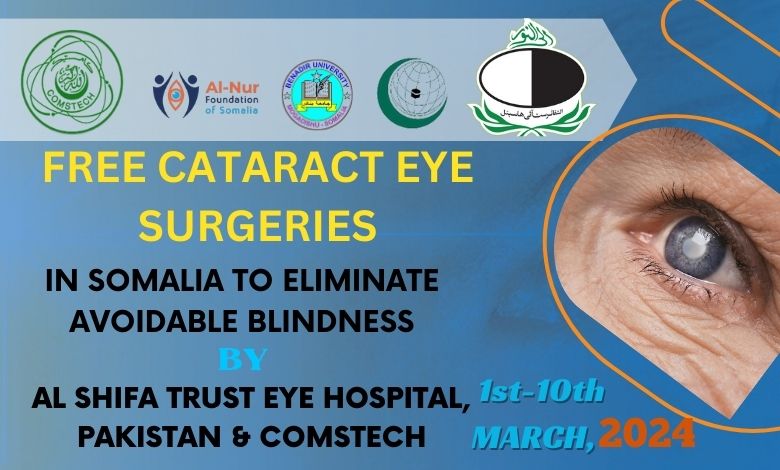
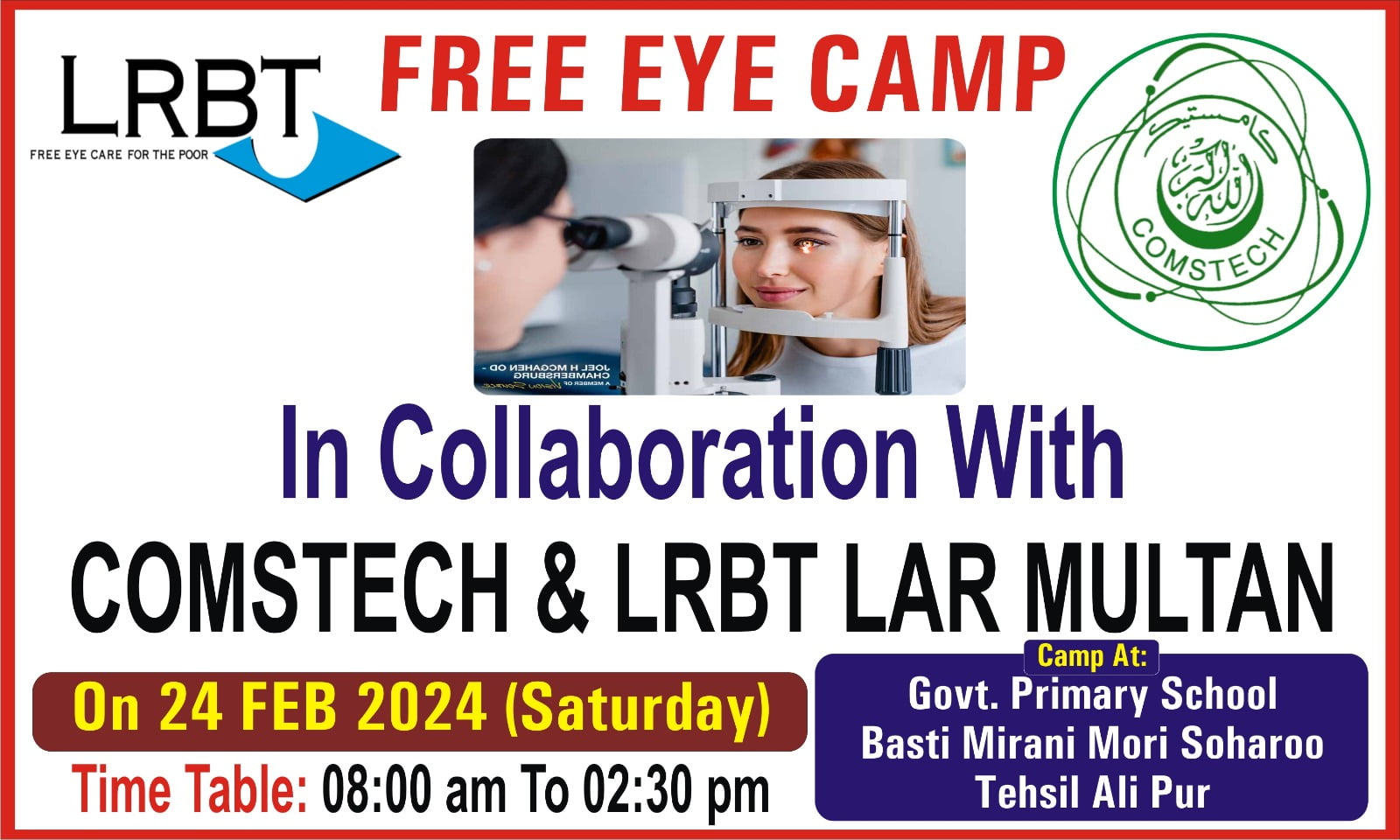
  • IsDB-COMSTECH: Cataract treatment campaign in Ndjamena, Chad

    Dates: May 22 – 30, 2023
    Venue: Ndjamena, Chad

    COMSTECH, in collaboration of IsDB and OIC Secretariat is organizing eye camps/training workshop in African OIC LDC’s. The objective is to contribute towards developing indigenous capacity of the OIC member states to fight against preventable blindness. The Eye Camp/Training Workshops in Chad are scheduled during 22-30 May 2023.

    A team of experienced ophthalmologists from Layton Rahmatulla Benevolent Trust (LRBT), Pakistan, will conduct 400 cataract surgeries, examination of post-operation patients, and conduct training workshops for local doctors with Phacoemulsification using the operation theater and other facilities available locally. Screening of patients and pre-operational preparation will be conducted by the local team. Apart from clinics, the Pakistani team will also launch public awareness campaign about eye health. In addition to that, the doctors, and paramedics of Chad will also be offered training and research opportunities at the LRBT Eye Hospital’s facilities in Pakistan as a follow-up. All the consumables and medicines for these eye camps will be transported from Pakistan.

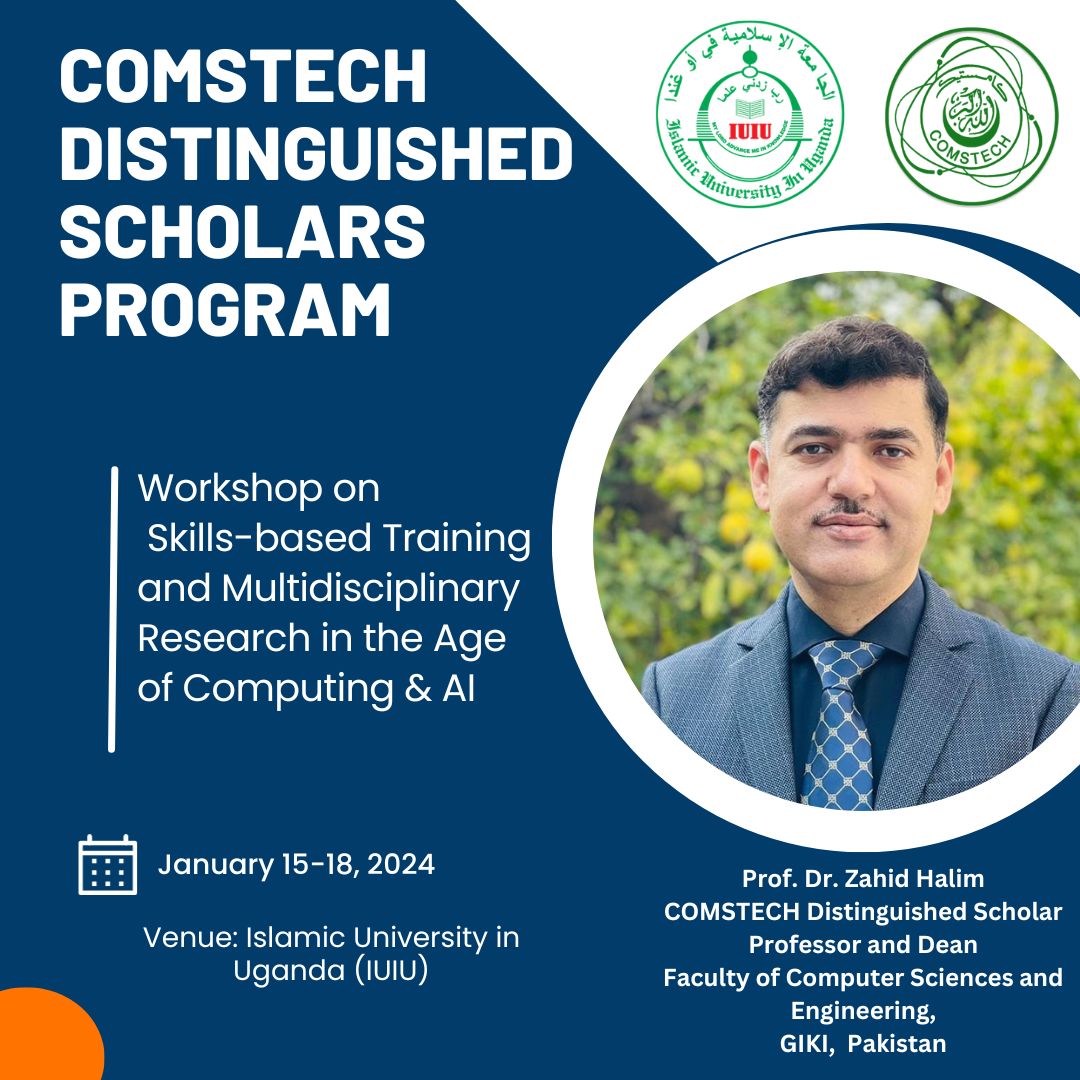
  • COMSTECH Distinguished Scholars Program: International Workshop on Exploring NMR Spectroscopy, Principles, Techniques, and Applications

    Date: 16-18 May, 2023
    Time: 09:00 AM-04:30PM Malaysia Time
    Venue: AuRIns, UiTM, Puncak Alam, Malaysia. 

    NMR Spectroscopy

    Registration Process

    Step 1: For Virtual Registration: https://forms.gle/3Xw1LAMA9Q2rMPpp8

    Step 2: Read instructions in the application form carefully and submit a properly filled form.

    Step 3: Selected candidates will be notified through email; hence, applicants are required to check their emails regularly. Only candidates with field relevance will be selected.

    Profile of Speaker: Click Here

    For any queries:

    Muhammad Haseeb Ahmad
    Program Officer
    COMSTECH
    Haseeb.ahmad@comstech.org

Back to top button