Past Events

  • Exploring the Intersection of AI, Human Computing, and Affective Computing: Applications, Challenges, and Future Directions

    Date: 14 September, 2023
    Time 14:30 – 16:00 (PKT)
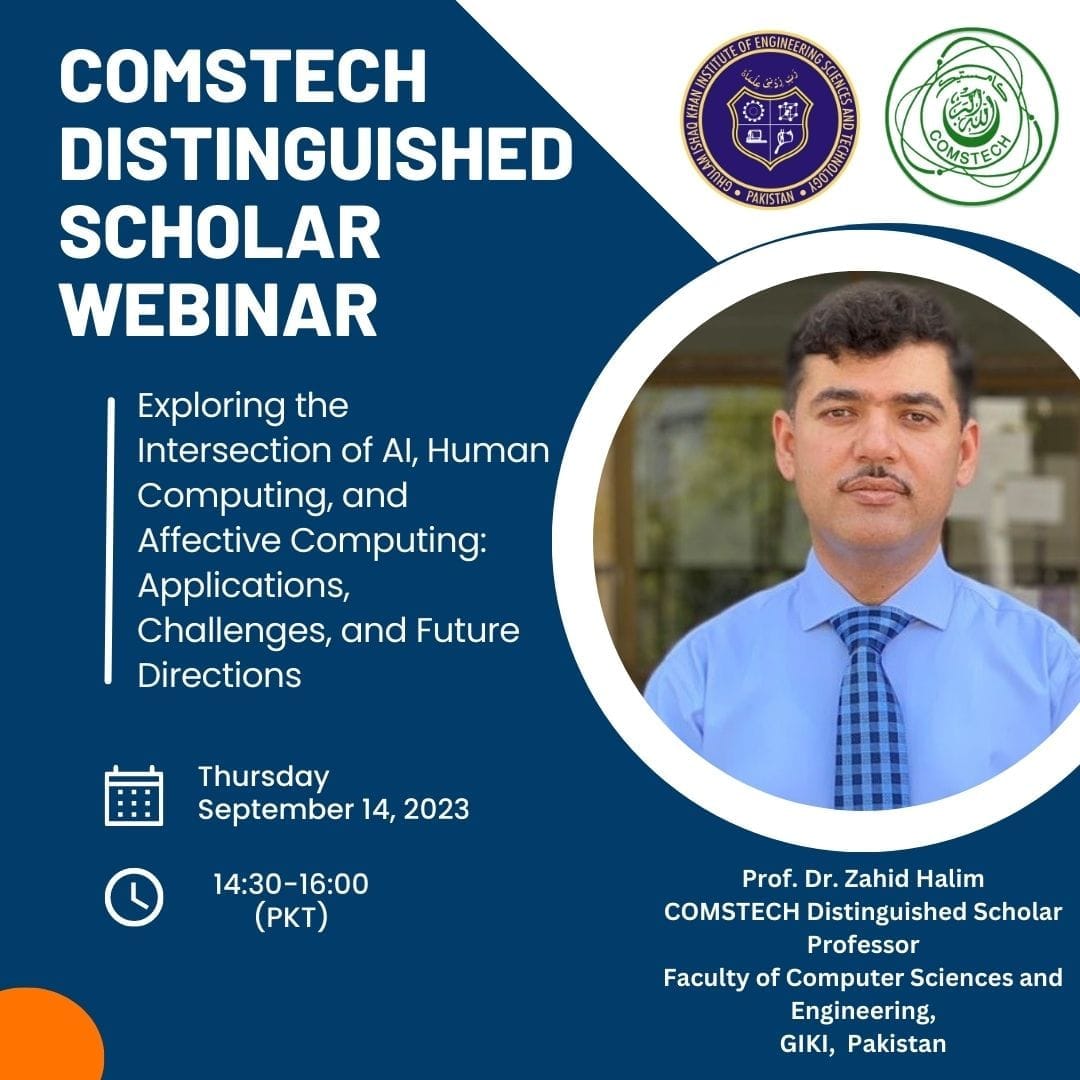
    Profile of the Speaker

    Abstract:
    The intersection of Artificial Intelligence (AI), Human Computing, and Affective Computing has emerged as a promising area of research, revolutionizing the way machines interact with humans. AI, with its ability to analyze vast amounts of data and make intelligent decisions, has facilitated the development of systems that understand and respond to human emotions. Affective Computing, on the other hand, focuses on enabling machines to recognize, interpret, and respond appropriately to human emotions. By integrating these technologies with Human Computing, which emphasizes human-centered approaches to designing and evaluating interactive systems, we can create more empathetic, intuitive, and user-friendly interfaces.

    One of the key applications of this intersection lies in healthcare, where AI, Human Computing, and Affective Computing collaborate to improve patient care. Intelligent systems can monitor patients’ emotional states, detect signs of distress or discomfort, and provide personalized support and interventions. Such systems can also enhance mental health support, providing empathetic virtual companions or therapy tools.

    However, several challenges hinder the widespread adoption of this interdisciplinary field. Ethical considerations, privacy concerns, and biases in emotion recognition algorithms pose significant challenges. Ensuring transparency, fairness, and accountability in these systems is crucial to building trust among users and society as a whole.

    Looking towards the future, there are numerous exciting directions for further exploration. The combination of AI, Human Computing, and Affective Computing can pave the way for emotionally intelligent virtual assistants, immersive virtual reality experiences, and intelligent tutoring systems that adapt to students’ emotional states. Additionally, advances in neuroimaging and wearable technologies offer the potential to capture physiological responses and brain activity to enhance emotion recognition and personalize interactions further.

    The webinar will cover the convergence of AI, Human Computing, and Affective Computing that holds immense potential for transforming various domains, including healthcare, education, entertainment, and more. The talk will discuss the issues researchers must address and the challenges surrounding ethics, privacy, and bias. The aim is to emphasize how to embrace these challenges and explore new frontiers to create AI systems that genuinely understand and respond to human emotions, resulting in more meaningful and empathetic human-machine interactions.

    For Virtual participation please register at:, https://forms.gle/WdXpg8yvzXU3copr6

    E-certificates will be issued upon complete participation.

    Coordinator:
    Muhammad Haseeb Ahmad
    Program Officer
    COMSTECH, Islamabad.
    Email: Haseeb.ahmad@comstech.org
    Phone: +92 51 9220681

  • Training Workshops for National Assessors on the implementation of Patient Safety Friendly Hospital Framework

    Dates: 7-9 August 2023

    The Ministerial Standing Committee for Scientific and Technological Cooperation (COMSTECH) of the Organization of Islamic Organization (OIC) in collaboration with World Health Organization (WHO) and Ministry of National Health Services, Regulation and Coordination (M/oNHSR&C), will organize a Training workshop for National Assessors on the Implementation of Patient Safety Friendly Hospital Framework on 7th-9th August 2023 at COMSTECH Secretariat.

    The Patient Safety Friendly Hospital Framework (PSFHF) is aimed at enhancing the visibility and implementation of patient safety practices in healthcare facilities. The initiative provides a framework through which hospitals can deliver safer patient care. The framework comprises a comprehensive set of standards and an assessment methodology that specifically target patient safety. The standards were initially developed in 2011 by a group of international experts and are based on research and best practice. The standards were revised to the second edition in 2016 and recently been revised to the third edition in 2020. The focus of PSFHF is twofold, one to assess hospitals from a patient safety perspective and two to build the capacity of staff in patient safety.

    Training methodology
    The workshop will foster an interactive approach for development of the local capacity on the use of the PSFHF assessment and improvement initiative. It will provide guidance on “know how” and “know do” for the implementation of PSFHF standards. The approach for implementation will be provided through a field visit to one selected hospital to illustrate the methodology for the identification of gaps and priorities. Then participants will be guided on how to use the findings for institutionalization of a patient safety system based on the WHO patient safety tool kit.

    Training objectives:
    • To provide updates on WHO global and regional patient Safety programs
    • To introduce the Patient Safety Friendly Hospital Framework (PSFHF) and the associated tools for assessing and improving PS
    • To train national assessors from each sector based on the PSFHF assessment manual.
    • To develop a road map for action to be followed by all participating hospitals on the short/mid-terms.
    Expected outcomes:
    • Update knowledge of Patient Safety focal points on the WHO patient safety interventions.
    • PSFHF components recognized by participating team from each health department and healthcare commissions, and hospitals.
    • Identify Patient Safety Gaps at the hospital level based on the PSFHF standards.
    • Guidance on how to successfully perform a self-assessment by reference to the PSFHI standards’ requirements.
    • Road map for the institutionalization of a patient safety program at the hospital level based on the WHO PSFHF.

    Target Participants:
    • Hospital Managers, Healthcare Commissions, focal person healthcare department

  • COMSTECH Webinar; Co-Combustion of Coal and Biomass for Clean Electricity Generation

    COMSTECH Webinar
    Co-Combustion of Coal and Biomass for Clean Electricity Generation

    Date: Friday, 11th August 2023
    Time: 03:00 pm (Pakistan Standard Time)
    Online participation only.

    Flyer attached,

    Speaker/Convener
    Prof. Dr. Shahid Munir
    Chairperson
    Punjab Higher Education Commission

    Speakers Profile:

    Prof. Dr. Shahid Munir did his BSC Chemical Engineering and MSC Chemical Engineering from the Institute of Chemical Engineering & technology, University of the Punjab, Lahore. He won gold medal by securing first position in MSc Chemical Engineering. He has 10 years of industrial experience on his credit. He obtained outstanding performance award from Punjab University in 2005. He did his PhD from University of Leeds, UK. His area of research in Biomass-Coal Co-Combustion and his research work has been published in international and national journals of high impact factor.

    He worked as controller Examination, University of the Punjab from 2014 to 2018. He served as Director Centre for Coal Technology, University of the Punjab form 2011-2018. He secured funding of around Rs.2.0 billion in the projects and launched many academic programs including those that were not being taught in the country. He transformed centre for coal technology into Institute of Energy and Environmental Engineering in Punjab University. He has been member of panel of experts of Punjab Power Development Board for the Establishment of Coal Fired Power Plants in Punjab. He was first one who challenged the Thar coral underground coal gasification project of Dr. Samar Mubarakmand and suggested open pit mining in that coal field. Now, according to his proposed technology coal is being mined at Thar and power generation is going on.

    Prof. Dr. Shahid Munir served as a Vice Chancellor of the University of Jhang from 2018-2022. Keeping in view his outstanding performance, he was appointed as Vice Chancellor on additional charge at, University of Mianwali from July 2020 to February 2021 to initiate that university from scratch that he did in similar fashion in Jhang. Moreover, he assumed the additional charge of the post of Vice Chancellor, University of Sargodha from 18 June 2021 to 17 September 2021. He worked hard to de-politicise the University of Sargodha and implemented meritocracy. He has been member of more than 100 statutory bodies/committees of different organizations keeping in view his visionary and dynamic leadership. He is appointed as Chairperson Punjab Higher Education commission in June 2022.

    Who Should Attend?

    Early stage researchers, students, relevant personnel from the research Laboratories and industries.

    Abstract of the webinar Attached

    Registration Form: https://forms.gle/wb6KhQ9zsZbKdNGw8

    For more information please contact:

    Khazima Muazim
    Program Manager COMSTECH
    khazima@comstech.org

    Maham Yamin
    Program Officer COMSTECH
    maham.yamin@comstech.org

  • COMSTECH WEBINAR SERIES

    COMSTECH Webinar
    Transforming Newcastle Disease Virus: From Menace to Potential Therapeutic Ally

    Date: Wednesday, 9th August 2023
    Time: 03:00 pm (Pakistan Standard Time)
    Online participation only.

    Flyer: Click Here

    Speaker/Convener

    Professor Khatijah Mohd Yusoff
    PhD, DSc (honoris causa) (La Trobe)
    FASc, FTWAS, FIAS, FMSA
    National Institutes of Biotechnology Malaysia

    Speakers Profile:

    Dr. Khatijah has extensive engagement and network with industry, professional bodies and academies. She is currently the Vice-President of Islamic World Academy of Sciences (IAS), member of the Council of Scientific Advisors of International Centre for Genetic engineering and Biotechnology (ICGEB), a Senior Fellow of the Academy of Sciences Malaysia (ASM), Fellow of the Malaysian Scientific Association (MSA) and Fellow and former Vice-President of The World Academy of Sciences for the advancement of science in developing countries (TWAS). Her 5-year stint as the Deputy Secretary-General of Ministry of Science, Technology and Innovation Malaysia (2008-2013) gave her an opportunity to promote science through national policies and development of a strong framework in managing Science in the country. She believes strongly on the need for translating science into tangible benefits to people around the world; she previously sat on the Board of Trustees of the International Livestock Research Institute, SEAMEO-BIOTROP Governing Board, Advisory Board for La Trobe Asia, and the Technical Advisory Panel for COMSATS as well as several agencies in Malaysia. She is currently the Chairman of the National Committee on Research Integrity. Her research focuses on the molecular biology of Newcastle disease virus, a poultry virus which kills cancer cells without affecting the normal cells.  Through reverse genetics, she is currently developing an NDV-based cancer vaccine for the treatment of colorectal and bladder cancers.  Her research and innovation have received great acclaim nationally and internationally such as the prestigious Merdeka Award (2015) and UNESCO’s Carlos Finlay Prize for microbiology (2005).  She was recognised as one of the top 20 most influential women in science in the Islamic World. She was also featured in a 2021 special edition of DC Comics “Wonder Women: Wonderful Women of The World.   Her special message to young scientists looking to impact their field is to “never give up and value the importance of teamwork”.

    Who Should Attend?

    Early stage researchers, students, relevant personnel from the research Laboratories and industries.

    Abstract of the webinar:

    Newcastle disease virus (NDV) is an important avian paramyxovirus that naturally infects a wide range of bird species, including domestic poultry. The resulting Newcastle disease (ND) poses a substantial threat to the poultry industry, leading to considerable economic losses. While mass vaccination using modified live vaccines has been successful in controlling the virus, sporadic outbreaks still occur due to the emergence of new genotypes among circulating NDV strains that differ from the vaccine strains.  In a ground breaking development, reverse genetics techniques have been employed to create a remarkably stable avirulent vaccine against these circulating NDV strains. By selectively replacing specific genes of the circulating virus with genes from the vaccine strain, researchers have achieved an effective means of combating the disease. Furthermore, NDV has demonstrated a remarkable ability to selectively target and destroy human cancer cells, making it a promising candidate for oncovirotherapy. The virus exhibits a unique characteristic of selectively lysing cancer cells with a high degree of specificity and sensitivity, leaving normal cells unharmed. Exploiting this property, NDV can be harnessed for cancer treatment by engineering it to carry immunomodulatory genes. These genes would attract immune cells to attack the cancer cells, thereby enhancing the efficiency of oncolysis—the destruction of cancer cells using viruses. The use of reverse genetics to manipulate the NDV genome in the development of the aforementioned vaccines represents an exciting and challenging avenue for cancer therapy. It opens up new possibilities for leveraging the virus’s potential to combat cancer while minimizing harm to healthy cells. This innovative approach holds great promise for advancing cancer treatment and offers hope for improved therapeutic outcomes.

    Registration Form: https://forms.gle/5mtLgByxHUM9jEFx8

    For more information please contact:

    Khazima Muazim
    Program Manager COMSTECH
    khazima@comstech.org

    Maham Yamin
    Program Officer COMSTECH
    maham.yamin@comstech.org

  • DEVELOPMENT OF ANIMAL DISEASE MODELS FOR METABOLIC DISEASE

    Flyer: Click Here
    PROGRAM SCHEDULE: 2nd – 4th August 2023
    DAY & Time: Wednesday, 10:00 am – 01:00 pm (PST)
    FOR REGISTRATION USE THE GIVEN LINK: Click Here
    VENUE:COMSTECH Secretariat, Islamabad

  • ASIAN SYMPOSIUM ON MEDICINAL PLANTS, SPICES AND OTHER NATURAL PRODUCTS XVIII

    Date: 05-07, October 2023
    For more information: asomps2023.com

  • COMSTECH –SOMALIA S&T COOPERATION

    Date:   21, July 2023
    Venue: COMSTECH Secretariat, Islamabad, Pakistan.

    COMSTECH is a Ministerial Standing Committee on Scientific and Technological Cooperation of the Organization of Islamic Cooperation (OIC), with the mandate to strengthen cooperation among the OIC Member States in the realm of science and technology and higher education by enhancing their capabilities through capacity building and institutional strengthening in emerging areas of science, technology and innovation (STI). Therefore, COMSTECH has launched a series of programs and initiatives for the STI capacity building of the OIC member states.

    The strategic intent of these programs/ initiatives is to:

    1. Create S&T interdependence among the OIC member states
    2. Increase investment, and trade through technology based projects
    3. Promote culture of science in the OIC region through international cooperation

    The COMSTECH, in close coordination with the OIC General Secretariat Jeddah, has launched several new initiatives and programs for the capacity building of OIC Member states, particularly for the African OIC LDCs. Somalia, being one of the largest OIC member            states in the African Continent, is desired to play a leading role in implementation of COMSTECH S&T programs in the OIC region.

    Brief details about the initiative are as under:

    1. COMSTECH Consortium of Excellence (CCoE) is one of the major initiatives, comprising of key Science, Technology and Engineering Research and Academic Institutions of the OIC Member States.  We would like to officially invite top two universities of the Somalia to join the COMSTECH Consortium of Excellence (CCoE).
    2. Fellowship Program: COMSTECH, in collaboration with the member institutions of COMSTECH Consortium of Excellence (CCoE), will offer fully funded 10 fellowships to the Somalian students, researchers and technical personnel, who are currently living and working in Somalia.

              COMSTECH will provide economy class return air fare to the selected fellows. The host institutions will provide boarding & lodging and modest scholarship, along with free training.

    • Workshops and Training Courses: COMSTECH,  in collaboration with the relevant institutions in Somalia will organize thematic workshops and training courses on emerging technologies relevant to the national and regional needs.

              COMSTECH will provide economy class return air fare to the resource persons of the workshops/trainings. The local host institutions in Somalia will provide venue, boarding and lodging and food cost of the participants. COMSTECH and local institution will work together to organize the event.

    • Health Camps/Trainings in Ophthalmology and Neuro Critical Care: COMSTECH in collaboration with Islamic Development Bank and OIC General Secretariat will conduct Health Camps for high quality cataract services to improve vision related quality of life and reduce blindness related poverty. Similarly, COMSTECH in collaboration with the relevant institutions in Somalia and Pakistan will arrange training programs in Ophthalmology and Neuro Critical care for capacity building of local health professionals.
    • Women in Science Fellowship Program: Somalian women scientists will be able to benefit from “Women in Science” fellowship program to conduct research studies in leading R&D institutions of Pakistan, and other COMSTECH member states.

              COMSTECH will provide economy class return air fare to the fellows. The offering institutions will provide boarding & lodging and modest scholarship along with free training.

    Apart from the above programs, Somalian students and scholars may also participate in other COMSTECH programs which are launched and publicized through COMSTECH website and social media. Similarly, the R&D institutions of Somalia may collaborate with CCOE institutions for exchange of knowledge, expertise, technology and resources to develop their capacities and devise solutions for their autonomous development under Reverse Linkages Program of Islamic Development Bank.

    COMSTECH-Somalia Science and Technology Cooperation Program is being launched jointly with the Embassy of the Republic of Somalia in Islamabad, in coordination of the Ministry of Foreign Affairs and Ministry of Science & Technology, in presence of the national and international media. 

    For inquiries please contact Mr. Umer Ali, Program officer, COMSTECH at umerali@comstech.org

  • International Training Workshop on Managing Science and Technology Parks (STPs)

    Jointly Organized by OIC – COMSTECH and Universitas Airlangga, Indonesia, in collaboration with Pardis Technology Park, Iran
    Date: 4 – 7 September, 2023

    Venue: Universitas Airlangga, Gubeng, Surabaya, East Java, Indonesia

    Flyer attached,

    Introduction:

    The first science park was established in 1970 by the University of Cambridge to facilitate the sharing of knowledge between the industry, academia and the government. Science parks play a key role in attracting talent to bring forward technological advancement and innovation. It is an effective medium to attract entrepreneurs in desirable science and tech industries by providing high quality working space with a chance to work in close collaboration with the industry.

    At a Science and Technology Park, businesses, start-ups and entrepreneurs have access to purpose built office spaces, laboratories and meeting areas designed to facilitate research in growth in various fields of science and technology. These parks are managed by trained professionals who stimulate and coordinate the flow of technology and knowledge among the universities, research and innovation institutions, and manage the park facilities. These technology parks have proven to be the bridge between converting innovative ideas into commercial products and services. 

    OIC – COMSTECH and Universitas Airlangga, Indonesia, in collaboration with Pardis Technology Park, Iran are organizing an international training workshop on “Managing Science and Technology Parks”. This workshop will analyze the path of development of an idea into a commercial product along with discussing the different models of accelerators, incubation centers and technology parks. Furthermore, the workshop will focus specifically on training managers and personnel that run the technology parks.

    Target Audience:

    Managers/CEO of technology parks, managers from incubation parks, university based technology incubation centers, consultants, start-ups, ORIC in-charge, Scientists, researchers, policy maker/government officials, and academicians from the OIC countries are encouraged to participate.

    Key Contents:

    The training workshop will cover the following topics over three days:

    • The growth of an idea and team: from idea to the end of incubation period.
    • Product and market development, fundraising and commercialization.
    • Accelerators: How to manage and support
    • Case studies of different types of accelerators and their development plan in Indonesia, Iran, and Pakistan.
    • Pre-incubation & incubation; Graduation policies & post-incubation interaction
    • Publication: Success stories documentation
    • Different types of Tech parks (public/private)
    • Assessment policies, financial, credit & investment services and marketing services in parks (national & international).
    • Case study of Pardis Technology Park: Planning, funding, government policies and execution.

    The training will be over three days, two days for lectures and interactive sessions, followed by visit to Science and Technology Parks in Indonesia.

    About the Resource Persons

    The resource persons will consist of managers and heads of various world renowned technology parks who will deliver lectures on key areas of technology park management.

    Travel & Local Hospitality:

    Universitas Airlangga, Indonesia, to provide all local hospitality (accommodation, meals, etc.) for resource persons and international participants, and COMSTECH will provide air travel support to resource persons and selected participants from OIC member countries travelling for the workshop.

    Registration Process:

    Step 1: For Physical Participation please register at https://forms.gle/4mwhCDCLkyttZ2W5A

    Step 2: For Virtual participation please register at: https://forms.gle/rGxdaXFCAwKEAfAW6

    Step 3: Selected candidates will be notified through email; hence, applicants are required to check their emails.

    Workshop Coordinators          

    Dr. Andi Zaidan
    Head
    Institute of Life Sciences, Technology and Engineering,
    Universitas Airlangga, Indonesia.


    Muhammad Haris Akram
    Program Manager, COMSTECH
    Tel: +92-51-9220681-3
    Fax: +92-51-9205264, +92-51-9220265
    Email: haris@comstech.org

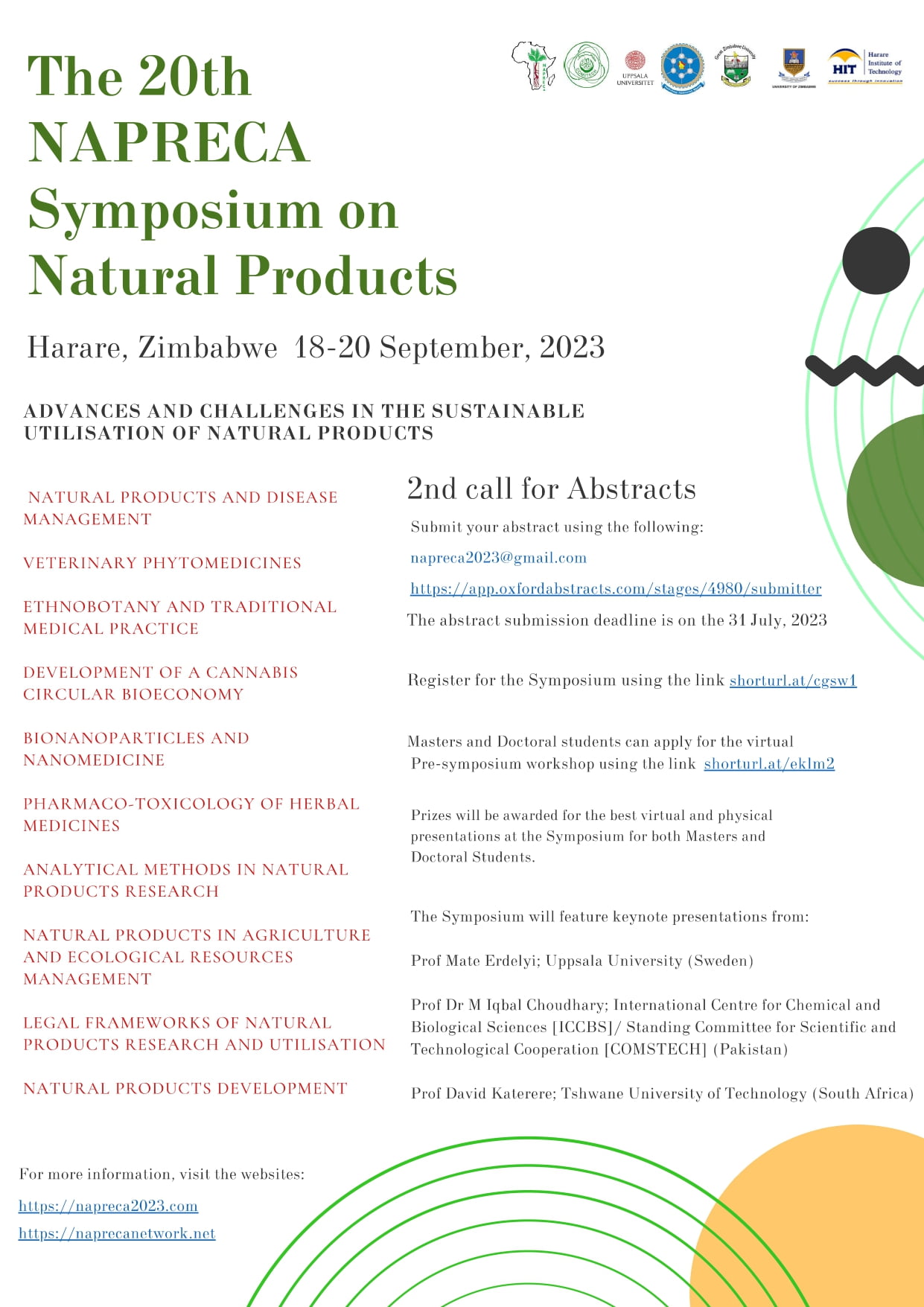
  • The 20th NAPRECA Symposium on Natural Products

    For more information, Visit the websites:

    1- https://napreca2023.com
    2- https://naprecanetwork.net

  • Hybrid Course Drug Development and Advanced Technique for Drug Research

    PROGRAM SCHEDULE: July 17-28, 2023
    Time: 10.00 AM to 12:00 PM

    REGISTRATION DEADLINE: 14th July 2023
    FOR REGISTRATION USE THE GIVEN LINK: Click Here

    Course Title:     Drug Development and Advanced Technique for Drug Research

    Credit: One                                                           Instructor: Prof. Dr. M. Hafizur Rahman, Ph.D. (Japan)

    CLASS SCHEDULE: JULY 17 to JULY 28, 2023                       Time: 10:00 AM to 12:00 PM)

    Lecture No.DateTimeTopic
      1.  July 17, 2023  10:00-12:00 PM   Drug Design and Development: The Arts and ScienceBiotechnology and drug discovery: from bench to bedside
      2.  July 18, 2023  10:00-12:00 PM   Development of Animal Models for Drug Research  
      3.  July 19, 2023  10:00-12:00 PM   Translational of In-vitro Dosages to In-vivo for Drug Research
      4.  July 20, 2023  10:00-12:00 PM   Basic concepts of Pharmacokinetics  
      5.  July 21, 2023  10:00-12:00 PM   Basic concepts of Pharmacodynamics
    6-8July 24- 26, 2023   Histological and Immunohistochemical (IHC) Techniques for Drug Research
      6  July 24, 2023  10:00-12:00 PM   The art and science of IHCTissue Harvesting and Fixation Tissue Processing, Tissue Sectioning, Slide preparationHematoxylin & Eosin (H&E) Staining.
      7  July 25, 2023  10:00-12:00 PM   Immunohistochemistry of rat/mice section. ImmunocytochemistryIHC uses and considerations
      8  July 26, 2023  10:00-12:00 PM   Antibodies and Antigens Selection of Primary and Secondary Antibodies for IHC Antibody Tittering, and Antigen unmasking for IHC Light & Fluorescent Microscopy, Magnification and Resolution, and Image processing.
    9July 29, 202310:30 – 11:30 AMFinal Exam

    CERTIFICATES: Registered participants will receive a digital certificate after the successful completion of all the necessary requirements of the course.

    For more information: siren.lej@gmail.com;  Call:  021-111-222-292 Ext: 267, 275.

    Room No. 202, 2nd floor, L.E.J. National Science Information Center, International Center for Chemical and Biological Sciences (ICCBS), University of Karachi, Karachi-75270.

    Final Exam:

    Critical Success Factors (Passing Criteria)

    Time duration of Exam: 60 minutes, Passing marks: Min 50 %,Attendance: >=75 % or as per
    rules of ICCBS

    Suggested reading

    1. Barrett JS (editor). Fundamentals of Drug Development. 1st ed. Wiley, USA: 2022.
    2. Drugs@FDA Glossary of Terms. US Food & Drug Administration; Silver Spring, MD, USA: 2022.
    3. Young DC (editor). Computational Drug Design. John Wiley & Sons, Inc.; Hoboken, NJ, USA: 2009.
    4. Rowland M and Tozer TN (editors). Clinical Pharmacokinetics and Pharmacodynamics. 4th ed. Lippincott Williams & Wilkins; Baltimore, MD, USA: 2011. Hafizur RM, Raza SA, Chishti S, Shaukat S and Ahmed A (2015) A ‘Humanized’ rat model of pre-diabetes by high fat diet-feeding to weaning Wistar rats. Integrative Obesity and Diabetes 1: 44-48
    5. Shaukat S and Hafizur RM (2014) A long term high fat diet/low dose streptozotocin develops a type 2 diabetic rat model showing clinical presentation and pathophysiology of natural history of diabetes. Journal of Biological and Chemical Research 31, 1187-1204.
Back to top button