For More Information: Click Here

For More Information: Click Here
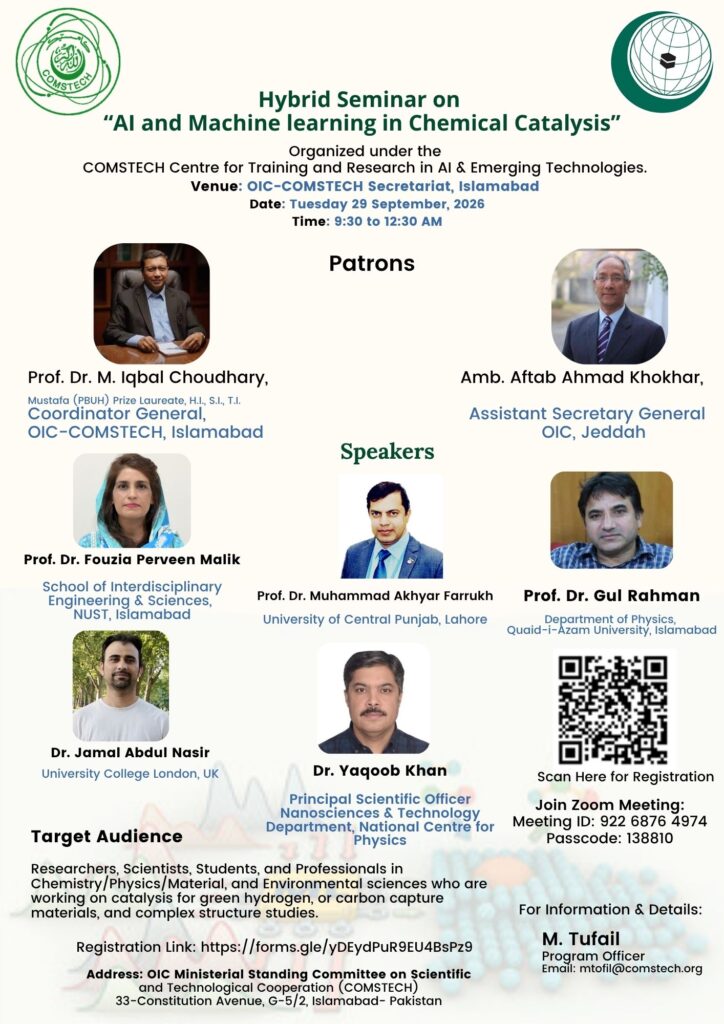
Target Audience:
Researchers, Scientists, Students, and Professionals in Chemistry/Physics/Material, and Environmental sciences who are working on catalysis for green hydrogen, or carbon capture materials, and complex structure studies.
Venue: OIC-COMSTECH Secretariat, Islamabad
Date: Tuesday 29 September, 2026
Time: 9:30 to 12:30 AM
Registration link
https://forms.gle/yDEydPuR9EU4BsPz9
QR code for the Registration form

Join Zoom Meeting
https://zoom.us/j/92268764974?pwd=jWZNWQUb4zGp507MJ698cTeuF7sNY6.1
Meeting ID: 922 6876 4974
Passcode: 138810
Jointly Organized by:
OIC – COMSTECH, Samarkand State Medical University, & A Global Network for Neglected Tropical Diseases
Venue: Samarkand State Medical University, Samarkand, Uzbekistan
Dates: 21st – 24th September 2026
Flyer: Click Here
Background
Leishmaniasis is a major Neglected Tropical Disease (NTD) affecting millions of people worldwide, particularly in OIC Member States across South Asia, Central Asia, the Middle East, and North Africa. Accurate differential diagnosis and effective in vitro cultivation of Leishmania spp. are essential for disease confirmation, epidemiological surveillance, drug susceptibility testing, and research on parasite biology.
NTD inflicts substantial socioeconomic consequences for the affected communities. These consequences include long term disability, reduced productivity, and increased health costs. At the global level, and at the OIC level, strengthening the capacity of the endemic countries to detect, differentiate, and monitor Leishmania infections. It is critically important to achieve objectives of the World Health Organization’s NTD Road Map and advancing progress toward universal health coverage, and the Sustainable Development Goals. There is pressing need to build sustainable laboratory and research capacities in the OIC member states particularly important for improving early diagnosis, effective disease surveillance, monitoring treatment outcome, and drug resistance, and developing improved diagnostic and therapeutic approaches.
In continuation of previous successful capacity-building initiatives conducted in Kenya (2023) and Ethiopia (2024), Morocco (2025), COMSTECH, in collaboration with the NTD Network, and Samarkand State Medical University, Samarkand, Uzbekistan, is organizing this specialized hands-on training workshop in Samarkand, Uzbekistan to strengthen clinical diagnosis, laboratory and research capacities in the Central Asian region.
Objectives of the Workshop
The training aims to:
Key Topics to be Covered
Target Participants
The workshop is designed for:
Relevant disciplines include:
Financial Support
Limited Travel support will be provided by OIC- COMSTECH for selected OIC participants from Central Asia and West Asia.
Application Procedure
Interested candidates are requested to submit their applications of the interest using following link. : Click Here
Young scientists are encouraged to submit their abstract using the above given registration link. Once selected, they can give oral presentation during scientific program.
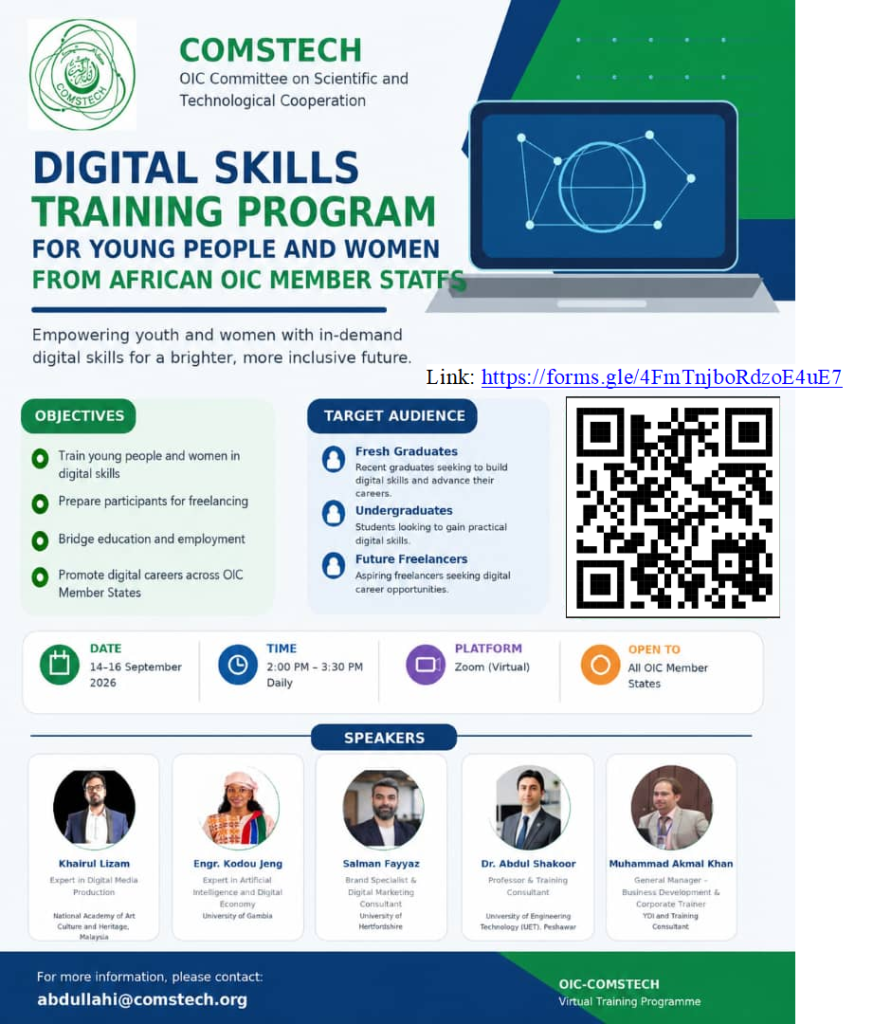
The QR code for the zoom link is given below.

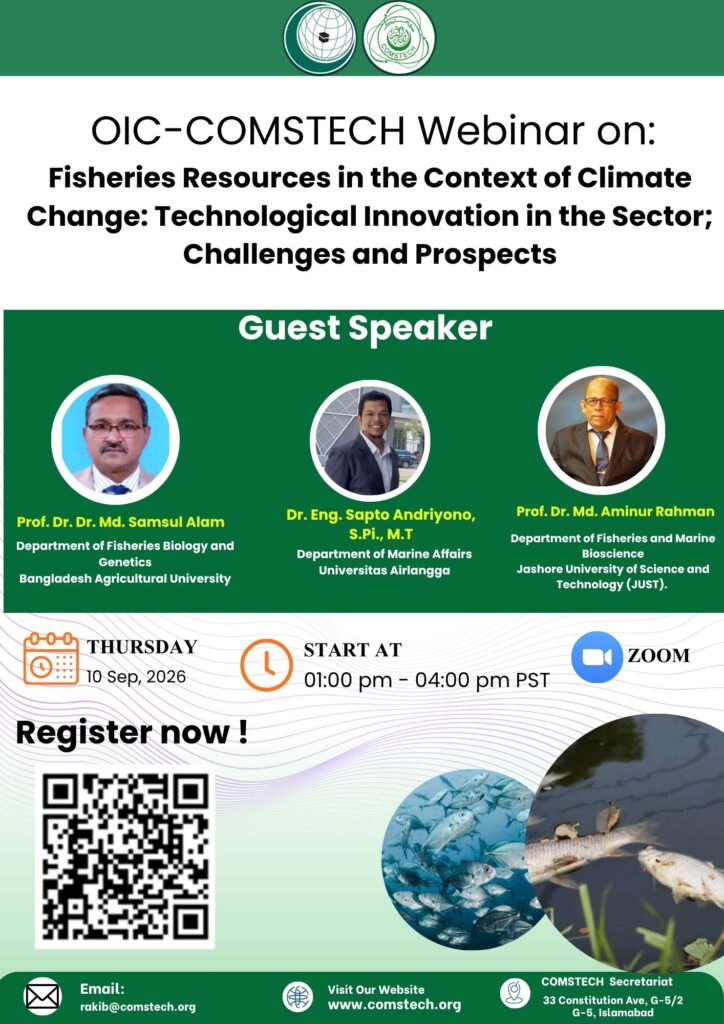
Climate change has emerged as one of the most significant challenges affecting fisheries resources and aquatic ecosystems globally. Rising temperatures, changing precipitation patterns, salinity intrusion, habitat degradation, and increasing occurrences of extreme climatic events have profound implications for fish production, biodiversity conservation, and food security. Fisheries-dependent communities are particularly vulnerable to these environmental changes, necessitating innovative and sustainable approaches to fisheries management and aquaculture development.
Technological advancements are transforming the fisheries sector by introducing climate-smart aquaculture systems, biotechnology applications, precision monitoring technologies, remote sensing, and data-driven resource management tools. These innovations offer promising opportunities to enhance productivity, strengthen ecosystem resilience, and support sustainable utilization of fisheries resources. However, challenges related to technological accessibility, capacity building, policy implementation, and climate adaptation remain significant concerns, particularly for developing countries.
Guest Speakers
Department of Marine Affairs,
Faculty of Fisheries and Marine Science
Universitas Airlangga
Event Details
Date: 07 – 09 September 2026
Water security remains a critical challenge across many OIC Member States due to climate variability, rapid population growth, urbanization, weak governance frameworks, and limited technical and financial capacity for sustainable water management. These challenges disproportionately affect vulnerable communities, exacerbate inequalities, and undermine progress toward sustainable development, public health, food security, and economic resilience. Addressing water insecurity, therefore, requires not only technical solutions but also inclusive governance, evidence-based decision making, and effective mobilization of resources for implementation.
Despite ongoing efforts, many water sector professionals and institutions across OIC Member States face gaps in access to practical training on integrated water governance, use of data for planning and monitoring, and development of bankable water projects. Strengthening these capacities—while fostering cross-country learning and collaboration—can significantly enhance national and regional responses to water stress. This 3-day intensive training is designed to respond to these needs by equipping participants with practical tools, applied knowledge, and peer-learning opportunities aligned with OIC priorities and the Sustainable Development Goals, particularly SDG 6. Capacity building and institutional strengthening in Inclusive Governance and Policy Frameworks for Water Security, Data-Driven Decision Making for Sustainable Water Management and Project Development and Resource Mobilization for Water Security will promote the achievement of the OIC Water Vision of “working together for a water secure future”
Daily Thematic Focus;
Day 1: Inclusive Governance and Policy Frameworks for Water Security
Day 2: Data-Driven Decision Making for Sustainable Water Management
Day 3: Project Development and Partnerships for Water Security
This training will strengthen the capacity of water sector professionals and policymakers in OIC Member States to design, manage, and mobilize sustainable water security interventions through inclusive governance, data-driven decision making, and effective project development.
Mode: Hybrid
Venue for Onsite participation: OIC-COMSTECH Secretariat, Islamabad, Pakistan
Registration Links: Click Here
Zoom Link for online Participation
[Link]
Flyers:
Certificate
Participants will be certified
For more information, please kindly contact Mr. Omar Jallow at omarjallow@comstech.org
Flyer: Click Here
Organized by: OIC-COMSTECH
In collaboration with: SAWiE Ecosystems Ltd.
Date: 24 August 2026
Time: 10:00 AM – 3:00 PM
Venue: 3rd Floor, COMSTECH Secretariat, Islamabad
Format: Hybrid
About the Event
OIC-COMSTECH, in collaboration with SAWiE Ecosystems Ltd., is organizing an International Roundtable and Technical Dialogue on “Unlocking Agricultural Carbon Markets: Climate-Smart Solutions for a Resilient Future.”
Agriculture remains central to food security, livelihoods, exports and economic growth across Pakistan and many OIC member states. At the same time, agricultural activities—including rice cultivation, livestock, synthetic fertilizer use and on-farm energy consumption—contribute significantly to greenhouse gas emissions. The transition towards climate-smart and low-carbon agriculture therefore presents both a challenge and an important opportunity.
The Roundtable will explore how climate-smart agriculture, nature-based solutions, regenerative agriculture and carbon-market mechanisms can help reduce emissions while maintaining agricultural productivity, improving resilience, strengthening export competitiveness and creating new opportunities for farmers and other stakeholders.
Objectives
The Roundtable aims to:
Who Can Attend?
The Roundtable is particularly relevant for:
Key Themes
The technical dialogue will focus on i. Climate-Smart Agriculture, ii. Sustainable Rice Production & Carbon Markets, iii. Climate-Smart Irrigation, iv.Nature-Based Solutions, v. Regenerative Agriculture & Carbon Markets, vi. Agricultural Carbon Markets & Article.
The detailed program includes expert presentations and panel discussions on carbon markets, sustainable rice production, climate-smart irrigation, nature-based solutions, regenerative agriculture, methane reduction and biochar.
Registration & Participation
The event will be conducted in a hybrid format, providing an opportunity for both in-person (For Rawalpindi / Islamabad residents) and online participation.
Registration Link: https://forms.gle/ptAGp34DYNSidAu77
For further information and participation:
Dr. Khalid Mahmood
Founder, SAWiE Ecosystems
khalid.mahmood@sawie.net
Ms. Khazima Muazim
Senior Program Manager, OIC-COMSTECH
khazima@comstech.org
Date: 2nd ,September 2025
Venue: COMSTECH Secretariat, Islamabad, Pakistan
Time: 10:00-3:30 PST
Flyer: Click Here
About the Workshop:
OIC – COMSTECH, in collaboration with leading botanical scientists from Azerbaijan & other OIC countries is organizing a focused One-day international workshop on nature-based medicinal and cosmetic products. The workshop will showcase traditional knowledge, research advances, product development, and commercialization strategies in the field of botanical sciences.
This event aims to strengthen scientific exchange and promote collaborative research between Pakistan, Azerbaijan & OIC countries on herbal medicines and cosmetic formulations using indigenous plant resources.
Objective:
The primary aim of the workshop is to:
Key Themes:
Target Beneficiaries:
• Researchers and scientists in the field of botany, pharmacognosy, and natural products.
• Faculty members and postgraduate students from relevant disciplines.
• Industry professionals in herbal medicine and cosmetic formulation.
• Policymakers and R&D stakeholders from OIC countries.
Speakers & Experts from:
PARTICIPANTS:
Highlights:
Limited Seats Available – Pre-registration Required
For Registration and Information: Click Here
Date: 20th August 2026
Time: 2:00pm-3:30pm
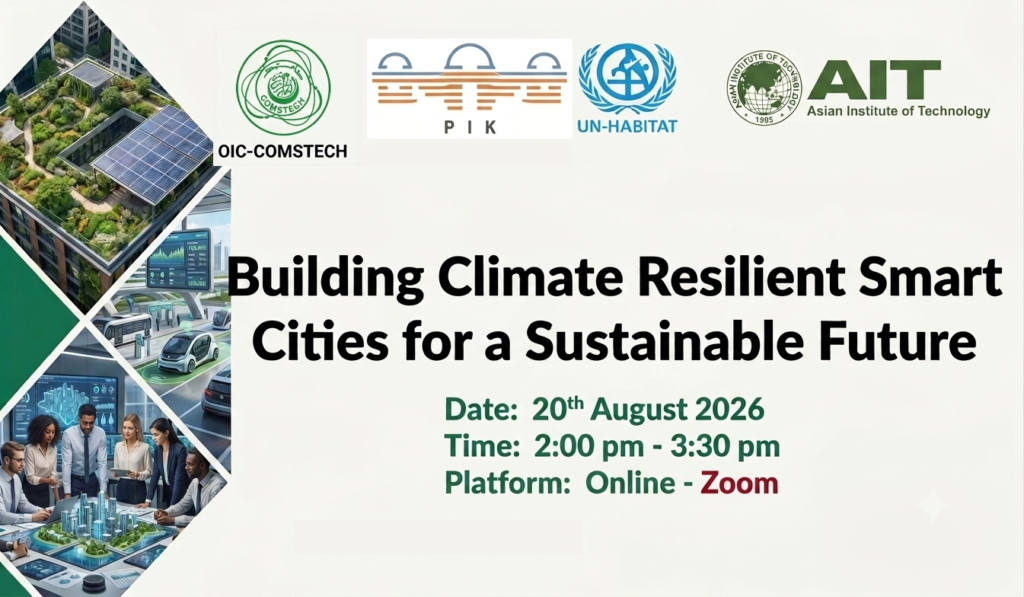
Background:
Rapid urbanization and climate change are reshaping cities across the world, particularly in OIC Member States where growing populations continue to place increasing pressure on infrastructure, natural resources, and essential public services. Rising greenhouse gas emissions, unsustainable construction practices, urban heat, flooding, air pollution, and declining green spaces have made climate resilience a priority for sustainable urban development.
To address these challenges, OIC-COMSTECH, under the Forum on Environment and Ecosystem Restoration (CFEER), is organizing an online seminar on “Building Climate Resilient Smart Cities for a Sustainable Future.” The seminar will bring together researchers, policymakers, practitioners, and students to explore innovative strategies, digital technologies, and collaborative approaches for developing smarter, more inclusive, and climate-resilient cities across OIC Member and Observer States.
Objectives
Expected Outcomes
Who Can Apply:
Researchers, faculty members, policymakers, urban planners, professionals, development practitioners, postgraduate students, and representatives of government agencies, universities, research institutions, and relevant organizations from OIC Member and Observer States are encouraged to apply.
Registration:
For Participation, please register at: Click Here
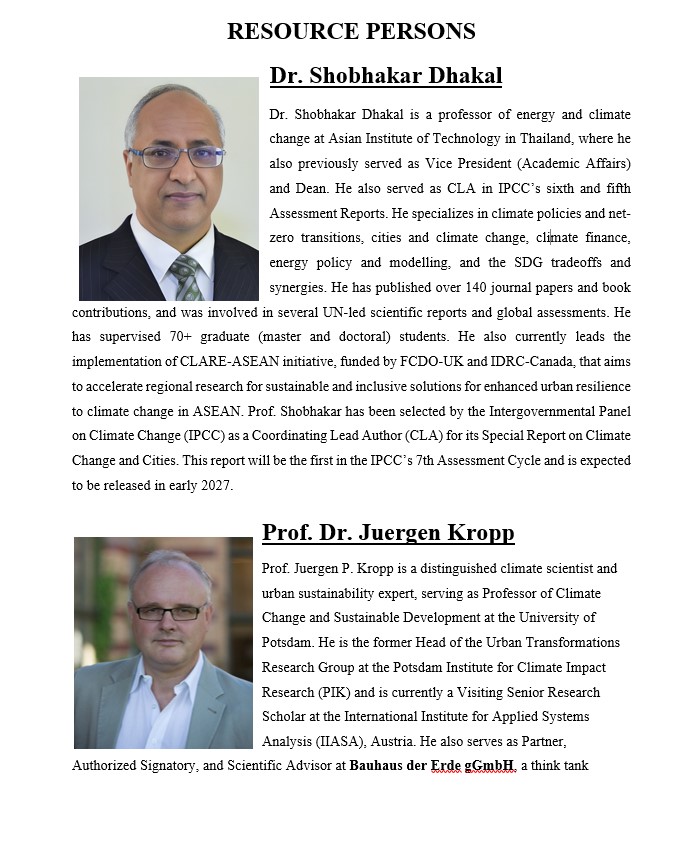
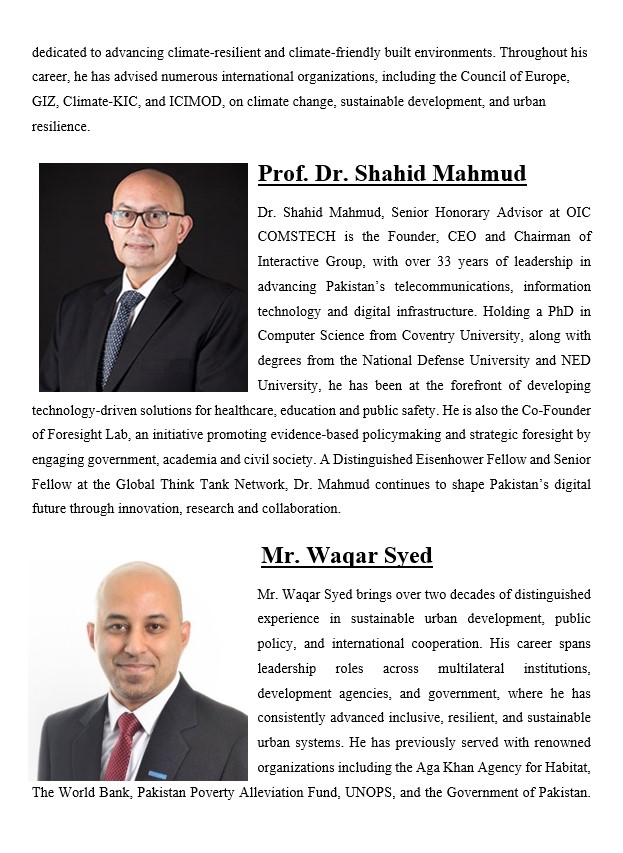
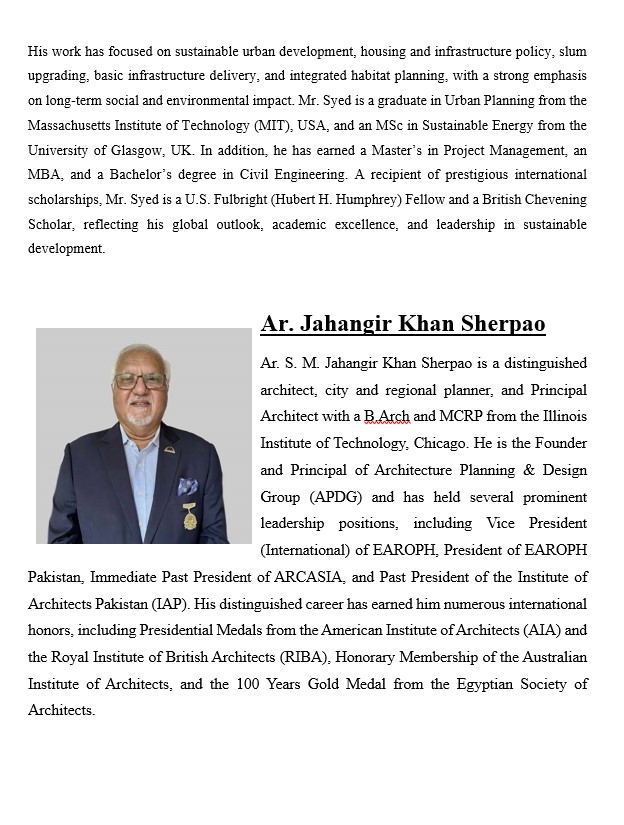
Contact details:
For any queries, please feel free to contact:
Aneela Aziz
Internee
OIC – COMSTECH Secretariat
Email: aneelaaziz19@gmail.com
