OIC-COMSTECH in collaboration with University of Wah (UW), is offering fully funded Scholarships for International Students from OIC Member States to study in Master Degree Programs (see the list given below).
Duration of Scholarship: Maximum period of 2 years
Scholarship Incentives:
The scholarship program covers funds for the following expenses:
Economy Class return Airfare (one time)
Semester Dues including Tuition Fee
Accommodation and Meals at the Student Hostel
Limited Outdoor Health Cover
Student Admission Timeline:
Fall Semester (July-September)
Spring Semester (December-February)
It is recommended that international applicants may apply at least 5-6 months prior to the start of the recommended session.
Organized by: OIC-COMSTECH Technovation Academy Hosted by: Pardis Technology Park, Iran Location: Pardis Technology Park, Iran International Innovation District, Tehran
INTRODUCTION
In today’s rapidly evolving global economy, technology and innovation ecosystems play a critical role in driving sustainable development, economic diversification, and competitiveness. Effective innovation ecosystems bring together policymakers, academia, industry, startups, investors, and support institutions to transform ideas into impactful solutions, generate high-value employment, and address complex societal challenges.
Recognizing the growing importance of innovation-led growth across OIC Member States, the OIC-COMSTECH Technovation Academy, in collaboration with Pardis Technology Park (PTP), Iran, is organizing the International Capacity-Building Training Program on Technology & Innovation Ecosystem Development, to be held from 14–25 April 2026 at the Pardis Technology Park, International Innovation District, Tehran.
This intensive, practice-oriented program is designed to equip mid- to senior-level professionals with the conceptual frameworks, practical tools, and hands-on exposure required to design, strengthen, and manage innovation ecosystems tailored to their national and regional contexts. Leveraging Iran’s experience—particularly the successful model of Pardis Technology Park—the program will combine expert-led training, technology tours, case studies, and collaborative group work to foster actionable learning and cross-country knowledge exchange among participants from OIC Member States.
PROGRAM OBJECTIVES
By the end of this program, participants will be able to:
Understand the core components and dynamics of innovation ecosystems
Design context-specific strategies for ecosystem development
Identify key stakeholders and build effective collaboration models
Develop funding, policy, and infrastructure roadmaps
Learn from global best practices and Iranian success stories
Build an international network of ecosystem builders
PROGRAM STRUCTURE
Duration: 10 Days
Daily Schedule:
Workshops;
Tech tours;
Expert panels;
Group projects;
Networking sessions;
Iranian culture experience;
BENEFITS
Limited to 20 participants from OIC member countries — Selection is competitive.
Round-trip international airfare
Accommodation (shared twin rooms)
All local transportation (airport transfers & program-related travel)
Daily meals (breakfast, lunch, dinner)
Training materials & certification of completion
This program is fully funded for selected participants.
No participation fee.
Visa assistance provided.
QUALIFICATION FOR PARTICIPANTS
Eligible applicants include professionals from OIC member states, particularly those working in:
Government officials & policymakers in science, technology & innovation
Managers of science & technology parks, technology incubators, and innovation accelerators
Innovation ecosystem developers & consultants
Representatives of international development agencies
Academics & researchers in innovation policy
Startup ecosystem enablers & investors
Applicants must be fluent in English and committed to implementing learnings in their home ecosystems.
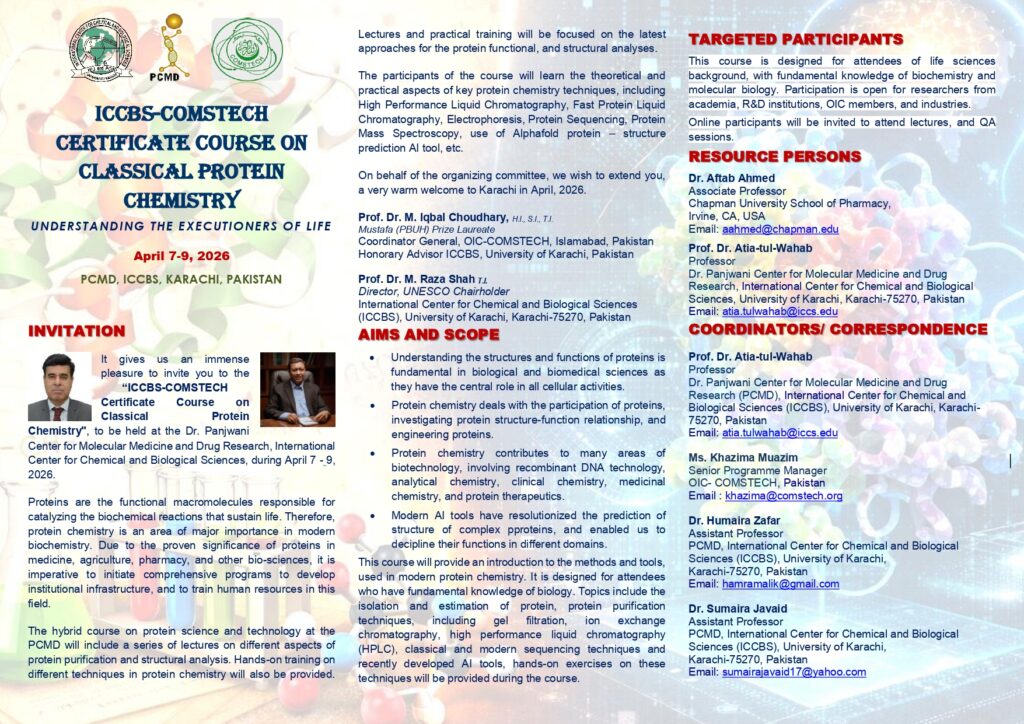
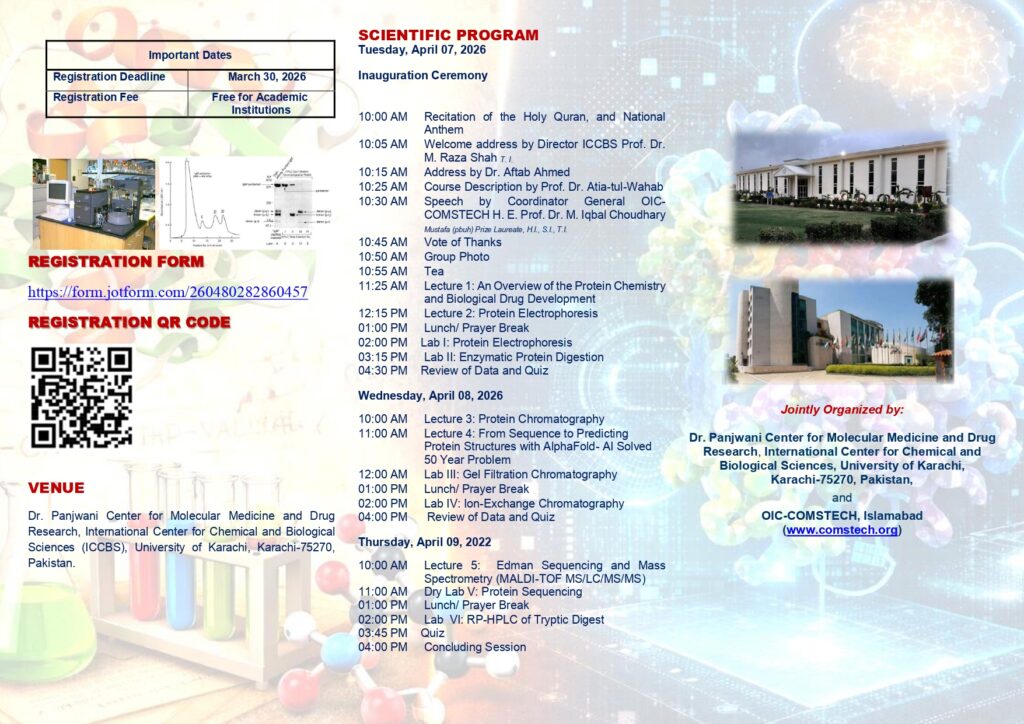
Dr. Panjwani Center for Molecular Medicine and Drug Research, International Center for Chemical and Biological Sciences (ICCBS), University of Karachi, Karachi-75270, Pakistan.
OIC-COMSTECH is pleased to announce an International Seminar on Neglected Tropical Diseases (NTDs), addressing critical global health challenges affecting vulnerable populations across Africa, Asia, and the Americas.NTDs comprise a group of 20 infectious diseases caused by viruses, bacteria, protozoa, and parasitic worms. With the impact of climate change and global warming, these diseases are increasingly spreading beyond tropical regions into temperate climates.
A special focus of this seminar will be Leishmaniasis, one of the top ten NTDs worldwide, affecting more than 12 million people globally. In this seminar, a team of internationally renowned speakers will discuss diagnostics of NTDs, structure-based and AI supported drug discovery targeting the Leishmaniasis causing parasites.
Participation:
Physical participation is only open for residents of Islamabad, Rawalpindi and nearby Islamabad, Pakistan.
Virtual participation is open to all interested individuals of OIC member states and others.
OIC-COMSTECH, in collaboration with Riphah International Institute of Public Policy (RIPP-Riphah), Istanbul Aydin University (Türkiye), Tashkent State Transport University (Uzbekistan) including other partners, like; University of Haripur, University of Baltistan, USPCAS-W, NUML, Institute of Research Promotion (IRP), TesPak, PCRWR, and BRC Iraq, is organizing the 3rd International Climate Change and Water Conference (ICCW 2026) and the 10th Series of International Water Conference (IWC 2026).
The conference aims to bring together researchers, academicians, policymakers, practitioners, and development partners to exchange cutting-edge research findings, policy perspectives, and practical solutions for sustainable water management in the face of climate change.
Conference Sub-Themes
Climate-Smart Water and Agriculture Practices/Systems
Technology and Innovation for Climate and Water Challenges
Awareness, Policy and Governance in Climate Adaptation
Important Dates
Abstract Submission Deadline: 30th July 2026
Acceptance Notification: 15th August 2026
Full-Length Paper Submission: 30th October 2026
Researchers, scholars, students, academicians, and practitioners are encouraged to submit their abstracts and full papers within the stipulated deadlines.
Note: To submit an abstract, interested candidates must first request access to the submission form. Access will be granted upon approval, after which the abstract can be submitted.
Please submit the abstract/full paper on the following
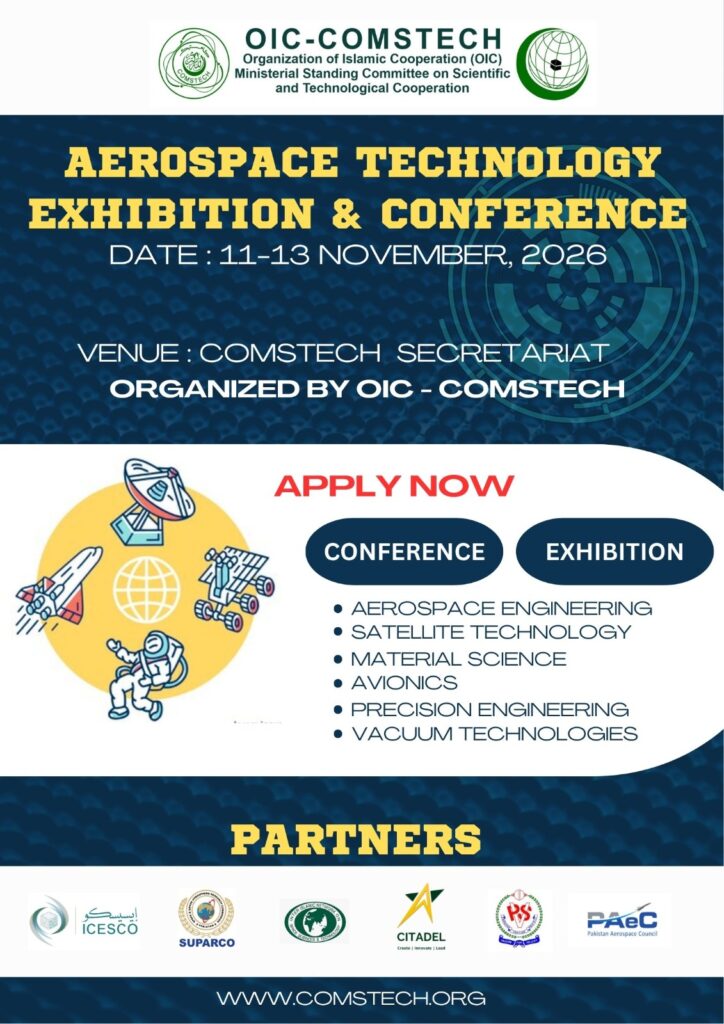
Aerospace technology is one of the most advanced and strategically vital sectors, driving innovations in communications, defense, space exploration, and environmental monitoring. Despite the growing importance of aerospace capabilities globally, most OIC member states are underrepresented in this field due to limited investments, capacity gaps, and fragmented collaboration.
Recognizing the urgent need to build indigenous capabilities and strengthen cooperation among OIC Member Countries, OIC-COMSTECH proposes a technology exhibition and conference to bring together stakeholders from government, academia, industry, and research institutions. This initiative aims to create a unified platform for knowledge-sharing, policy dialogue, and technology partnerships that reflect the collective aspirations of the Islamic world in aerospace innovation.
Objectives: To catalyze capacity-building, collaboration, and technological advancement in aerospace sectors among OIC member states.
To showcase current developments and capabilities in aerospace technologies within the Muslim world.
To identify opportunities for joint research, development, and industrial collaboration among OIC countries.
To highlight the role of academia and youth in advancing aerospace innovation.
To promote policy dialogue on space governance, airspace security, and peaceful uses of space.
To establish a permanent working group or platform for aerospace cooperation under OIC-COMSTECH.
Fields:
Aerospace Engineering
Avionics
Satellite Technology
Material Sciences
Precision Engineering
Astronomy
Any other relevant field
Expected Outcomes:
A consolidated report outlining the state of aerospace development in OIC countries.
Identification of training and capacity-building needs and initiatives.
Launch of a collaborative network of aerospace institutions and experts across OIC states.
Increased awareness and visibility of aerospace as a strategic priority in the Muslim world.
Beneficiaries:
Scientists, engineers, and researchers in aerospace and related fields.
Policymakers and space agency officials from OIC member states.
University students and faculty in engineering, physics, and related disciplines.
Industry stakeholders and technology innovators.
The broader scientific community in the Islamic world.
Expected Impact:
Strengthened scientific and technological self-reliance of OIC countries.
Enhanced regional and inter-state cooperation on aerospace initiatives.
Promotion of peaceful uses of space and high-tech innovation in OIC countries.
Contribution toward socio-economic development and national security through aerospace capabilities.
2. RATIONALE / ALIGNMENT WITH THE CORE MANDATE OF OIC-COMSTECH
Under the COMSTECH Training and Research Center on AI and Emerging Technologies, this initiative aligns with OIC-COMSTECH’s mandate to strengthen scientific capacity, promote technology transfer, foster innovation, and support sustainable development.
By integrating AI, digital agriculture, and plant health diagnostics, the initiative supports climate-smart agriculture, enhances food security, and strengthens agricultural resilience against climate change and emerging plant diseases.
3. BACKGROUND
Agriculture remains a critical pillar of food security, economic growth, and livelihoods across many developing countries, particularly within OIC Member States in Africa and Asia. However, plant pests and diseases continue to pose a major threat to agricultural productivity, food systems, and rural incomes. According to the Food and Agriculture Organization of the United Nations (FAO, 2024), plant pests and diseases are responsible for up to 40% of global crop losses annually, resulting in economic losses exceeding USD 220 billion each year. Climate change, increasing trade, and the emergence of new pathogens are further accelerating the spread and severity of plant diseases.
Cassava (Manihot esculenta) is not simply a food crop in Africa; it is a strategic staple for food security, rural livelihoods and household income, particularly across Sub-Saharan Africa. The crop is cultivated in around 40 African countries and has become deeply integrated into smallholder farming systems, especially in areas affected by drought, poor soils and climatic variability. According to the Food and Agriculture Organization of the United Nations (FAO), more than 70 million people in Africa depend on cassava as a primary source of food, while the International Institute of Tropical Agriculture (IITA) estimates that cassava supports the livelihoods of more than 300 million Africans. Cassava is particularly important to smallholder farmers because of its ability to produce reasonable yields under difficult agroecological conditions, its tolerance to drought and marginal soils, and its flexibility in harvesting and storage. Beyond household consumption, cassava provides an important source of cash income: smallholder farmers commonly sell part of their production, while processing and marketing activities create additional economic opportunities along the value chain. FAO further identifies cassava as simultaneously a major staple, a low-cost source of carbohydrates and a source of cash income for producing households, making the crop particularly relevant to poverty reduction and rural economic resilience.
This strategic importance, however, is increasingly threatened by Cassava Mosaic Disease (CMD), one of the most destructive and widespread viral diseases affecting cassava production in Africa. CMD is caused by a group of cassava mosaic begomoviruses, including the African cassava mosaic virus (ACMV) and East African cassava mosaic virus (EACMV), and is primarily transmitted by the whitefly Bemisia tabaci as well as through the use of infected planting material. The disease causes characteristic mosaic patterns, leaf deformation, chlorosis, stunted plant growth and, in severe cases, substantial reductions or complete loss of root yield. FAO estimates that at least 30% of Africa’s cassava crop approximately 45 million tonnes is lost annually to CMD, underlining the scale of its threat to food security and rural livelihoods.
Early detection and timely management of plant diseases are essential to minimizing crop losses and safeguarding food systems. Traditional disease surveillance methods, which rely largely on visual inspection by trained experts, are often time-consuming, costly, and difficult to scale, particularly in rural and resource-constrained settings. In contrast, recent advances in Emerging technologies, AI, Machine Learning (ML), ComputerVision, IoT, GIS etc and laboratory diagnostics have emerged as complementary tools, offering transformative opportunities to automate disease detection through the analysis of images captured using smartphones, drones, or field-based sensors. However, ML-based detection tools serve primarily as screening mechanisms and require laboratory confirmation. Molecular and serological diagnostic techniques, particularly Polymerase Chain Reaction (PCR), provide high sensitivity and specificity for confirming plant pathogens.
International plant health frameworks promoted by the International Plant Protection Convention (IPPC) recommend a layered diagnostic approach that combines field-level detection with confirmatory laboratory testing. In line with these frameworks, this training workshop adopts an integrated early detection approach, strengthening capacities across the full diagnostic continuum rather than treating digital and laboratory methods as isolated solutions. The workshop aims to build participants’ practical and applied capacities to understand, design, and deploy Machine Learning solutions and laboratory diagnostic techniques for plant disease detection, while drawing lessons applicable to other strategic crops across OIC Member States.
The workshop aims to demonstrate how existing Machine Learning (ML) and Artificial Intelligence (AI) algorithms can support plant scientists in the early detection and diagnosis of crop diseases. The hands-on component will not focus on developing new ML/AI algorithms or protocols from scratch. Instead, participants will be introduced to the practical use of existing AI-based tools and models, including basic steps such as image acquisition, data preparation, disease classification, model use, and interpretation of results.
ARTIFICIAL INTELLIGENCE (AI)/ ML TOOLS FOR DETECTING CROP DISEASES
The detection and identification of diseases on crops at early stages and during the growing stages combine computer vision techniques, machine learning algorithms, deep learning, use of drone technologies and satellite imagery data to identify plant diseases at an early and growing stages. The benefits of this technology are leading to higher crop yield and sustainable economy and agriculture and contempt global food shortage and crisis.
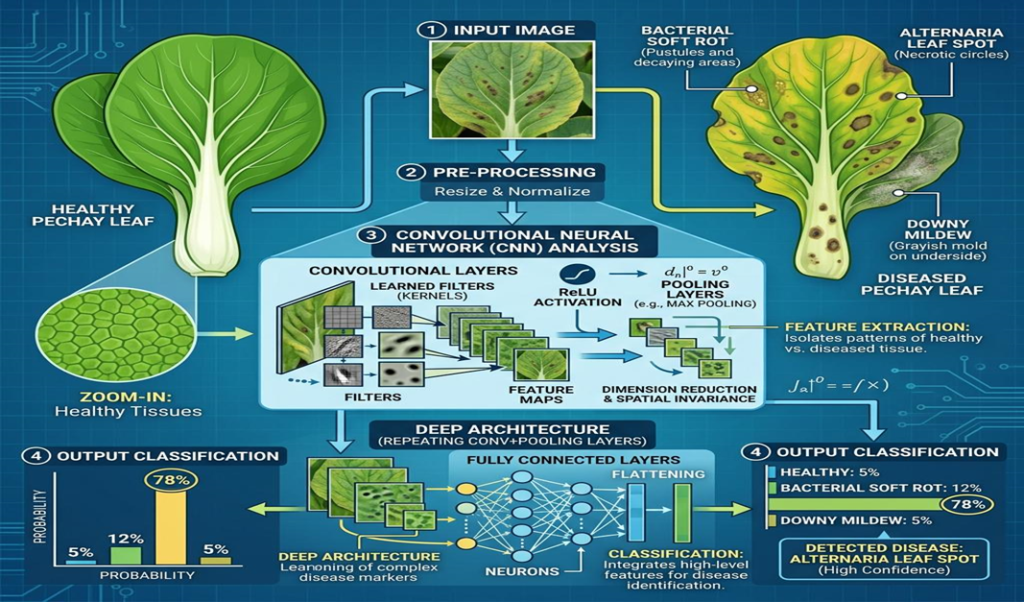
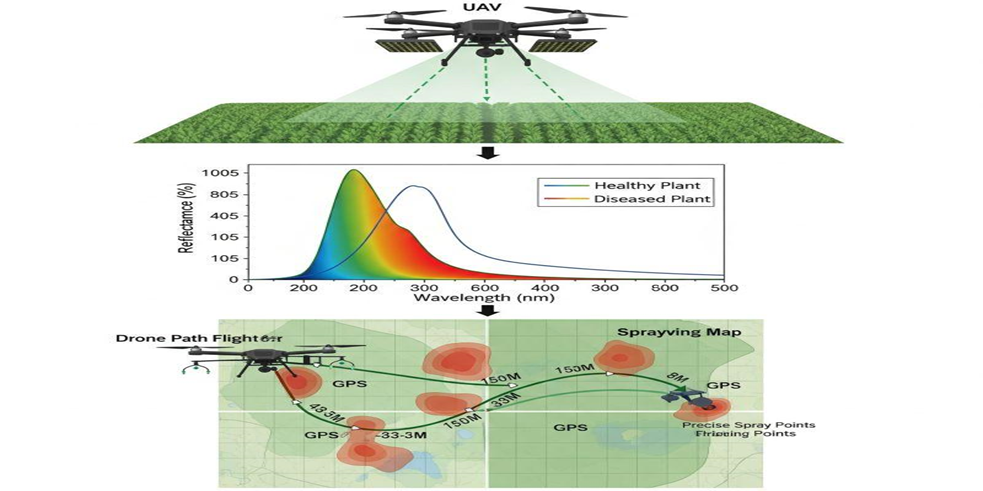
Figure 1 Shows a basic architecture how AI technology uses Algorithms and machine learning tools to identify a healthy crop. The healthy crop is classified and identified based on the features identified from the original healthy plants. The Tool or the algorithm is trained to classify the healthy crop based on supplied data. Figure 2 shows a section of digital image for plants captured to be used as an input in the Mobile AI application while Figure 3 is displaying drone technology using deep learning tools to identify and classify healthy crops.
Figure 1: Block Architecture showing how AI techniques and algorithms detect disease on crops
Figure 2 : A digital Image of a plant section captured to be inputted in AI algorithm for disease identification
Figure 3 : Drone technology configured with Machine and Deep Learning tools classifying healthy parts of crops
Table 1 shows major Artificial Intelligence tools and technologies that are efficiently used for crop diseases detection and classification of healthy plants from non-healthy ones.
AI tool and Technology
Main Usage
Typical Application
1
TensorFlow
Deep-learning model development
Leaf-image disease classification
2
PyTorch
Deep-learning and computer vision
CNN/transformer disease detection
3
YOLO
Real-time object detection
Detecting diseased areas on leaves/plants
4
OpenCV
Image processing
Segmenting and analyzing infected leaves
5
PlantVillage dataset
Training/testing models
Classification of common plant diseases
6
Google Teachable Machine
Easy image-model training
Prototype disease classifiers without extensive coding
7
Roboflow
Image annotation and computer vision
Preparing crop-disease datasets and training models
8
Edge Impulse
Edge AI deployment
Running disease detection on mobile/IoT devices
9
Google Earth Engine
Satellite/geospatial analysis
Monitoring crop stress over large areas
10
11
Sentinel-2 imagery
Multispectral crop monitoring
Detecting vegetation stress and disease indicators
12
Drone + AI
High-resolution field inspection
Mapping disease outbreaks within farms
13
Mobile AI apps
Field diagnosis
Farmers photograph leaves for disease identification
Overview of Laboratory Techniques
The practical laboratory session will introduce participants to the molecular detection of Cassava Mosaic Disease (CMD). It will provide a practical overview of key diagnostic steps, including plant sample preparation, DNA extraction, PCR principles, and interpretation of results. The session will also highlight how molecular diagnostics can complement visual and AI/ML-based disease detection.
Standard laboratory biosafety procedures, including PPE, equipment and surface disinfection, appropriate sample handling, and biological waste management, will be observed.
Participant Selection Criteria
Relevant academic background in plant sciences, agriculture, agronomy, biology, biotechnology, phytopathology, computer science, AI/ML, data science, or related fields;
Professional or research experience related to crop health, plant disease management, agricultural technologies,
Demonstrated interest in applying AI/ML tools to agricultural and plant health challenges;
Relevance of the workshop to the participant’s current professional or research activities;
Potential to apply and disseminate the knowledge acquired within their home institution;
Priority may be given to participants from OIC Member States and neighboring West African countries, ensuring appropriate geographical and institutional diversity.
In addition, the practical session in Lab will involve 10 selected participants based on the following criteria:
Academic background in biology, agronomy, phytopathology, biotechnology, plant sciences, or related fields;
Demonstrated experience or interest in plant disease diagnosis;
Basic laboratory knowledge and experience considered an advantage;
Clear relevance of the training to the participant’s professional or research activities;
Potential and commitment to replicate and share the knowledge acquired within their home institution.
4. OBJECTIVES
Strengthen capacities in the early detection and diagnosis of crop diseases through the practical use of existing AI/ML tools, complemented by laboratory-based diagnostic methods.
Promote the adoption of AI-driven agriculturalsolutions for crop health monitoring, early disease detection, improved productivity, and farmers’ livelihoods.
Facilitate knowledge exchange and scientific collaboration among plant scientists, AI/ML specialists, laboratory experts, and agricultural professionals.
5. STRATEGIC SIGNIFICANCE
Supports food security and agricultural resilience in West Africa.
Promotes the use of emerging technologies in agriculture (smart agriculture.)
Strengthens laboratory and research capacities for plant disease diagnostics.
Encourages South-South scientific cooperation and technology transfer.
6. EXPECTED IMPACTS
Improved technical skills in AI-based crop disease detection and laboratory diagnostics.
Enhanced disease surveillance and early warning systems for major food crops.
Strengthened institutional capacities in plant health research and diagnostics.
Increased collaboration among agricultural research institutions across OIC Member States.
7. TARGET PARTICIPANTS
7.1 The training workshop targets:
Plant protection researcher, data scientists and farmers;
Phytopathologist, Specialized agronomist.
7.2 Number of participants: 40 in person; +100 online
8. METHODOLOGY AND TRAINING APPROACH
The workshop will adopt a hands-on, practice-oriented approach, combining:
Expert-led lectures and technical presentations;
Practical lab sessions and case studies;
Demonstrations of existing AI-based agricultural tools;
Interactive discussions and knowledge-sharing sessions.
9. EXPECTED OUTCOMES
Enhanced Technical Capacity in Disease Early Detection
Improved Application of Machine Learning, IoT, GIS system for Field-Based Screening
Strengthened Competence in Laboratory Diagnostics
Effective Integration of Field and Laboratory Detection Methods
Improved Disease Surveillance and Early Warning Systems
Enhanced Institutional Coordination and Collaboration
Action-Oriented National Follow-Up and Implementation
10. PARTNERS WITH THE FOCAL NODE
Lead Organization
OIC-COMSTECH
Partners
Islamic Organization for Food Security (IOFS)
OIC GS
Host Institution
Cheikh Anta Diop University (UCAD)
Other Partners
International Institute of Tropical Agriculture (IITA)
Central And West African Virus Epidemiology (Wave) TBC
11. PROPOSED FOLLOW-UP
Establish a group of experts in ML for agriculture and plant disease diagnostics.
Zoom recording of the training session.
12. CONTACTS / OUTREACH
All official communications and outreach will be made through OIC-COMSTECH’s official channels and shared on the partners’ pages (UCAD, OIC, IOFS), National Focal Points and Young Affiliates.
Cheikh Anta Diop University of Dakar (UCAD) Prof. Alioune Dior FALL Head of the Pharmacognosy and Botany Laboratory Faculty of Medicine and Pharmacy Email: alioune.fall@ucad.edu.sn
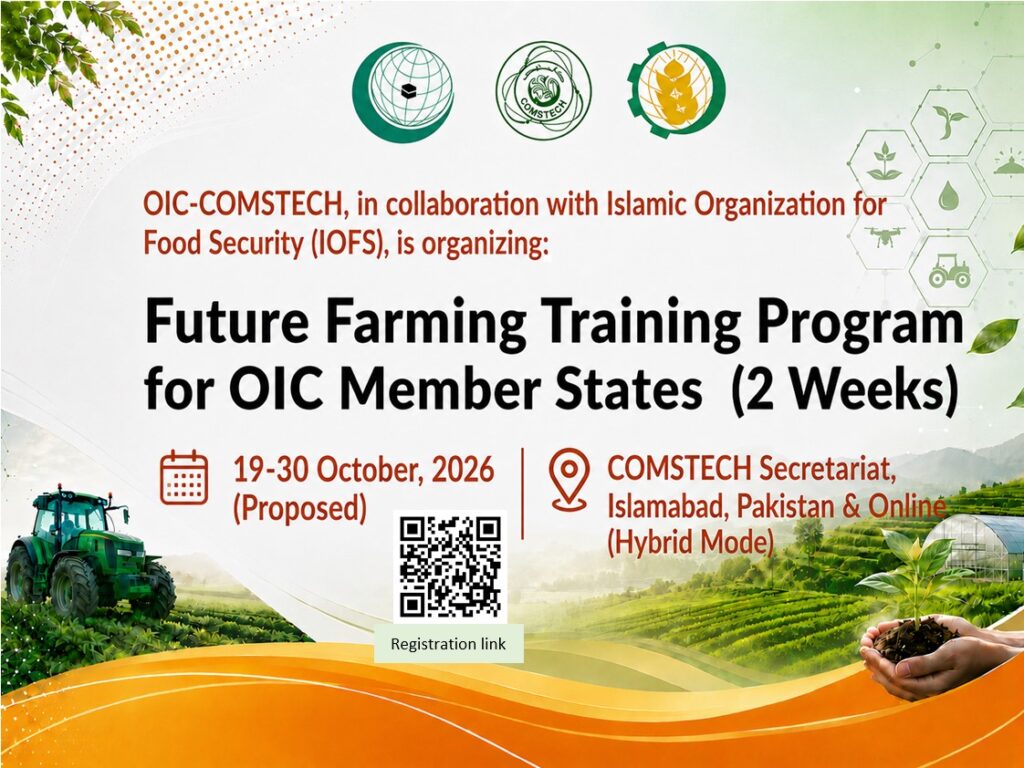
19–30 October 2026 Islamabad, Pakistan & Online (Hybrid Mode)
Organized Under: OIC-COMSTECH & Islamic Organization for Food Security (IOFS)
The OIC Ministerial Standing Committee on Scientific and Technological Cooperation (COMSTECH), and the Islamic Organization for Food Security (IOFS), are pleased to announce a joint two-week Future Farming Training Program, aimed at strengthening agricultural capacity across OIC Member and Observer States.
Program Overview
Agriculture remains a cornerstone of economic development and food security in many OIC countries. However, enduring challenges such as climate change, water scarcity, low productivity, and limited adoption of modern technologies continue to hinder growth in this sector. This training program is designed to equip participants with advanced knowledge and practical skills in modern, climate-smart agriculture.
The training will be conducted in a hybrid format, combining in-person workshops in Islamabad with online participation from across OIC Member and Observer States.
Key Objectives
To promote adoption of precision and digital agriculture technologies
To develop skills in plant biotechnology to smart systems
To enhance food security through sustainable and climate-smart farming
To strengthen post-harvest management and agri-value chains
To foster innovation and entrepreneurship in agriculture
20 in-person participants (10 from OIC Member and Observer States, 10 from Pakistan)
Up to 1,000 online participants
Eligibility Criteria
Applicants must meet the following requirements:
Minimum 16 years of education (BS) in agriculture sciences or related fields
At least 2 years of relevant professional experience
Age between 20–40 years
Open to agriculturists, farmers, agribusiness professionals, students, and young entrepreneurs (both public and private sector; male and female working in the field of agriculture)
Women agri-entrepreneur and progressive farmers are welcomed
Facilities for Selected Participants
For participants selected from OIC Member and Observer States, the program will cover:
Air travel/Visa fee
Accommodation
Meals
Certification
Participants will receive a certificate upon successful completion of the training, and final assessment.
Partner Institutions
The program will be conducted with the support of leading institutions, including:
Pir Mehr Ali Shah Arid Agriculture University, Rawalpindi
National Agricultural Research Centre (NARC), Islamabad
Allama Iqbal Open University, Islamabad
National University of Sciences and Technology (NUST), Islamabad
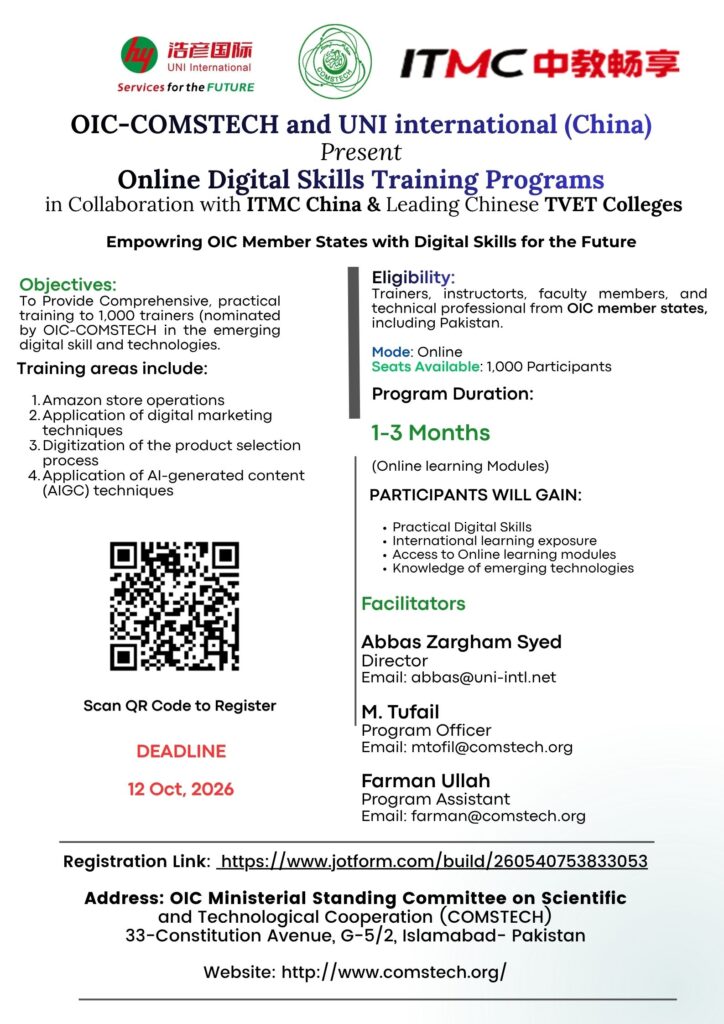
OIC-COMSTECH and UNI International (China) Online Digital Skills Training Programs in collaboration with ITMC China & Leading Chinese TVET Colleges, is offering a series of Online Digital Skills Training Programs for students, trainers, instructors, faculty members, and technical professionals from OIC Member States. The initiative aims to strengthen digital competencies and provide participants with practical knowledge in emerging technologies, including Amazon Store Operations, Digital Marketing, Product Selection Digitization, and AI-Generated Content (AIGC).
The program will be delivered online over a period of 1–3 months, with 1,000 seats available. Participants will benefit from practical digital skills, international learning exposure, online learning resources, and insights into emerging technologies.
Eligibility: Students, Trainers, instructors, faculty members, and technical professionals from OIC Member States, including Pakistan.