Lecture Time: 10:30 am – 12:30 pm (2 hours)
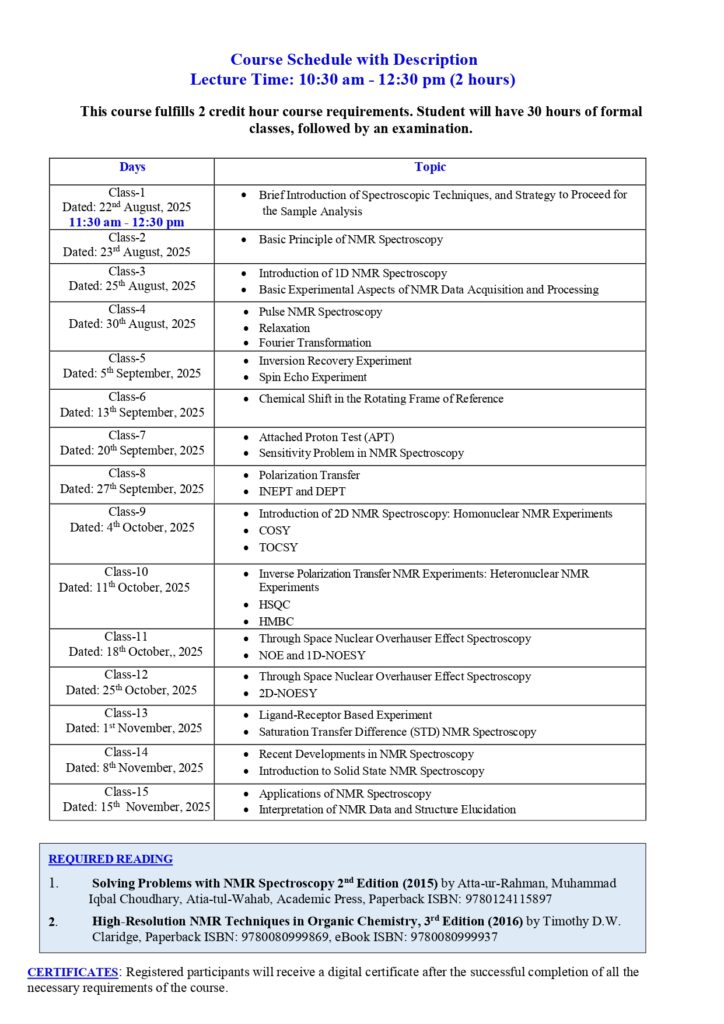

Lecture Time: 10:30 am – 12:30 pm (2 hours)
October 15 to November 30, 2025
Flyer: Click Here
OIC – COMSTECH, in collaboration with the Dr. Panjwani Center for Molecular Medicine and Drug Research (PCMD), University of Karachi, is pleased to announce the COMSTECH – PCMD Training Course in Virology and Pandemic Preparedness.
This intensive six-week program is designed to provide hands-on training and practical knowledge in the following critical areas:
Funding Support
Selected participants will receive:
Eligibility
How to Apply
Interested candidates are encouraged to apply through the following link:
Application Form : Click Here
Program Details: Attached
Application Deadline: 18th September 2025; For further inquiries, please contact:
📧 khazima@comstech.org | ☎️ (+92 51) 9220681-3
Date: November 14, 2025
Time: 03:00-04:30 PM Pakistan Standard Time
Abstract:
OIC-COMSTECH cordially invites you to a thought-provoking webinar that delves into one of the most urgent issues of our time the escalating impacts of climate change across South Asia. This session aims to analyze the lessons learned from recent extreme flood events and explore ways to strengthen regional resilience, policy coordination, and community-based adaptation strategies.
South Asia faces an increasing frequency of extreme flood events that disrupt lives, livelihoods, and ecosystems. These floods are stark reminders of the region’s vulnerability to climate change and the limitations of current disaster management systems. This webinar aims to examine major flood events in South Asia to extract key lessons on adaptation, resilience, and policy response. It will discuss socio-economic and environmental impacts, highlight successful community resilience practices, and propose ways to strengthen regional cooperation and early warning systems for future climate-induced disasters.
Webinar Objectives:
To analyze and highlight lessons learned from South Asia’s extreme flood events as a means to strengthen regional climate resilience, policy coordination, and community-based adaptation strategies.
Target audiences: Young Scholars, Health Sciences, PhD students, Ecosystems Sciences, and Environmental sciences, Policymakers, and scientists with expertise in data analysis, including NGO, to strengthen evidence-based solutions across the OIC member states.
Distinguished Speakers:
Dr. Md. Sirajul Islam
Professor & Director,
Center for Infrastructure Research and Sustainable Development (CIRS)
Department of Civil and Environmental Engineering, North South University
Dr. Md. Sirajul Islam is a distinguished academic and researcher with over two decades of experience in water resources, environmental engineering, climate change, and disaster management. Since joining NSU in 2005, he has served in key leadership roles, including Dean of the School of Engineering and Physical Sciences and Founder Chair of the CEE Department. A Ph.D. graduate of The University of Tokyo and former Postdoctoral Fellow at JST, Dr. Islam has collaborated with leading global institutions such as UNFCCC, IPCC, ADB, UNDP, GIZ, and the World Bank. He currently serves on the Board of BAETE, contributing to engineering education reform in Bangladesh. Author of over 100 publications, Dr. Islam is also Editor of the Journal of Water Management Modeling (JWMM), Canada, and a frequent speaker at prestigious international conferences worldwide.
Webinar Flyer: Click Here
Registration link: Click Here
Webinar Coordinator:
Md. Rakibul Hasan
Junior Program Manager
Email: jpmrakib@comstech.org
Date: 12th nov, 2025 at 03:00 PM (PST)
Guest Speaker: Prof. Dr. Quarraisha Abdool Karim, FRS
President of The World Academy of Sciences
Flyer: Click Here
Abstract
Resilient research institutions are vital to confronting today’s global health challenges and preparing for those of tomorrow.
Local leadership driving solutions to local priorities, synergistic partnerships and collaborations, long-term investments in research, local infrastructure, human capacity and the next generation of science leadership is key for realising the transformative potential of science for social and economic well-being in low and middle-income countries that benefit everyone.
Three decades of HIV and TB research illustrate the translation of science to policy and practice, benefitting the most vulnerable, and the rapid pivoting to respond to the more recent COVID-19 pandemic.
In these unprecedented and volatile times, we need science that unites countries to ensure sustainable futures for this and generations to come.
Objectives:
Target Beneficiaries:
Registration link: Click Here
Contact Info
For any query, Please contact on the below given Email address.
Email: Khazima@comstech.org
Khazima Muazim
Programme Manager
Winter School 2024
Theme “Socio-Economic Importance of Medicinal Plant Production”
25-28 November, 2024
The University of Central Punjab, Historical Mughal City of Lahore, Pakistan
Program_NAPRECA_UCP_Winter_School: Click Here
Flyer: Click Here
We are proud to announce the 21st Winter School of the Natural Product Research Network for East and
Central Africa (NAPRECA) that will be hosted at the University of Central Punjab in the historical Mughal
city of Lahore, Pakistan 25-28 November 2024. The theme for this event is “Socio- Economic Importance
of Medicinal Plants Production”. This is a historical moment and a milestone in the history of NAPRECA,
as it is the first time to organize such a big event outside Africa in Lahore, Pakistan.
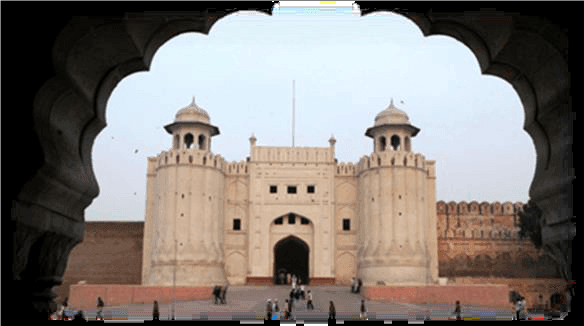
Lahore is the capital and largest city of the Pakistani province of Punjab. As the second largest city in Pakistan, after Karachi, and 26th largest in the world, with a population of over 13 million, Lahore is one of Pakistan’s major industrial and economic hubs. It has been the historic capital and cultural center of the wider Punjab region, and one of Pakistan’s most socially liberal, progressive, and cosmopolitan cities.
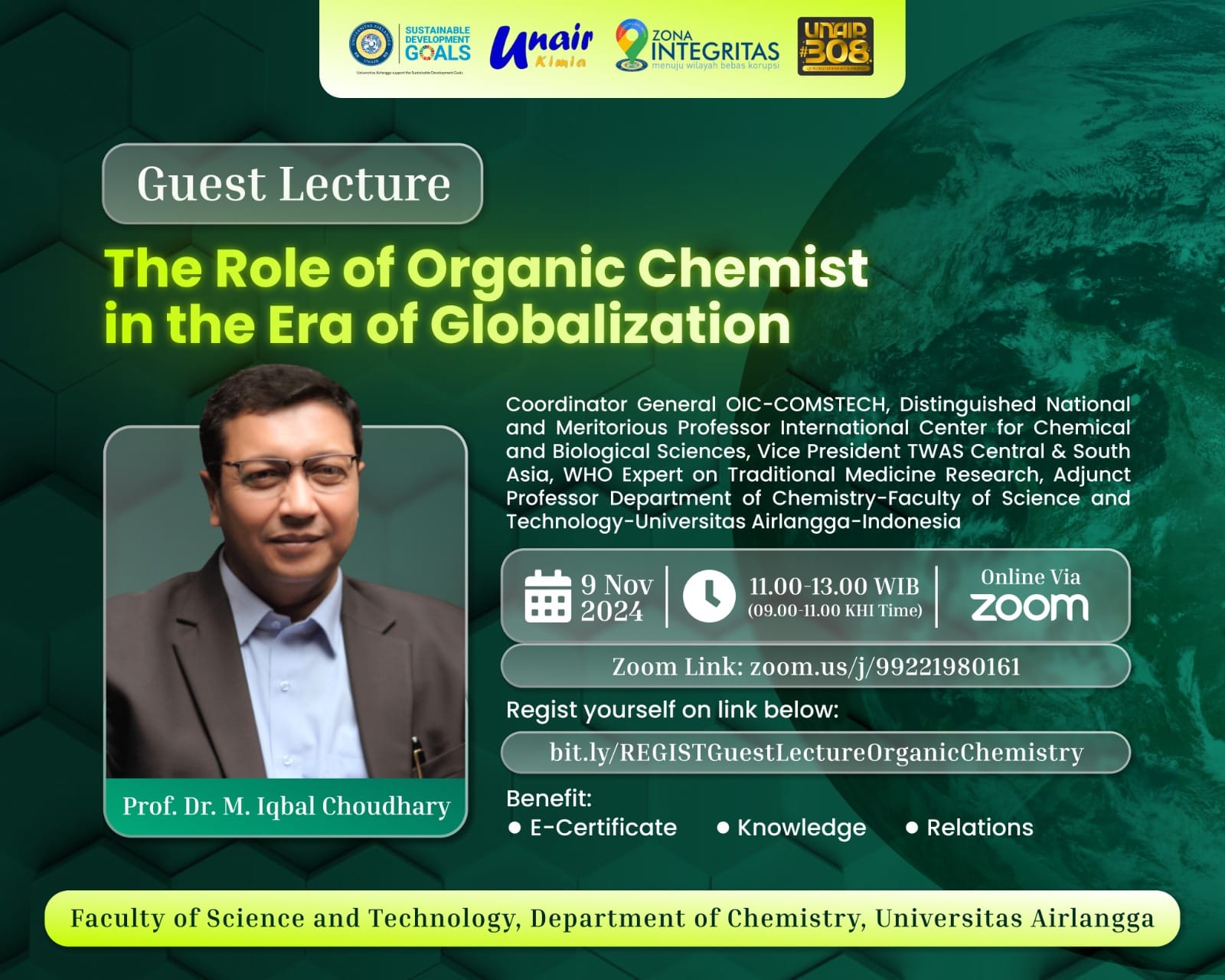
It is our pleasure that NAPRECA winter school will be organized under the auspices of Prof. Dr. M. Iqbal Choudhary, Mustafa (PBUH) Prize Laureate, H. I., S. I., T. I., Coordinator General COMSTECH, Distinguished National Professor/ Honorary Advisor ICCBS/ Vice President TWAS (South and Central Asia). NAPRECA also expresses deepest gratitude for the support from the International Science Programme,Uppsala University, Sweden.
The event aims at addressing the issue of industrialization of medicinal plants production as well as
social and economic importance of this sector. Young African researchers from Botswana, Cameroon, DR
Congo, Egypt, Ethiopia, Kenya, Madagascar, Rwanda, Sudan, Tanzania, Uganda and Zimbabwe are
nominated by the chairs of the chapters in these countries to participate in the event. The scientific
program will include invited keynote lectures, invited short lectures, practical and poster sessions.
Looking forward meeting you in Lahore.
On behalf of the Organizing Committee
Prof. Dr. Sameh AbouZid
NAPRECA Executive Secretary
On December 3rd – 4th, 2024
Venue: COMSTECH Secretariat, Islamabad, Pakistan.
Organized by: COMSTECH Secretariat
with the cooperation of Pakistan Council of Research in Water Resources (PCRWR) and the
International Water Management Institute (IWMI)
Technical Committee:
Organizing Committee:
Mr. Aftab Hussain Zaidi
Senior Director HR & Administration COMSTECH
Mr. Mujeeb-ur-Rehman
Senior Director Finance & Accounts COMSTECH
Mr. Naveed Aamer
General Manager Hospitality COMSTECH
Mr. Usman Quddus Malik
Assistant Director (IT) COMSTECH
Mr. Ikram Abbasi
Sr. Programme Manager COMSTECH
Mr. Umer Ali
Programme Officer COMSTECH
Mr. Muhammad Jamil
PS COMSTECH
Mr. Rizwan Raza
Admin Officer COMSTECH
Mr. Shabbir Hussain
Media Coordinator COMSTECH
Dr Amgad ELmahdi
Regional Manager – Middle East and North Africa (MENA), Egypt
Green Climate Fund-GCF
Dr. Majid Labbaf Khaneiki
Assistant Professor, University of Nizwa, Oman
UNESCO Chair on Aflaj Studies (Archaeo-Hydrology)
Dr. Daler Domullodzhanov
International Water and Land Specialist,
FAO Regional Office for Europe and Central Asia; 36,
Giprozem, app 90, Dushanbe, Tajikistan
OIC Member States face enormous challenges in water-related issues such as: limited water availability, ensuring access to water and sanitation services, balancing water use and food production, access to finance, trans-boundary waters, and climate changes. The counter this emerging challenge. OIC water vision was adopted in 2012. The OIC Water Vision envisioned exchange and knowledge sharing through peer networks and knowledge hubs as a mean to address the water challenges OIC countries face.
The OIC Water Vision aims to catalyze improved water security in OIC countries through connecting centers of excellence within the OIC in water science, policy, management and technology development; identifying solutions to water problems through increased dialogue and exchange of experience; and promoting solutions to water security challenges in the national and international agendas of OIC leaders.
Following up the OIC water vision, the STI Agenda 2026 and Abu Dhabi Declaration adopted respectively by the First and Second OIC Science and Technology Summits held in Astana in September 2017 and –virtually- in Abu Dhabi 2022, urged building the collective competence and strengthening working linkages between Member States to face water challenges. This international workshop and networking meeting of OIC Centre of Excellence on Water are continuation of OIC commitment to water issue. Main objective of this workshop and networking meeting are as following.
Scope of the International Workshop and the Networking Meeting of Water Research Institutes in OIC Member States
This part of the activity would concentrate on introducing the activities and foci of interest of the various centres, establishing linkages between them for formal cooperation, exchanges of personnel and data, planning ahead for coordination of national policies, sharing knowledge of best practices and of the emerging challenges to the water resources in the face of climate change.
Detailed Concept Note can be found at: Click Here
Detailed Technical Program: ———TBA—————-
To attend the event register at: Click Here
Jointly organized by OIC-COMSTECH and Huawei Technologies
Date: 17-18 December, 2024
Venue: COMSTECH Secretariat, Islamabad.
Mode: Hybrid (onsite and virtual participation)
Registration of International Participants for Physical Participation is Closed
Deadline for Local Participation: 26-November-2024
Flyer: Click Here
Introduction:
In an era of rapid digital transformation, cybersecurity has become a crucial component for the stability and security of nations. With increasing reliance on digital infrastructure, OIC countries face unique challenges in protecting their data, networks, and critical systems from cyber threats. In this context, an international workshop on the “Cybersecurity Landscape in OIC Countries: Issues and Prospects” is being jointly organized by OIC-COMSTECH and Huawei Technologies.
The workshop aims to provide a platform for stakeholders from OIC Member States, including experts, policymakers, and industry leaders, to discuss current cybersecurity challenges, share best practices, and develop strategies for mitigating risks and fostering collaboration. Through expert-led discussions, participants will explore opportunities to build resilient cybersecurity frameworks that adapt to the evolving threat landscape, ultimately strengthening the collective cybersecurity posture of OIC countries and ensuring a safer digital future.
Topics/Areas to be covered:
WHO SHOULD ATTEND?
This workshop is ideal for cybersecurity professionals, policymakers, researchers, industry leaders, startups, academicians, students, and representatives from international organizations.
ELIGIBILITY CRITERIA
Applicant must be relevant to the field of cybersecurity.
Registration Process:
Travel & Local Hospitality:
Venue:
The workshop will be held at the COMSTECH Secretariat, Islamabad, Pakistan. The city with the backdrop of Margalla Hills and National Park was purpose-built as the capital of sixth largest globally and second most populous (in OIC) country Pakistan in the year 1966. Pakistan, according to the Forbes magazine, is a hidden treasure for tourists with rich cultural diversity, ancient history, diverse landscape, cuisines, modern cities, and locally produced items.
Workshop organizers:
Prof. Dr. S. Khurshid Hasanain
Advisor, COMSTECH.
Mr. Haris Akram
Program Manager, COMSTECH
Haris@comstech.org
Mr. M. Haseeb Ahmad
Program Officer, COMSTECH
Haseeb.ahmad@comstech.org
COMSTECH the Ministerial Standing Committee on Scientific and Technological Cooperation of the OIC (Organization of Islamic Cooperation)
has organised a webinar on
“A One Health Approach to Zoonotic Outbreaks”
Date: Sep 19th 2024
Time: 03:00PM Pakistan standard Time
Venue: Online only
Registration Link : Click Here
Flyer: Click Here
Biography of Speaker:
DR. TARIQ MAHMOOD ALI
Dean Social Science / Associate Professor (Health Economics)
HEALTH SERVICES ACADEMY
(Degree Awarding Institute)
Prime Minister Health Complex, Park Road, Chak Shahzad, Islamabad, Pakistan
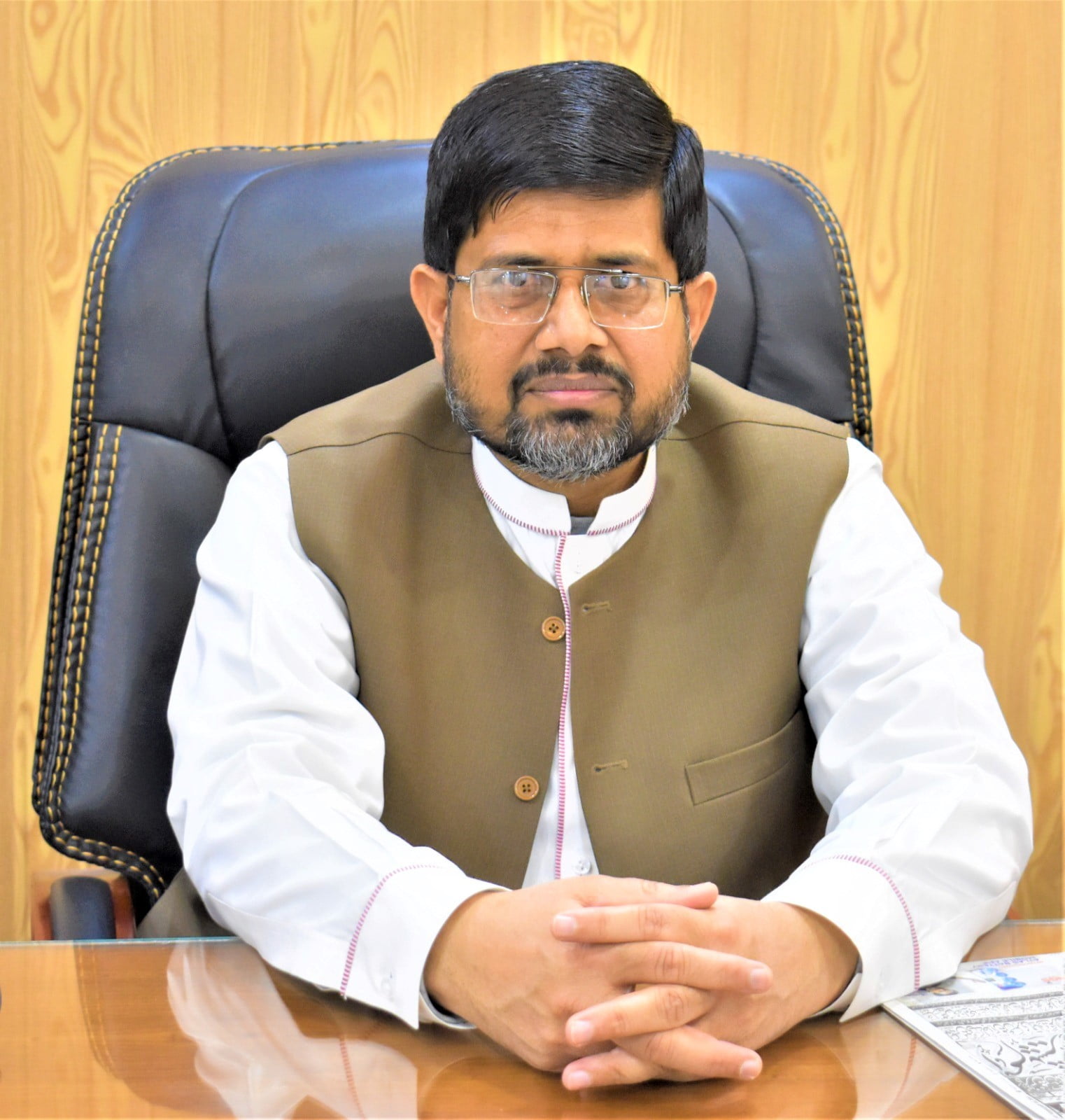
Dr. Tariq Mahmood Ali is a distinguished academic and public sector professional with over two decades of experience. His career spans various roles in academia and public service, reflecting his dedication to advancing education and health policy in Pakistan. Dr. Ali has taught extensively at the undergraduate, graduate, and postgraduate levels in some of the country’s most prestigious institutions, including Federal Urdu University of Arts, Science and Technology (FUUAST), National University of Modern Languages (NUML), Quaid-i-Azam University, COMSATS University, and the Health Services Academy (HSA) in Islamabad.
Currently, Dr. Ali serves as the Dean of Social Sciences at the Health Services Academy, Islamabad, where he has been a pivotal figure since 2020. His academic expertise is broad, encompassing health economics, health financing, social health protection, public policy, and economic development. In addition to his role as Dean, he is also an Associate Professor of Health Economics at HSA, a position he has held since February 2022. Previously, he served as Registrar at HSA and as Assistant Professor of Health Economics.
Dr. Ali has made significant contributions to curriculum development in Pakistan, particularly in health economics. He designed and developed the curriculum for the BS, MS, and PhD programs in Health Economics, which were approved by the Higher Education Commission (HEC) and launched for the first time in Pakistan in Fall 2022 at HSA. His work in this area underscores his commitment to fostering advanced education in health economics, preparing future generations to address complex health policy challenges. His research credentials are equally impressive, having secured competitive research grants, including a $3,000 grant from STEPI, Korea in 2017. Dr. Ali has also secured substantial funding for various projects through the Public Sector Development Programme (PSDP) of the Government of Pakistan, amounting to millions of rupees. In the current financial year, he secured the project of one health workforce development (cost of Rs. 230 million) through PSDP, Government of Pakistan. He is currently serving as Project Director for multiple PSDP projects, focusing on health human resources, innovation, and the strengthening of the Health Services Academy.
As a WHO consultant, Dr. Ali played a key role in developing the PC-1 for Viral Hepatitis, a project valued at Rs. 350 million USD, which was subsequently approved by the Planning Commission. His expertise is further recognized in his role as a Social Health Protection Advisor and Research Excellence Expert with the GFA Consultant Group, where he supports government initiatives in social protection and health policies.
Dr. Ali’s academic achievements are equally notable. He holds a Bachelor’s degree in Statistics, Mathematics, and Economics, an M.Sc. in Economics, and a PhD in Economics from the University of Manchester, UK, and FUUAST, Islamabad. He completed his PhD research with a scholarship from HEC at the Manchester Institute of Innovation Research (MioIR). Dr. Ali has published 21 research papers in peer-reviewed journals and has presented at international conferences. Currently, he is supervising 8 PhD scholars and 18 MS students and 30+ students have completed their MS research under his supervision. His name is listed among the “Productive Scientists of Pakistan” by the Pakistan Council for Science and Technology (PCST).
Dr. Ali’s extensive experience, academic achievements, and dedication to public service make him a leading figure in the fields of health economics and public policy in Pakistan.
Webinar Background:
The talk comprises of three parts. The first part will introduce the One Health approach, which emphasizes the interconnectedness of human, animal, and environmental health in addressing zoonotic outbreaks—infectious diseases that spread from animals to humans. The talk outlines how zoonotic diseases, such as rabies, SARS, and COVID-19, can escalate into significant health crises due to increased human-animal interaction. One Health adopts a multidisciplinary strategy involving preparedness, alert, response, and recovery phases to manage these outbreaks. It highlights the economic and health benefits of integrating human and animal health services, as demonstrated in various field applications, like providing joint veterinary and medical services to mobile pastoralists.
The second part will delve into the human health perspective within the One Health framework for managing zoonotic outbreaks. It begins by defining public health as a discipline focused on preventing disease and promoting well-being across entire populations, highlighting the need for a collaborative, multisectoral approach in outbreak management. The talk then examines the four phases of outbreak response—preparedness, alert, response, and recovery—emphasizing the importance of relationship-building and coordination across human, animal, and environmental health sectors. Challenges such as siloed working, conflicting priorities, and communication issues are discussed, underscoring the need for trust and collaboration among stakeholders.
The third part will explore the role of animal health in managing zoonotic outbreaks through the One Health approach. It emphasizes the importance of veterinary services in preventing and controlling diseases transmitted between animals and humans, such as through livestock, companion animals, and wildlife. The talk outlines the veterinary domain, which includes animal health, welfare, food safety, and the challenges posed by antimicrobial resistance and global trade. It highlights the need for coordinated action across human, environmental, and animal health sectors, stressing the importance of preparedness, early detection, and effective communication during outbreaks. The talk also discusses the overlap between public and private veterinary services and the necessity of their collaboration.
The talk also addresses challenges in adopting the One Health approach, including sectoral silos and communication issues during outbreaks. Overall, the talk underscores the need for coordinated, cross-sectoral collaboration to prevent and manage zoonotic outbreaks effectively. The talk concludes by acknowledging challenges and advocating for continued coordination and integration across sectors.
Target audience:
Healthcare Professionals, Researchers and Academics, Humanitarian Workers, Policy Makers and Advocates and other interested students.
To register, kindly click here: https://forms.gle/1fnfLxTxowotxm5n6
For more information, please contact:
Program Manager, Ms. Khazima Muazim khazima@comstech.org