Past Events

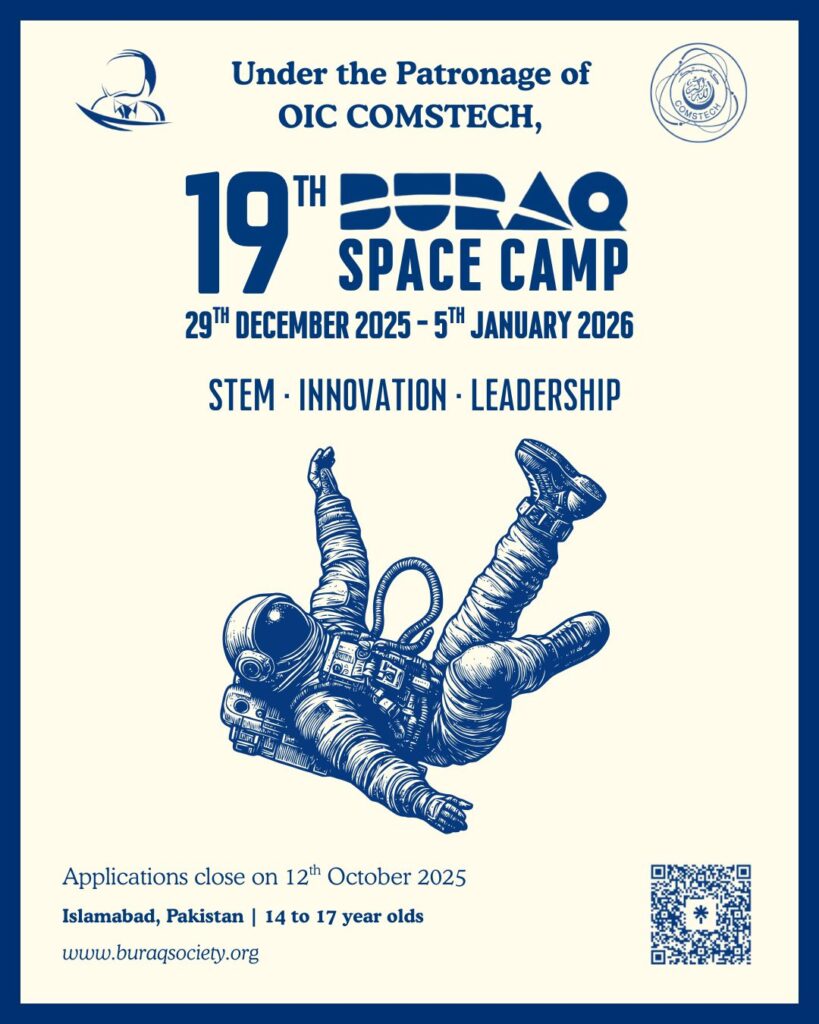
  • 19th BURAQ Space Camp

    Date: 29 December, 2025 – 5 January, 2026
    Venue: OIC-COMSTECH Secretariat, Islamabad, Pakistan.
    Deadline for Applications: October 30, 2025

    About the Camp

    The BURAQ Space Camp, now in its 19th edition, is a flagship initiative designed to inspire and empower young minds in the fields of Science, Technology, Engineering, and Mathematics (STEM). Being held this year under the esteemed patronage of OIC-COMSTECH, this immersive program will bring together students from across OIC member states to collaborate, innovate, and explore solutions to pressing global challenges.

    For over three decades, BURAQ has provided high-quality extracurricular training to students aged 14–17, fostering critical thinking, creativity, and teamwork. This year, participants will benefit from the state-of-the-art facilities of OIC-COMSTECH in Islamabad, Pakistan, where they will engage in hands-on projects, leadership activities, and mentorship from leading experts in academia and industry.


    Our Mission

    BURAQ’s mission is to prepare the next generation to think beyond traditional boundaries and to harness today’s resources responsibly for the benefit of future generations. Through experiential learning and dynamic team-based challenges, the program aims to cultivate resilience, creativity, and innovation in young learners.


    Our Goals

    The 19th BURAQ Space Camp seeks to:

    • Advance STEM education while aligning with the UN Sustainable Development Goals and the Paris Agreement.
    • Build global networks of like-minded youth committed to sustainability and innovation.
    • Promote collaboration, discipline, and leadership among students from diverse backgrounds.

    Program Highlights

    • Team-Based Learning: Students are placed in diverse teams, living and working together to solve real-world problems.
    • Sustainability Focus: Each team selects a UN Sustainable Development Goal to design a startup-style social enterprise using STEM-driven solutions.
    • Expert Mentorship: Participants interact with world-class academics, practitioners, and role models who provide inspiration and guidance.
    • Leadership Development: Senior student leaders mentor their peers, cultivating essential leadership and teamwork skills.
    • Immersive Experience: An intensive eight-day residential program running from 6:00 AM to 10:00 PM, with a curated schedule of academic sessions, interactive workshops, team-building exercises, and physical activities.

    Why Join?

    By participating in the BURAQ Space Camp, students not only enhance their scientific and problem-solving skills but also gain a unique opportunity to contribute toward a sustainable future. The camp nurtures a sense of responsibility, collaboration, and global citizenship, preparing youth to lead in their academic, professional, and personal journeys.

    For further information and registration: https://www.buraqsociety.org/about

  • COMSTECH-Benadir Training Course on Oncology


    Venue: Benadir University, Somalia

    Flyer: Click Here

    The Oncology Training Course at Benadir University, Somalia, scheduled for November 3-7, 2025, is a significant educational endeavor aimed at enhancing the expertise of healthcare professionals in oncology. This training is designed to provide a comprehensive understanding of cancer, its causes, and the various approaches to its management. With the rising incidence of cancer worldwide, it is imperative for medical practitioners to stay up to date with the latest advancements and methodologies in oncology to improve patient outcomes.

    Importance of the Workshop:

    • Enhancing Knowledge: The training will equip participants with a foundational understanding of oncology, focusing on the biological nature of cancer and the principles of cancer aetiology.
    • Multidisciplinary Approach: Emphasizing the importance of a multidisciplinary approach, the course will cover the collaborative management of cancer, highlighting that curative treatment is just one aspect of comprehensive cancer care.
    • Prevention and Early Detection: Participants will learn about the principles of cancer prevention, early detection, and screening, which are critical in reducing cancer incidence and improving survival rates.
    • Non-Surgical Treatments: The course will delve into the principles underlying non-surgical treatments for cancer, broadening the therapeutic options available to healthcare providers.

    Topics to be Covered:

    • Introduction to Oncology and the Biological Nature of Cancer
    • Principles of Cancer Aetiology and Major Causative Factors
    • Multidisciplinary Management of Cancer
    • Curative Treatment as a Component of Overall Cancer Management
    • Principles of Cancer Prevention, Early Detection, and Screening
    • Principles Underlying Non-Surgical Treatments for Cancer
    • Distinction Between Palliative Care and End-of-Life Care
    • Principles of Palliative Care

    Who Can Attend?

    This comprehensive course is designed for a wide range of medical professionals and students dedicated to improving cancer care in the OIC Member States. These include:

    • Medical Students & Recent Graduates: Ideal for those seeking a foundational understanding of oncology, from cancer biology to multidisciplinary treatment and palliative care principles.
    • Practicing Healthcare Providers: Essential for general practitioners, nurses, interns, and clinical officers who are often the first point of contact for patients and play a critical role in early detection and ongoing management.
    • Public Health Professionals & Policymakers: Highly beneficial for individuals involved in community health, aiming to develop effective cancer prevention, screening, and public education strategies.

    About the Resource Person:

    Dr. Asghar H. Asghar

    MBBS, M.Sc, FCPS, Consultant Clinical Oncologist

    Deputy Chief Medical Officer

    Director KIRAN Hospital, Karachi, Pakistan.

    Dr. Asghar H. Asghar is a seasoned Consultant Clinical Oncologist affiliated with KIRAN and Memon Medical Institute, Karachi. With over 25 years of experience, he specializes in the management of all cancer types and is well-trained in chemotherapy, radiotherapy (IMRT, VMAT), brachytherapy, and immunotherapy. Dr. Asghar is also proficient in using Eclipse and Monaco radiation contouring software developed by Varian and Elekta, respectively.

    He holds a Master’s in Nuclear Medicine from PIEAS and FCPS in Radiation Oncology. A founding member of the City Tumor Board, he is also a supervisor and examiner for CPSP and regularly facilitates research methodology workshops. Dr. Asghar actively contributes to national and international oncology forums and is a motivational speaker for PAEC. He is a member of ASCO, ESMO, FARO, PSCO, RSP, and PMA. In 2016, he received the Gold Medal from the Pakistan Atomic Energy Commission for his outstanding contributions to oncology.

    Registration Process:

    Step 1: For Physical Participation, please register at (Somalia Only) : Click Here

    Step 2:  For Virtual Participation, please register at: Click Here

    Selected candidates will be notified through email hence; applicants are required to regularly check their emails.

    Technical Focal Person:

    Dr. Mohamed Abdullaahi Awale,
    Dean, Faculty of Medicine,
    Benadir University, Somalia

    Training Coordinator:

    Muhammad Haseeb Ahmad
    Program Officer, COMSTECH                               
    haseeb.ahmad@comstech.org

  • OIC – COMSTECH & KCFR Certificate Course on “AI Essentials for Diplomats”

    Course Details:

    This certificate course is designed exclusively for diplomats, policymakers, and representatives from OIC member states and other countries who wish to enhance their understanding of Artificial Intelligence (AI) and its global impact. The program focuses on providing a comprehensive overview of AI fundamentals, its key domains, and its transformative role in governance, diplomacy, education, and sustainable development.

    The course will emphasize the importance of AI in shaping international cooperation, policy formulation, and strategic decision-making, particularly for resource-constrained nations. Participants will also gain insights into how AI can be harnessed to support innovation, strengthen institutions, and address cross-border challenges in the Muslim world and beyond.

    Learning Objectives:

    By the end of this course, the participants will:

    • Understand the fundamentals of AI and its key domains.
    • Explore the role of AI in diplomacy, governance, and international collaboration.
    • Gain practical insights into global best practices and policy frameworks.
    • Identify opportunities for adopting AI in national and institutional development.
    • Strengthen their capacity to engage in AI-driven discussions at regional and international platforms.

    Target Audience:

    • Diplomats from OIC member, observer, and other countries
    • Policy makers engaged in Science, Technology, Health, and Education
    • Senior Representatives of International Organizations
    • Leaders involved in Innovation, Strategic Planning, and Global Partnerships

    Course Modules:

    1. Fundamentals of AI & Global Diplomacy

    • Types of AI: Narrow AI, General AI, Generative AI
    • Domains of AI: Machine Learning, NLP, Robotics, Computer Vision
    • Role of AI in governance, diplomacy & international relations
      Exercise: Group activity- Map AI domains to real-world diplomatic challenges

    2. AI Tools for Diplomats

    • Drafting speeches, policy briefs & negotiation notes with AI
    • Real-time translation & communication support
    • AI for policy research & knowledge management
       Exercise: Hands-on –  Use AI to draft a short diplomatic statement

    3. Responsible & Strategic Use of AI

    • Ethics, bias & disinformation risks
    • AI in decision-making & crisis response
    • Building a personal AI action plan for diplomacy
      Exercise: Case study simulation – Apply AI insights in a mock crisis scenario

    Expected outcomes:

    • Gain a clear understanding of AI fundamentals and key domains.
    • Explore AI’s role in global governance, diplomacy, and sustainable development.
    • Learn from international best practices and policy frameworks.
    • Strengthen the ability to represent national interests in global AI forums.
    • Identify opportunities for AI-driven collaboration among OIC member states.
    • Poster of Certificated Course: 
    • Date: 14th -October-2025
    • Timing: 01:00 – 04:30PM (Pakistan Standard Time)
    • Procedure to join: In-Person
    • Registration link:
    • Address: COMSTECH Secretariat, 33-Constitution Avenue, G-5/2, Islamabad 
      Phone No. : 92 51 9220681-3
      Email:  comstech@comstech.org

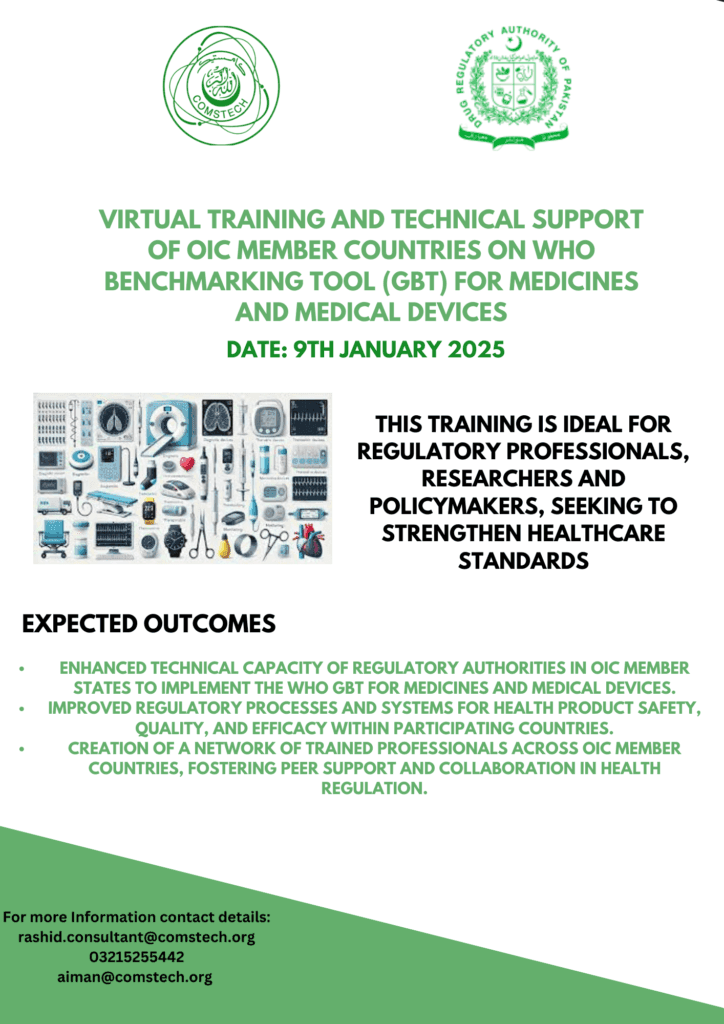
  • Virtual Training and Technical Support of OIC Member Countries on WHO Benchmarking Tool (GBT) for Medicines and Medical Devices

    Registration form: Click Here

  • COMSTECH Webinar on “Impact of Climate Change on Health”

    Delivered by “Prof. Dr. Mohammad Abdollahi”
    School of Pharmacy & Pharmaceutical Sciences Research Center (PSRC)
    Tehran University of Medical Sciences (TUMS)

    Online Only

    Date and Time: 23rd December 2024, 1500 hrs Pakistan Time

    Flyer: Click Here

    Abstract:
    Climate change is a significant challenge for humanity in the 21st century. Global warming and air pollution are two of its most recognized sequelae. Human intervention is primarily responsible for the current alarming rate of climate change. The increasing concentration of greenhouse gases results in global warming, which can have several pathophysiological effects on the human body. It can aggravate pre-existing conditions, cause premature death, and increase the risk of various neurological disorders. Air pollution is a significant concern as it can negatively affect human health. Common air pollutants include PM, NO2, SO2, CO, and O3. Burning fossil fuels is the leading cause of elevated levels of air pollutants. PM2.5 alone contributes to 800,000 deaths yearly and can lead to neurological disorders. Air pollution is also closely linked to respiratory and cerebrovascular diseases. Tackling air pollution and global warming together is crucial for reducing harmful effects.

    Brief profile of the speaker:
    Prof. Dr. Mohammad Abdollahi achieved the remarkable honor of being the youngest full Professor at TUMS in 2002, a testament to his exceptional academic prowess and leadership capabilities. Throughout his career, he has taken on significant roles, including chairing the Department of Toxicology & Pharmacology and the Iranian Society of Toxicology and Poisoning. With over 900 published papers and 300 book chapters, all in collaboration with his students, he has garnered approximately 80,000 citations, boasting an impressive H-index exceeding 130. His dedicated research in Mechanistic Toxicology and Pharmacology highlights the critical effects of environmental toxicants on public health, especially within the context of climate change.

    Who Should Attend?
    Early stage researchers, students, relevant personnels, and public health practitioners.

    Registration Link: Click Here
    Registration outcome will be shared through email, therefore, please give your valid email address.

    For more information, please contact:
    Ms. Khazima Muazim
    Program Manager COMSTECH
    khazima@comstech.org

  • Online Course Theme: Prospects for Climate Resilient Development and Just Energy Transition in OIC Regions

    Date:  December 18th, 2025
    Venue: COMSTECH Secretariat, Islamabad.

    Background

    OIC member states face high climate vulnerability but also have large untapped renewable resources. Scaling climate-resilient development and a just energy transition (JET) across OIC countries is feasible, but will require: targeted adaptation, policy reform to derisk renewable investments, regional cooperation for technology/skills transfer, and blended public-private finance mechanisms.

    In fact, access to electricity is a striking example of the country’s limited infrastructure, but also of the inequitable distribution of that infrastructure. The main sources of energy used today in remote areas in many countries are sources of deforestation in the case of biomass and a very uncertain supply in the case of fuel (which powers generators). But there are still many levers for improvement, especially if we want to ensure balanced development from a geographical point of view.

    Nowadays, solar, hydro, and wind energy are growing fast enough to meet the world’s growing demand for electricity. However, it is clear that this growth is slowing down and that renewable energy capacity forecasts are “5% lower” in some OIC member states and observer states, reflecting changes in policy, regulation, and the market since 2024, according to the IEA.

    The initiative to strengthen youth, and policymakers commitment for just energy transition in OIC member states align with Sustainable Development Goals 7 (Ensure access to affordable, reliable, sustainable, and modern energy for all); 8 (Promote sustained, inclusive, and sustainable economic growth); 11 (Ensure inclusive and sustainable cities, communities, and human settlements); and 13 (Take urgent action to combat climate change and its impacts).

    Objectives:

    • Strengthen youth skills in climate change resilience;
    • Reinforce training in renewable energy sector for agricultural and industrial production;
    • Establish appropriate policies for suitable just energy transition (JET).

    Outcomes:

    • Enhanced Climate-Resilient Development Pathways;
    • Promotion of energy access and equity, ensuring that vulnerable populations are not left behind.
    • Investment in research, innovation, and training for climate resilience and renewable energy.

    Target audience:

    Young entrepreneurs, Applied Science students; NGOs; policymakers and technicians with experience and people without experience in the building sector who would like to improve their skills and/or specialize in the renewable energy sector.

    Speaker Profile

    Prof. Youba Sokona has over 30 years of expertise in energy, environment, and sustainable development in Africa and has led numerous national and continental initiatives. He served as Vice-Chair of the IPCC’s sixth assessment report and Co-Chair of IPCC Working Group III for the fifth report, contributing since 1990. He received a Nobel Committee certificate in 2007 for his significant work with the IPCC. Prof. Sokona has held leadership roles, including as the inaugural Coordinator of the African Climate Policy Centre, and is affiliated with prestigious academies, including TWAS and the African Academy of Sciences. He is renowned for his technical knowledge and commitment to African-led development.

    Kindly follow the link for Registration : Click Here

    Zoom link: Click Here

    Contact Person: akim@comstech.org

  • International Conference on “Strengthening STI Policy Implementation for Achieving the SDGs: Challenges and Pathways to Solutions”

    Registration Form

    Registration Form

    1. Context

    Humanity faces complex challenges: climate change, health crises, food insecurity, and social inequalities, all intensified by environmental degradation and demographic pressures. Addressing these challenges demands coordinated global efforts built upon innovation, scientific knowledge, and sustainable practices. Science, Technology, and Innovation (STI) lie at the heart of transformative solutions needed to achieve the Sustainable Development Goals (SDGs) by 2030, the African Union’s Agenda 2063, and the OIC’s Agenda 2026. However, despite significant progress in policy formulation, STI policy implementation across many developing countries remains constrained by:

    • Weak inter-sectoral coordination;
    • Limited monitoring and evaluation frameworks;
    • Short-term political priorities overshadowing long-term development goals; and
    • Insufficient inclusion of youth, women, and marginalized groups.

    Unfortunately, despite the efforts made to define STI policies here and there, it must be recognized that implementation mechanisms face constraints such as a lack of coordination, sometimes counterproductive political measures, the difficulty of measuring policy performance and the potential mismatch between short-term political interests and long-term societal objectives. Therefore, it becomes urgent to conduct a detailed analysis of the various bottlenecks for the implementation of STI policies in countries and to propose solutions that can ensure their effectiveness and alignment with the SDGs; notably the “Leave No One Behind” principle, which is a fundamental commitment to end poverty and reduce all inequalities, giving priority to the most vulnerable and marginalized people.

    Faced with these persistent obstacles, COMSTECH and COMSATS University in Islamabad took the initiative to jointly organize this international conference, which aims to strengthen the capacity of policymakers, researchers and practitioners to design and implement mechanisms for the implementation of inclusive and evidence-based STI policies, in line with the SDGs.

    • Aim and Objective

    The training aim is to strengthen participants’ capacity to develop, implement, and evaluate STI policies that are coherent with national priorities and the SDGs. Participants will analyze implementation challenges, learn from best practices, and identify actionable strategies for transparent, participatory, and inclusive policymaking.

    Following are the Objectives of Training:

    • To enhance understanding of STI policy design and implementation mechanisms.
    • To identify bottlenecks and constraints hindering policy effectiveness.
    • To share good practices and innovative solutions from OIC and global contexts.
    • To foster networking and collaboration among STI policymakers, researchers, and innovators.
    • To draft a technical framework for developing and implementing effective STI policies.
    • Topics to be covered
    • Conceptual and Analytical Frameworks
    • Methodological approaches for the design and implementation of STI policies and instruments
    • Alignment of STI policies and instruments with the SDGs
    • Mechanisms for monitoring STI policies and evaluating their performance
    • Implementation Challenges and Case Analyses
    • Constraints in the development and implementation of STI policies
    • Governance, Success/Failure
    • Gender perspectives and inclusion in STI policymaking
    • Solutions and Future Directions
    • Good practices for SDG-aligned STI policies implemented
    • Recommended solutions for a transparent, participatory, inclusive, and evidence-based STI policymaking process capable of addressing challenges.
    • Policy tools, Multi-stakeholder collaboration
    • Training content

    The training will be in the form of interactive sessions alternating theoretical presentations and discussions. Two training sessions of two hours each are proposed and structured around the basic elements (1) conceptual framework of STI policies, (2) youth innovation and entrepreneurship to respond to global challenges related to the SDGs, (3) diagnosis of constraints to the implementation of STI policies, (4) solutions and strategies for the development and implementation of effective STI policies, and (5) analysis of cases of success or failure in the implementation of STI policies.

    • Profile of the speakers
    • Senior STI policy experts
    • Researchers
    • STI policy managers
    • Private sector STI policy experts
    • Civil society members
    • Think Thanks
    • Target audience
    • Scientific community (researchers, teachers, students, etc.)
    • Industrialists (including innovators)
    • Policymakers and government officials in STI sectors Civil society actors
    • Development actors
    • Local elected officials
    • Learners
    • Representatives of industry and innovation ecosystems
    • Civil society and youth organizations
    • Development partners and local government officials
    • Invited institutions
    • Pakistan Science Foundation (PSF)
    • President Academy of Science
    • Higher Education Commission (HEC)
    • Association of Private Sector Universities of Pakistan (APSUP)
    • Ministry of Science and Technology (MOST)
    • Sustainable Development Policy Institute (SDPI)
    • Islamabad Policy Research Institute
    • National Defense University (NDU) Pakistan
    • National University of Sciences and Technology (NUST)
    • Planning Commission of Pakistan
    • Qatar Charity in Pakistan
    • TUBITAK, Turkiye
    • International Science, Technology and Innovation Centre (ISTIC, Malaysia)
    • Iranian Research Organization for Science and Technology (IROST, Iran)
    • National Research Centre (NRC), Egypt
    • Academy of Scientific Research and Technology (ASRT, Egypt)
    • WUACD, Indonesia
    • SESRIC
    • OIC-GS, ASG Science & Technology

    REGIISTRATION LINK:    https://forms.gle/NCoPfUWsmXzBwWmX9


    • Agenda
    TimeThemesSpeakers
     Opening ceremony 
      10 : 00 – 10 : 10  Recitation of Holy Quran
    Welcome address: Prof M. Iqbal Choudhary, Mustafa (PBUH) Laureate Priz, HI,SI,TI, Coordinator General OCI-COMSTECH
    10 : 10 – 10 : 30SESSION 1: « Conceptual and Implementation Frameworks for STI Policies Aligned with the SDGs »Dr. Hammad Omer, Head International Office (PS) COMSATS University Islamabad
    10 : 30 – 10 : 35Questions/Answers 
    10 : 35 – 10 : 55SESSION 2: « Continental Frameworks and STI Policies for the SDGs »Dr. Kalsoom Sumra COMSATS University Islamabad
    10 : 55 – 11 : 00Questions/Answers 
    11 : 00 – 11 : 20SESSION 3: « Youth Innovation and Entrepreneurship to Address Global Challenges »Prof. Dr. Muazzam Khattak, Director S&T, Quaid-i-Azam University, Park
    11 : 20 – 11 : 25Questions/Answers 
    11 : 25 – 11 : 45SESSION 4: «Evidence-based STI Policies for Political Decision-making »Dr. Tariq Mahmood Ali Dean, Health Service Academy, Islamabad
    11 : 45 – 11 : 50Questions/Answers 
    11 : 50 – 12 : 00Refreshments 
    12 : 00 – 12 : 20SESSION 5: «Diagnosis of Constraints in Implementing STI Policies »Dr. Ismaila Diallo, Advisor-COMSTECH
    12 : 20 – 12 : 25Questions/Answers 
    12 : 25 – 12 : 45SESSION 6: « Gender Perspective in STI Policies »Dr Jaweria Ambreen COMSATS University Islamabad
    12 : 45 – 12 : 50Questions/Answers 
    12 : 50 – 13 : 10SESSION 7: « Analysis of Cases of Success or Failure in the Implementation of STI Policies »Dr. Mitra Aminlou Head of STI Commercialization Group and responsible for Internal affairs, NRISP (IRAN)
    13 : 10 – 13 : 15Questions/Answers 
    13 : 15 – 13 : 35SESSION 8: “Solutions and Strategies for Developing and Implementing Effective STI Policies: Example of University & Industry Collaboration to Show Importance of Innovation Focus in Developing STI Policies”Dr Khaleel Malik Professor of Innovation Management Manchester Institute of Innovation Research The University of Manchester
    13 : 35 – 13 : 40Questions/Answers 
    13 : 40 – 13 : 50Draft a Technical Framework for Developing and Implementing Effective STI PoliciesDr. Ismaila Diallo, Advisor-COMSTECH
    13 : 50 – 14 : 00Closing Remarks and Refreshments 
    14 : 00LUNCH

  • International Symposium on Halal Science and Wellness

    Registration Form: Click Here

    Description: Join us for the International Symposium on Halal Science and Wellness, a premier event dedicated to exploring the convergence of scientific innovation, ethical standards, and holistic well-being. This symposium will bring together leading experts, researchers, and industry professionals to discuss the latest advancements and future directions in Halal science, spanning pharmaceuticals, cosmetics, food technology, and lifestyle products. The event will be held on 5th December 2025 at the COMSTECH Secretariat in Islamabad, Pakistan.

    Registration Form: Click Here

    For more information and registration, contact:

    Muhammad Tufail (Program Officer)
    Email: mtofil@comstech.org
    Phone: 03439140306

  • RECTORS’ CONFERENCE 2025

    SHAPING THE FUTURE: GOVERNANCE, LEADERSHIP AND REFORMS IN HIGHER EDUCATION

    Date: 3-5 DECEMBER 2025
    VENUE : COMSTECH SECRETARIAT, ISLAMABAD, PAKISTAN

    The higher education landscape across many OIC member states stands at a defining moment. Despite significant growth in the number of universities and student enrollment, systemic challenges continue to undermine the sector’s potential to drive scientific innovation and sustainable development. There is a dire need to improve governance structures, address critical leadership gaps, and modernize policy frameworks to meet the demands of the 21st-century knowledge economy. To truly harness higher education as a driver of collective progress for the Ummah, these deficits must be confronted with courage, clarity, and collective resolve across the Islamic world.

    Objectives:

    • To critically examine common governance challenges in OIC higher education systems and explore innovative models for accountability, transparency, and institutional strengthening.
    • To address the leadership crisis by promoting the development of ethical, visionary, and people-centric academic leaders, drawing inspiration from universal values and the Prophetic model of character.
    • To deliberate on educational reforms aimed at aligning curricula, pedagogy, and research with global competitiveness and the sustainable development needs of OIC societies.
    • To foster collaboration among rectors, policymakers, and stakeholders from OIC member states to build a collective roadmap for transforming higher education into a catalyst for innovation, and social development.

    Purpose of the Conference:
    The COMSTECH Rectors’ Conference 2025 provides a vital international platform for rectors, vice-chancellors, scholars, and thought leaders from OIC member states to engage in a candid dialogue. The goal is to critically examine shared challenges, including governance deficits, leadership crises, and the need for reform, while identifying practical, collaborative solutions that can transform our higher education institutions into engines of innovation, inclusivity, and sustainable nation-building for the Islamic world.

    Conference Coordinators:

    Murtaza Noor
    Focal Person/coordinator CCoE, Media, and linkages
    Mnoor@comstech.org

    Muhammad Haris Akram
    Program Manager, COMSTECH                               
    haris@comstech.org

    Muhammad Haseeb Ahmad
    Program Officer, COMSTECH
    Haseeb.ahmad@comstech.org

  • Meeting of National Medicines Regulatory Authorities of OIC Member States

    Date: 28 November 2025 (Hybrid)
    Venue: COMSTECH Secretariat Islamabad, Pakistan

    For Registrations: Click Here

Back to top button