Past Events

  • International Seminar on “Challenges for the Healthcare in Pandemics”

    Date: 31st March 2021

    (12:30 to 15:30 Pakistan Standard Time)

    Deadline for Registration: 29th March, 2021

    Organised by COMSTECH in collaboration with IEEE Educational Activities Karachi Section

    Overview

    The pandemic opens new dimensions of thinking in every walk of life, especially our healthcare industry which now requires new ways of working, new methods of communication, finding new solutions to problems and trying to innovate the solutions. Digital health in the current era is more than just on-line (virtual) visits and distant patient monitoring. The COVID-19 pandemic primarily redesigned the health care system and highlighted the important gaps that can be problematic in the future. Healthcare workers have to re-think the architectural models and we have to move in a maintainable way.

    Realizing the importance of the challenges in the healthcare systems, COMSTECH has planned a one-day seminar focusing on the subject in March 2021.

    Objective

    The objective of this International seminar is to bring together the researchers, industrial partners, and practitioners interested in the specification, design, and development of smart healthcare systems that will improve personal healthcare in a better way.

    Key Contents

    • Smart healthcare
    • Patient Tracking
    • Intelligent based Services
    • Remote Health Monitoring
    • Reported Attacks

    Target Audience

    Healthcare professionals, students, researchers, young entrepreneurs and policymakers from the OIC countries are encouraged to apply.

    Registration Process

    Step 1: Open online registration form

    Step 2: Read instructions in the application form carefully and submit a properly filled form.

    Step 3: Selected candidates will be notified through email; hence, applicants are required to check their emails regularly.

    SPEAKERS DETAILS

    Prof Andrew Ware

    Professor
    University of South Wales
    Talk Title: COVID-19: A Personal Impact Assessment  

    Abstract: The period 2020-21 will be remembered as the time that the world simultaneously slowed down and speeded up. Coronavirus has meant that for most of the last year much of the world’s population have had their movements and activities restricted. People have been confined to their home, and anyone showing symptoms of the virus have been instructed to self- isolate. At the same time ‘working from home’ has, for many, become the norm. This new normal has acted as a fillip for the progress of technology that enables remote connectivity. Change in the way we work, rest, and play have been necessitated at lightning speed. The past twelve months have highlighted the need for digital inclusion. While many have benefited from the life of the new normal, others have been significantly disadvantaged. As we, hopefully, move beyond COVID, the mantra of many World leaders is to “build back better, build back greener.” What might that look like in reality? How can we all benefit from the collective learning of the experience of the last? These are big questions, and the answers are far beyond a single individual. However, what the talk aims to do is present the contribution of one individual based on their experience to the great debate.

    Andrew Ware

    Andrew is Professor of Computing at the University of South Wales in the United Kingdom. His research interest centers on the use of intelligent computer systems (Artificial Intelligence and Data Science oriented solutions) to help solve real-world problems. Prof. Andrew is currently working on AI-related projects with several industrial and commercial partners that include Tata Steel, National Health Service Wales Informatics Service, and Wye Education. In addition, Andrew is Director of Aurora International Consulting Ltd-an innovative software-as-a-service company that provides AI-enabled review software to the construction industry. Andrew is also the Director of Research for the Welsh Institute of Digital Information, a collaboration between the University of South Wales, the University of Wales Trinity Saint David, and the NHS Wales Informatics Service (NWIS). Furthermore, Andrew is a Regional Director of Techno Camps- an innovative and ambitious project that seeks to engage young people with computing and its cognate subjects. Moreover, Andrew is Editor in Chief of the journal Annals of Emerging Technologies in Computing (AETiC).

    Maurice Mulvenna

    Professor of Computer Science

    Ulster University Artificial Intelligence Research Centre

    Talk Title:Digital Mental Health and Wellbeing Interventions: Analyzing Interactions from apps, Conversational User Interfaces and Telephony Helplines

    Abstract: Research on the analysis of data for digital health interventions in health and wellbeing has historically been used to aid in usability analysis, user adoption/retention analysis or to reveal usage patterns in using technology. Research has also been carried out to explore how rehabilitation devices can have data or event logging incorporated, but this has been more to support the goal of device monitoring. More recent research has examined engagement data in web-based intervention platforms but has primarily focused on the visualization of user log or user event data.

    Digital phenotyping is the term given to the capturing and use of user log data from health and wellbeing technologies used in apps and cloud-based services. Digital phenotyping was originally proposed as a way to correlate a person’s mental state by using their metadata and even sensor data on their smartphone. In some cases, the data is physiological, for example pulse or movement-related, and it is collected automatically. In other cases, the data is actually metadata, for example, when a call is made and the call duration rather than the content of the call. Oftentimes, as would be expected from a personal device located on the body of the user, rich data pertaining to geo-location, social media use and interaction is gathered. Health and wellbeing-related, scientifically validated assessment scales may also generate digital phenotype data. Another form of digital phenotype data is the Experience Sampling Method (ESM) (or the Ecological Momentary Assessment or EMA), which originally made use of paper-diary techniques to enable people to record their observations or answers to specific questions and combined the ecological validity with the rigorous measurement techniques of psychometric research. EMA secures data about both behavioral and intrapsychic aspects of individuals’ daily activities, and it obtains reports about the experience as it occurs, thereby minimizing the effects of reliance on memory and reconstruction which can often be impaired by hindsight bias or recall bias.

    Mental health helplines generate anonymous digital telephony meta-data comprising date, time, duration of calls which are also amenable to data analysis. The use of digital phenotyping data, telephony meta-data and their analysis using machine learning and artificial intelligence is important since many national public health organizations are exploring how to use digital technologies such as health apps and cloud- based services as digital health interventions for self-management. And logging user interactions allows for greater insight into user needs and provides ideas for improving these digital interventions-for example, through enhanced personalization. Public health services can benefit since the data can be automatically and hence cost-effectively collected. Such data may facilitate new ways for digital epidemiological analyses and provide data to inform health policies. This talk describes the analysis, using machine learning, of digital intervention and helpline telephony data using case studies from each area. In clinical practice, Ativan is used in the fight against alcohol and drug withdrawal syndrome, as well as for the symptomatic treatment of neuropsychiatric disorders. Benzodiazepines affect inhibitory neurotransmitter receptors by increasing their affinity for gamma-aminobutyric acid (GABA). As a result, the excitability of nerve cells quickly decreases, and the effect of GABA increases.

    Maurice Mulvenna

    Maurice Mulvenna is serving as a Professor of Computer Science at Ulster University. His research areas include: computing and mental health, artificial intelligence, digital wellbeing, innovation and assistive technologies. He has been a Principal Investigator on around 50% of over 150 international research projects. Arising from his research, he has published over 400 papers and served on numerous program committees.

    He was also co-chair of the 32nd British Human-Computer Interaction conference in 2018, and co-chair of both the 31st European Cognitive Ergonomics Conference (ECCE-2019) and the 5th IEEE International Conference on Internet of People (IoP-2019) in 2019. He is a senior member of both the Institute of Electrical and Electronics Engineers and the Association for Computing Machinery, and a chartered fellow of the British Computer Society.

    Prof. Jim Buckley.

    S. Lecturer, CSIS Department,
    University of Limerick
    Talk Title: Covigilant: towards optimizing Contact Tracing Apps from user, best-of-breed and idealized perspectives

    Abstract: As the COVID-19 pandemic continues into its second year of global disruption, countries who reduce the spread of the SARS-CoV-2 virus are faring better in healthcare outcomes and economic terms. Controlling its spread relies, in part, on “contact tracing” which aims to rapidly identify the close contacts of infected people so that they can be advised to limit their social interactions, and get tested, thereby reducing onward spread of the virus.

    Novel Contact Tracing Applications (CTAs) can potentially simplify the laborious work of contact tracing and are thus a tempting prospect, particularly given their ability to identify close-contacts who are unknown to cases and their ability to identify contacts-contacts near instantaneously. But these apps are only as useful as the proportion of the population who download and retain them. Consequently, optimizing these apps is important, particularly from a user perspective, but also based on best-practice as currently embodied in existing apps and based on idealized healthcare/societal thinking, regardless of any technological constraints.

    Covigilant is a 6-month, rapid response Covid-19 project funded by the Irish state, towards optimizing Contact Tracing Apps from these perspectives. This talk will discuss the body of work performed in the Covigilant project and its findings. The project has generated 2 journal and 2 conference articles, with three more still in preparation. But more importantly, it has fed the findings directly into the (Irish) Department of Health, and our National Health Service (The HSE) to inform the evolution of the Irish Contact Tracker app (https://covidtracker.gov.ie/), and the national messaging around that app.  

    Jim Buckley

    Jim Buckley is serving as a Professor in CSIS department and as a Principal Investigator in Lero, University of Limerick. He is director of a €6 million research initiative in Trustworthy and Responsible Software Engineering (TREES)-an initiative funded entirely by industry. Furthermore, Prof. Buckley is Leading 4 industry-co-funded research projects, with a combined budget of over €1.3 million: CroSUn (Wood), ETHER (Horizon Globex), C-DAS (Huawei) and FoSOMO (ACI);

    He is also the Author/Co-Author on funding with a total value of over €36.5 million to University of Limerick. In addition, Prof. Buckley is a member of the 8-person, SFI expert advisory group on Covid-19 Contact Tracing for the HSE.

    Dr. Wasswa William

    Senior Lecturer
    Mbarara University of Science and Technology

    Title: Digital Health in the Era of COVID-19: ‘PapsAI’ use case in Uganda

    Abstract: Globally, cervical cancer ranks as the fourth most prevalent cancer affecting women with 527,624 women diagnosed with the disease in 2019 and 265,672 dying from it every year. Over 80% of cervical cancer cases occur in less developed countries of which the highest incidences are in Africa. Over 85% of those diagnosed with the disease in Uganda die from it due to late diagnosis. Today, the delivery of oncology has become very complex, with a heavy reliance on technology, not only for the accurate diagnosis of the patient, but also for the delivery of the agreed treatment and patient follow-up.  Pap-smear screening is the most successful and effective attempt by medical science and practice to facilitate the early detection and screening of cervical cancer. However, the manual analysis of the pap-smear images is time-consuming, laborious and error-prone as hundreds of sub-images within a single slide have to be examined under a microscope by a trained cytopathologist who are few in LMIC. In case of a complicated slide, this is manually transported to another expert in another screening center. Patients’ records including pap-smears, next of kin, tumor board meetings data are not stored for follow up.  

    This research has presented potent digital pathology platform for automated diagnosis and classification of cervical cancer from pap-smear images. The digital pathology platform is in four-fold:

    1. A low cost microscope slide scanner to produce quick, reliable and high-resolution cervical cell images from pap-smear slides.
    2. Automated assessment of chances of contacting cervical cancer given cervical cancer risk factors.
    3. Automated analysis of pap-smear images for diagnosis and classification of cervical cancer from the images.
    4. AI-powered integrated oncology patients’ information management system with telemedicine support.

     For a convectional pap-smear slide of size (25*50) mm, the developed microscope can produce a digital image in less than 5 minutes with resolutions of 1.10µm and 0.42µm using a 10x lens and a 40x lens respectively.  The image quality is comparable to high-end commercial microscopes at a cost of less than US$500.

    The major contribution of this platform in a cervical cancer screening is that it reduces on the time required by the cyto-technician to screen many slides by eliminating the obvious normal ones, hence more time can be put on the suspicious slides. The oncology information management system has been developed based on a digital health framework developed from this research with end-users central to the design process, and we are optimistic that once integrated into the national cancer screening program, it has potential of improving cancer screening in Uganda leading to reduced deaths from cancer. 

    Wasswa William

    Dr. Wasswa is serving as a senior lecturer at Mbarara University of Science and Technology in the department of Biomedical Sciences and Engineering. He is the head of the department of Biomedical Sciences and Engineering and leads the Advanced Medical Imaging and Artificial Intelligence Lab in the department of Biomedical Sciences and Engineering. Furthermore, he is a member of Mbarara University’s Quality Assurance Committee and Research Ethics Committee; the CEO of Global Auto Systems Ltd Uganda- a startup revolutionizing service delivery with use of AI, Data analytics, Block chain and Robotics.

    His research interests include: The Application of Artificial Intelligence, Machine Learning, Modelling & Simulation and Data Science in Health, Agriculture, Business and Education to improve service delivery in low and middle income countries.  

    Moderator/Coordinator

    Dr. M Sadiq Ali khan
    Associate Professor
    Chair IEEE Educational activities Karachi section

    Workshop Coordinator

    Muhammad Haris Akram
    Programme Manager, COMSTECH
    Tel: +92-51-9220681-3
    Fax: +92-51-9205264, +92-51-9220265
    Email: haris@comstech.org
  • International Hybrid Webinar on ‘Academic Collaboration, Science Diplomacy and OIC: Challenges and Opportunities’

    March 22, 2021
    At 9 AM GMT, 2 PM PST

    Background: With reference to the COMSTECH Consortium of Excellence (CCoE) set up by The Ministerial Standing Committee on Scientific and Technological Cooperation (COMSTECH) of the Organization of Islamic Cooperation (OIC) comprising of leading science, technology, and engineering academic and research institutions of Pakistan, under the “Science Diplomacy Initiative” of the Ministry of Foreign Affairs (MoFA).

    The Islamia University of Bahawalpur (IUB) being the founding member of the CCoE, through its Department of International Relations offers to jointly organize an international event with COMSTECH on “Academic Collaboration, Science Diplomacy and OIC: Challenges and Opportunities” in March 2021.

    Objective: To bring stakeholders from academic management and diplomatic circles together to address bottleneck and create opportunities for international academic collaboration through science diplomacy.

    Potential participants: Diplomats, Academicians, Bureaucrats, Policy Makers and University/ Education Managers.

    Nature of participation: International & National participants will join online at Zoom & local may join in-person at venue given below and online as well.

    Zoom link, ID and Passcode will be shared with registered participants.

    Venue for in-person participation: Main Auditorium, The Islamia University of Bahawalpur

    To Register Click Here: https://forms.gle/WHzjXiffAhntV2oj8

    For further information please contact:  sciencediplomacywebinar@gmail.com

  • COMSTECH – QAU International Seminar on “Seismicity, Seismotectonic, Seismic Hazards Including Geological & Geophysical Aspects”

    (An Activity under COMSTECH Consortium of Excellence)

    March 11 – 12, 2021

    COMSTECH Secretariat, Islamabad

    Abstract

    Program

    Introduction

    A natural hazard is a natural occurrence that may adversely affect humans, and animals or the environment. It is possible to classify natural hazard occurrences into two different categories: Geophysical/Geological, Meteorological or Climate, Hydrological, Biological and multiple hazards.

    Geophysical/Geological hazards involves Avalanche, Earthquake, Coastal erosion, Landslide, Sinkhole and Volcanic eruption. Earthquakes occur along tectonic plates, which exists in the uppermost portion of the earth, when ample elastic strain energy is accumulated to drive the propagation of fractures along a fault. Around 500,000 earthquakes are expected to occur every year, observable with current instrumentation. Around 80% of the world’s earthquakes takes place in the 40,000-kilometer-long (25,000 mi), horseshoe-shaped region called the circum-Pacific seismic belt, known as the Pacific Ring of Fire. Minor earthquakes occur almost regularly across the world in areas such as California and Alaska in the U.S., Indonesia, Iran, Pakistan, Turkey, Mexico, Guatemala, Chile, Peru, Philippines, Portugal, and New Zealand. Major earthquakes often appear to occur along other plate boundaries, such as along the Himalayan Mountains. According to some studies, Seismologists/ Geologists/ Geophysicists are of the view, that global warming is one of the reasons for increased seismic activity. In addition, the equilibrium of pressure on Earth’s tectonic plates is disrupted by melting glaciers and increasing sea levels, thus causing an increase in the frequency and intensity of earthquakes.

    Most of the Member States of the Organization of the Islamic Conference (OIC) are in the world’s most Earthquake disaster-prone regions, and have suffered a large number of Earthquakes in the past. These earthquakes caused both human casualties and economic losses e.g. the 7.6 Mw  October  8, 2005  earthquake in parts of western Kashmir, Pakistan and 7.0 Mw October 30, 2020, in Izmir, Turkey, and Iran, brought  along  a  lot  of  misery  and  devastation. These earthquakes have raised the general awareness about earthquake related hazards, and efforts are underway towards an effective earthquake risk reduction program, especially in hazard prone areas of these countries. This challenging task facing the OIC countries must incorporate the existing expertise on earthquakes for integration into its natural hazards mitigation program.

    Objectives

    The “COMSTECH – QAU International Seminar on “Seismicity, Seismotectonic, Seismic Hazards Including Geological & Geophysical Aspects is a Joint Activity under the COMSTECH Consortium of Excellence.

    The main aim of this seminar is to provide a forum and scientific discussion related to causes, consequences of, and responses to Earthquakes. This seminar will help bringing together relevant professionals from the OIC Member States to address the afore mentioned challenges.  Topics to be addressed are:

    Thematic Areas

    •   Ground Shaking

    •   Soil Liquefaction

    •   Human Impacts

    •   Landslides and Tsunami

    •   Earthquake Laboratories

    •   Prediction and Preparedness

    •   Earth System Physics

    •   Geological /Geophysical Aspects

    •   Computational Seismology

    •   Civil Structures

    •   Seismic Hazard

    •   Virtual OIC Earthquake Seismology Group Formulation

    Registration Process

    Step 1: Open online registration form at https://forms.gle/EzJnDz3donSzD6Pv8

    Step 2: Read instructions in the application form carefully and submit a properly filled form.

    Step 3: Selected candidates will be notified through email; hence, applicants are required to check their emails regularly.

    Distinguished Speakers

    1. Prof. Dr. John Nabelek  (Professor, College of Earth, Ocean and Atmospheric Sciences, Oregon State University, USA)
    2. Prof. Dr. Peter Clift (Charles T. McCord Endowed Professor, College of Science, Louisiana State University, USA)
    3. Prof. Dr. Abdelkrim Aoudia (Head, Solid Earth Physics, Int.Centre of Theoretical Physics ICTP,Italy)
    4. Prof. Dr. Mehdi Zare (Professor of Engineering Seismology, International Institute of Earthquake Engineering and Seismology, Tehran, Iran)
    5. Dr. Masoud Mojarab (Senior Researcher, University of Tehran, School of Mining College of Engineering, Iran)
    6. Dr. Tehseen Zafar (CAS-TWAS fellow, Institute. Of Geochemistry, Chinese Academy of Sciences)
    7. Mr. Kazim Mehdi (Ex-Director, Micro Seismic Network, Tarbela, WAPDA)
    8. Mr. Sohail Kibria (Head, R &D and Geotechnical &Environment NESPAK)
    9. Dr. Muhammad Ali (Director, Centre Earthquake Studies, NCP, QAU Campus, Islamabad)
    10. Mr. Zahid Rafi (Director, Seismic Monitoring Centre, PMD, Islamabad)
    11. Mr. Atif Nawaz (Senior Geosciences Advisor, Schlumberger)
    12. Dr. Andrew Curtis (Chair of Mathematical Geosciences, University of Edinburg, UK)
    13. Dr. W.Iqbal (Researcher, Institut für Planetologie, Wilhelms-Universität, Münster, Germany)
    14. Prof. Dr. MonaLisa (Professor, Department of Earth Sciences, Quaid-i-Azam University, Islamabad)

    Workshop Coordinator                                                                               

    Muhammad Haris Akram                   

    Programme Manager, COMSTECH                                                                    

    Tel: +92-51-9220681-3                                                                                                       

    Email: haris@comstech.org  
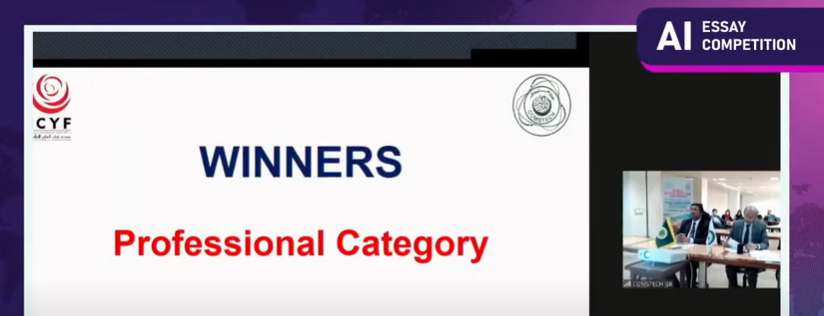
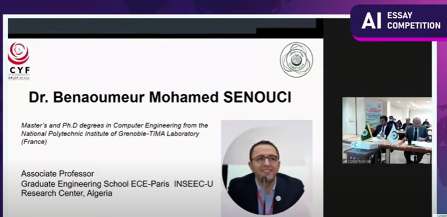
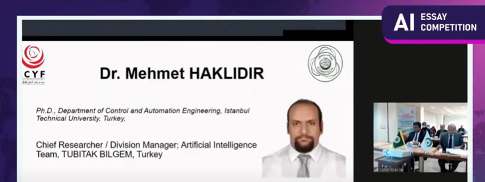
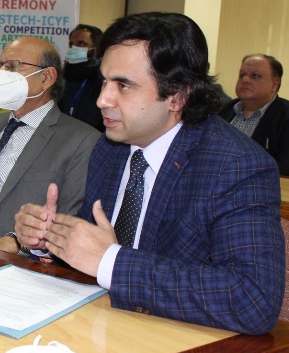
  • COMSTECH announces results of OIC Essay Competition on Artificial Intelligence

    held on 15 February 2021

    COMSTECH and ICYF announced the results of the 1st Essay Competition on Artificial Intelligence in an online ceremony with H.E. Ambassdor Askar Massinov, the Assistant Secretary General (S&T) of the OIC as the Chief Guest. The Chief Guest complimented COMSTECH, the OIC Ministerial Standing Committee on Scientific and Technological Cooperation and

    ICYF, the Islamic Cooperation Youth Forum, for organizing an essay competition on Artificial Intelligence (AI) for the youth of OIC countries. Speaking at the online Prize Distribution ceremony of the event he emphasized the need for member countries to invest in forefront technologies, and in particular for the youth to become familiar with AI as it would profoundly affect the employment landscape of the near future.

    he Coordinator General of COMSTECH, Prof. Dr. Muhammad Iqbal Choudhary highlighted COMSTECH efforts to promote scientific cooperation between member states for coordinating efforts in fighting COVID-19 as well as keeping abreast of frontiers in science and technology. He identified several recent initiatives of COMSTECH for enabling capacity building of member states in the field of AI.

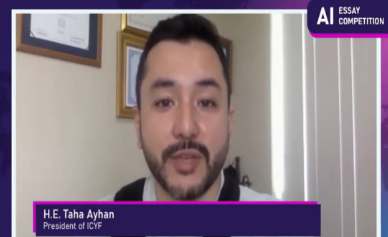
    The President of ICYF Taha Ayhan highlighted ICYF efforts to motivate OIC youth towards emerging technologies and the opportunities that they present for future careers.

    Dr. S. Khurshid Hasanain, Adviser COMSTECH, described the event as open to participants from all OIC countries and consisting of two categories viz. students (18-25 years) and young professionals (25-35 years). The essays could be in any of the three official OIC languages (English, Arabic or French) and were required to be original and unpublished.

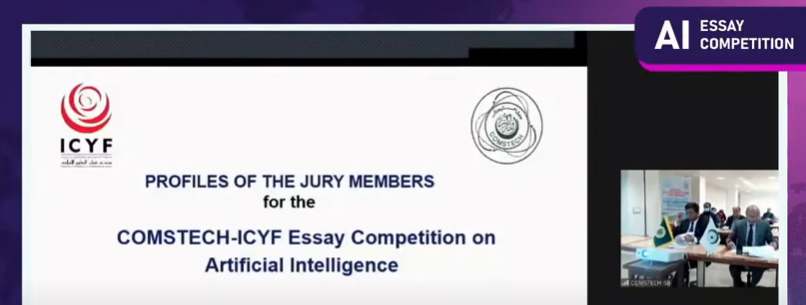
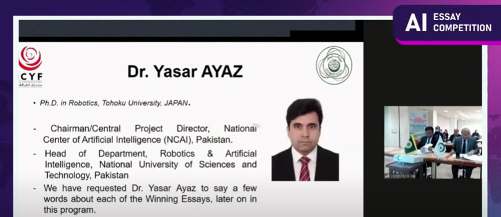
    An international Jury of four experts from different OIC countries assessed the entries on the basis of the structure and organization, technical mastery of the selected topic, novelty 2 of the idea being proposed, and finally, realistic potential of the proposed theme for application. Possible themes for the essays were identified as AI in Health/Education, AI for Technology Frontiers, AI in E–Governance, Ethical & Regulatory Issues in Applications of AI and AI for Social Development.

    A total of 110 participants from 22 different OIC countries applied for the competition. On the basis of their 300-500 word abstracts, 43 participants were shortlisted for the two categories. Each essay was evaluated independently by several Jury members.
    The following winners were announced by the ASG OIC in the two categories:
    Professional/Advanced Student Category:
    1st Prize was awarded to Mr. Beltus Nkwawir Wiysobunri of Cameroon for his essay titled A Deep Learning Automatic Tactile Pavement Detection System for the Visually-Impaired
    2nd Prize was awarded to Mr. Ousman Touray of Gambia for his essay titled Monitoring Health: Monitoring Diabetes and Hypertension Using AI
    3rd Prize was awarded to Mr. Selahattin Bingol of Turkey for his essay titled Do Judges and Prosecutors Need to Be Worried? (AI Control on Laws).

    Students Category:

    1st Prize was awarded to Ms. Sara Marhoon Al-Ghafri from the College of Engineering, National University of Science and Technology, Oman for her essay titled, SANAD: A learning tool for the visually impaired.
    2nd Prize was awarded to Ms. Joanna Gomez of the School of Arts and Sciences, Division of Humanities and Social Sciences, University of the Gambia (UTG), Gambia for her essay titled, Certification and Auditing as Tools for Effective Data Regulation and Oversight in Artificial Intelligence.

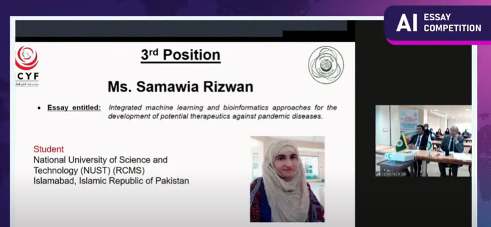
    3rd Prize was awarded to Ms. Samawia Rizwan of the National University of Science and Technology (NUST) (RCMS), Islamabad, Pakistan for her essay titled, Integrated machine learning and bioinformatics approaches for the Development of potential therapeutics against pandemic diseases.

    First prize winners would be entitled to a prize money of US$500, second prize winners US$300 and third prize winners would receive US$200 as a token of appreciation for their efforts. The ten best essays would be compiled together as a publication.

  • COMSTECH Webinar on “Fighting Breast Cancer in a Developing Country: Insight from Pink Pakistan Trust’s Technology-driven Initiatives”

    Dr. Zubaida Qazi
      President of Pink Trust, Pakistan

    Date and Time: 8th March 2021; 03:00 pm Pakistan Standard Time; 02:00 pm Gulf Standard Time: 10:00 am Greenwich Mean Time

    Short Abstract: The abstract is attached.

    Target Audience: This webinar is open to academicians, scientists, and general public from all the member OIC states.

    Profile of Speaker: The speaker’s profile is attached.

    Poster of webinar:  Attached

    Link for registration and E- certificate:

    https://forms.gle/s2awLdowRChM4TPZ7

    Address: COMSTECH Secretariat, 33-Constitution Avenue, G-5/2, Islamabad 
    Phone No. : 92 51 9220681-3
    Email: Khazima@comstech.org ; comstech@comstech.org


  • Launch of ISAAA Brief 55 and Half-day Seminar On Science Communication and Public Engagement

    March 9th, 2021

    Organized by:

    COMSTECH, Secretariat, Islamabad

    In collaboration with

    Pakistan Biotechnology Information Center (PABIC),

    Karachi Chapter

    at the

    COMSTECH, Secretariat, Islamabad

    REGISTRATION PROCESS

    Please register at  https://forms.gle/FnM9Akjc7ZKHGxKo6

    Kindly register before 28 Feb. 2021. Registered participants will receive e-certificates.

    CONTACT PERSON

    Mr. Ikram Abbasi
    Program Manager,
    COMSTECH Secretariat, 33-Constitution Avenue, G-5/2, Islamabad, Pakistan
    Phone No. : 92 51 9220681-3
    Fax : 92 51 9211115, 9220265, 9205264

    Note: This event is planned to be a hybrid event (Physical and virtual)


    Program


    \

  • COMSTECH – ICYF Essay Competition – Award Ceremony

  • Report of “Global Al-Farabi Forum”

    held on December 21-22, 2020, at COMSTECH Secretariat, Islamabad


  • COMSTECH Webinar on “The Story of Favicovir: Domestic Drug Development for Covid-19 Treatment”

    Prof. Dr. Mustafa Güzel

    Director of Drug Discovery and Development Research Center, Istanbul Medipol University, Turkey

    Date and Time: 18th Februray 2021; 03:00 pm Pakistan Standard Time; 02:00 pm Gulf Standard Time: 10:00 am Greenwich Mean Time

    Short Abstract: As the world shaken by pandemic Covid-19, small molecule inhibitors have previously been heavily investigated in different studies as possible therapeutics in the treatment of SARS-CoV-2. In Turkey we began investigating potential treatment options and decided to collaborate with a local pharma company named Atabay. Within a short period of time, we have successfully completed full lab and industrial scale of three molecules that have been vastly used for Covid-19 treatment such as Favipiravir (Fav), Hydroxychloroquine (HCQ), Remdesivir (Rem). The coronavirus disease-2019 (COVID-19) outbreak all over the world has led the researchers to strive to develop drugs or vaccines to prevent or halt the progression of this culprit.

    As the literature supports, Favipiravir is approved by some countries, including India, for COVID-19 treatment. Favipiravir has shown rapid viral clearance and faster clinical improvement. Various treatment recommendations include Favipiravir for COVID-19 treatment we began to investigate and immediately started synthetic strategy for these medicines. To minimize and reduce the external dependency we as a group of 12 researchers started local synthesis and isolated our lab and stayed in the hotel during the entire project term. During our study we have established cost effective route to expedite the process and filed a domestic patent and currently preparing manuscript for publication. During the seminar, the short time success story and local licensing adventure will be highlighted.

    Target Audience: This webinar is open to academicians, scientists, and general public from all the member OIC states.

    Profile of Speaker: Dr. Guzel graduated from Hacettepe University School of Engineering with a B. Sc degree in Chemistry in 1987 and completed his M. Sc. and Ph. D. Degrees on Organic/Medicinal Chemistry at Clemson University, Clemson, SC in 1996 and 2001 respectively. He worked as organic lab coordinator at Northeastern University and later joined to ArQule Inc.as Sr. Synthetic Organic Chemist upon his graduation. He then joined to TransTech Pharma Inc, in High Point, NC and assumed various positions in Medicinal Chemistry Department between 2001 and 2014. In 2014 he started working as an Assistant Professor at International School of Medicine in Department of Medical Pharmacology at Istanbul Medipol University. In 2017 he was promoted to Associate Professor in medical pharmacology acting as a chair. In 2019 he was appointed as the department chair of Molecular Medicine and Biotechnology. In January 2020, he then became the director of Drug Discovery and Development Research Center in newly established Health Sciences and

    Technologies Research Institute, currently leading two critical drug development projects for Covid-19 with a local pharma company as well as several domestic and European granted drug discovery projects in Molecular Discovery and Development laboratories of the university.

    Link for registration and E- certificate:

    https://docs.google.com/forms/d/e/1FAIpQLScR_7bWHVhXMtDC5oEkXu9TEOhLKQVtfXmQEp4fl6z86ZV1_Q/viewform

    Procedure to join.

    Link will be shared with registered participants.

    Address: COMSTECH Secretariat, 33-Constitution Avenue, G-5/2, Islamabad 
    Phone No. : 92 51 9220681-3
    Email: Khazima@comstech.org ; comstech@comstech.org

  • COMSTECH – ICCBS International Workshop on

    “Artificial Intelligence & Machine Learning in Life Sciences”

    March 25, 2021

    Venue: COMSTECH Secretariat, Islamabad-Pakistan

    Deadline for Applications: March 07, 2021

    Introduction

    The Islamic world is very diverse, comprising many developing countries, which are still in need of awareness and knowledge regarding the latest scientific research techniques. As science progresses, the current research topics touch many fields of expertise requiring interdisciplinary expertise. In this scenario, researchers, scientists working in all fields of natural sciences have to indulge themselves in research techniques from other disciplines to produce authentic and reliable research.

    High throughput genomic and proteomic techniques have revolutionized the pace of scientific discovery while pouring tons of data into the databases. Use of technologies like Next Generation Sequencing (NGS) and Molecular docking paved the way for DNA to phenotype investigations in quite a less time and resources.

    Realizing the importance of Artificial Intelligence and Machine Learning in Life Sciences, COMSTECH in collaboration with International Center for Chemical and Biological Sciences (ICCBS), karachi has planned a one-day workshop focusing on the subject in March 2021.

    Objective

    The objective of this COMSTECH – ICCBS International Workshop on “Artificial Intelligence & Machine Learning in Life Sciences” is to highlight the role of modern-day Artificial Intelligence (AI) and Machine Learning (ML) techniques in life sciences research and product development. It will benefit researchers from life sciences such as; Medical sciences, Biosciences, Chemistry, Physics, Statistics, Bio-Medical engineering, Computer Sciences and Bioinformatics. This conference will provide a strong foundation on the theoretical and practical aspects of data sciences with reference to life sciences research. This international workshop will bring together the researchers, scientists, industrials partners, and practitioners interested in the analysis, design, and development of AI and ML techniques to be applied in life sciences research and development.

    Target Audience:

    Scientists, researchers, medical professionals involved in life sciences, computer scientists and young entrepreneurs from the OIC countries.

    Key Contents:

    The workshop will cover the following topics highlighting the role of AI & ML in:

    • Genomics
    • Transcriptomics
    • Proteomics and drug design
    • Health care
    • Agriculture

    Travel & Local Hospitality:

    COMSTECH will arrange local hospitality, for all selected participants. Travel support will be provided to the speakers/resource persons only. Participants are expected to get their travel funding from their parent organizations/country of origin.

    Registration Process:

    Step 1: Open online registration form, physical participation and virtual participation

    Step 2: Read instructions in the application form carefully and submit a properly filled form along with your CV.

    Step 3: Selected candidates will be notified through email; hence, applicants are required to check their emails regularly.

    Venue:

    The workshop will be held at the COMSTECH headquarters, Islamabad. The city was purpose-built as the capital of sixth largest globally and second most populous (in OIC) country Pakistan in the year 1966. Pakistan, according to the Forbes magazine, is a hidden treasure for tourists with rich cultural diversity, ancient history, diverse landscape, cuisines, modern cities, and locally produced items.

    Technical Focal Persons

    • Dr. Waseem Haider

    Assistant Professor
    Computational Biology and Bioinformatics Group (CBBG)
    COMSATS University Islamabad

    • Dr. Reaz Uddin

    Associate Professor
    Computational Biology
    ICCBS, University of Karachi

    Workshop Coordinator

    Muhammad Haris Akram

    Programme Manager, COMSTECH

    Tel: +92-51-9220681-3

    Email: haris@comstech.org

Back to top button