Events
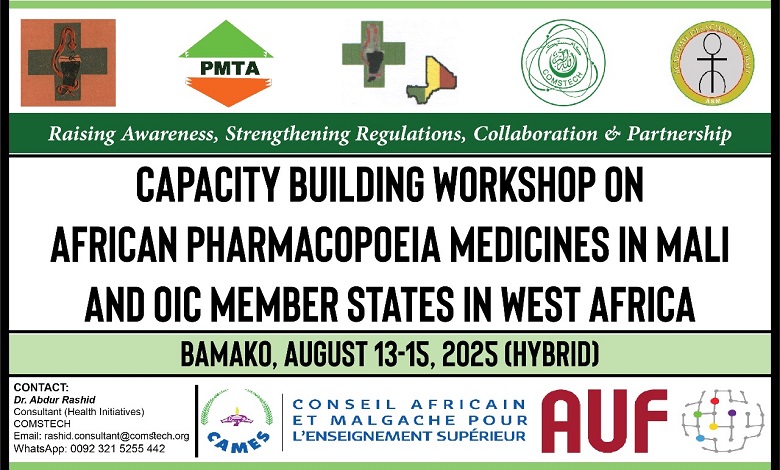
CAPACITY BUILDING WORKSHOP ON AFRICAN PHARMACOPOEIA MEDICINES IN MALI AND OIC MEMBER STATES IN WEST AFRICA

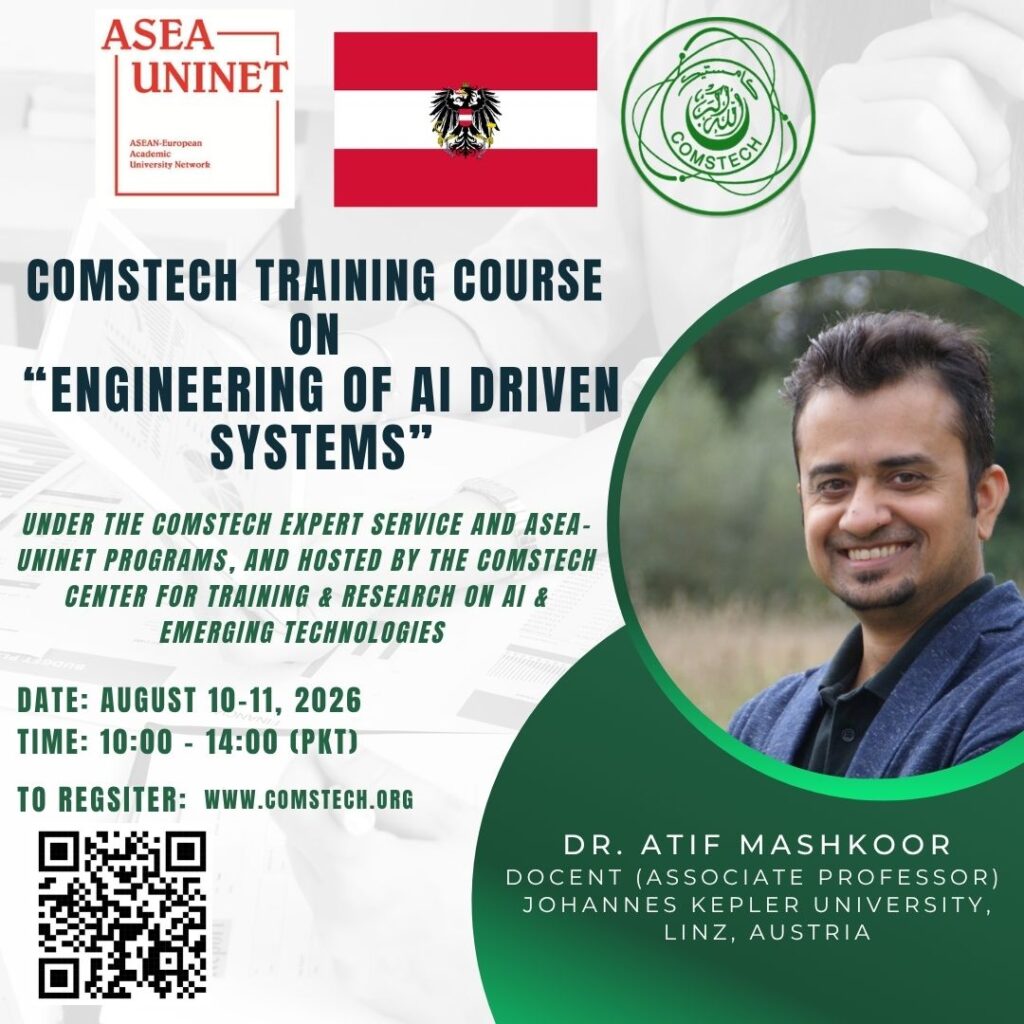
COMSTECH Training Course on “Engineering of AI Driven Systems”
Under the COMSTECH Expert Service Program, hosted by the COMSTECH Center for Training & Research on AI & Emerging Technologies
Date: August 10–11, 2026 Time: 10:00 – 14:00 (Pakistan Standard Time)

Introduction:
Artificial Intelligence is changing the way software-intensive systems are designed, built, and maintained. As AI components become a standard part of engineering solutions, sound software engineering principles need to be paired with methods specific to AI. OIC-COMSTECH is organizing a two-day training course on “Engineering of AI Driven Systems” to give researchers and faculty members from OIC Member and Observer States a practical grounding in how to engineer AI-driven systems.
Importance:
As AI moves from experimental use into mission-critical deployments, conventional software engineering practices on their own are no longer enough to guarantee quality, safety, and reliability. Engineering AI-driven systems calls for its own discipline – one that accounts for data-driven behavior, changing requirements, and the integration of AI components into larger systems. This course walks participants through that discipline across the AI system lifecycle, from requirements to design, development, and deployment, and contributes to building this capacity within institutions across OIC Member States.
Key Topics to be Covered:
- Fundamentals of AI
- Requirement Intelligence
- AI Driven Design
- AI System Engineering Life Cycle
- AI for Software Engineering
Speaker Profile:
This training course will be delivered by Prof. Dr. Atif Mashkoor, who is an Associate Professor at the Johannes Kepler University (JKU) Linz, Austria. Furthermore, he currently serves as the Requirements & Process Manager at Fronius International, Austria, and previously served as the Founding Managing Director of the Sino-Pak Center for AI at Pak-Austria Fachhochschule, and as Scientific Head at the Software Competence Center Hagenberg, Austria. He is also an Adjunct Faculty member at the International Center for Chemical and Biological Sciences (ICCBS), University of Karachi.
Dr. Mashkoor holds a Doctorate of Science (Habilitation) in Software Engineering from JKU Austria, a Ph.D. in Computer Science from the University of Lorraine, France, and an M.S. in Computer Science from Umeå University, Sweden. He is an internationally recognized expert in Requirements Engineering, Formal Methods, and AI-driven Software Engineering, with over 100 publications and 1,400+ citations to his credit.
Pre-requisites:
Applicants should hold a minimum of Bachelor’s degree in Computer Science, Software Engineering, or a closely related discipline.
Who Can Apply:
Researchers and faculty members from universities and research institutions across OIC Member and Observer States are encouraged to apply.
Registration:
Physical Registration (For participants based in Rawalpindi/Islamabad)
Click HereVirtual Participation Click Here Workshop Coordinator:
Muhammad Haseeb Ahmad
Program Officer
OIC-COMSTECH
Haseeb.ahmad@comstech.org15th World HAPEX 2026 International Conference on Halal Wellness & Innovations
Jointly organized by the Halal Institute, Prince of Songkla University, and the OIC Ministerial Standing Committee on Scientific and Technological Cooperation (OIC-COMSTECH).
Date: 30 July – 2 August 2026
Venue: ICC Hall Hatyai, Songkhla, ThailandFlyer: Click Here
Introduction
The global Halal industry has evolved far beyond traditional dietary boundaries, transitioning into a holistic, multi-billion-dollar ecosystem that encompasses wellness, pharmaceuticals, cosmetics, and advanced services. The 15th World HAPEX Thailand 2026 (World Halal Products Exhibition) stands as a premier international platform designed to catalyze growth, harmonize standards, and showcase cutting-edge innovations within the sector.
For OIC Member and Observer states, this event represents a crucial strategic avenue for capacity building, intra-OIC trade expansion, and scientific exchange. Southeast Asia, with Thailand as a major regional hub, offers mature frameworks in Halal food science, standardization, and export logistics.
Recognizing the immense importance, OIC-COMSTECH has partnered with the Prince of Songkla University (PSU) to co-organize this landmark event. Through this strategic collaboration, both institutions aim to actively engage leading scientists, researchers, and policy experts from across OIC member and observer states, providing them a premier platform to contribute to the international conference, share technical expertise, and drive institutional partnerships forward.
Objectives
- Promote Science and Innovation: Showcase cutting-edge research, technology, and compliance strategies driving the modern Halal market, with a strong focus on wellness and sustainability.
- Foster Regional & International Collaborations: Strengthen institutional, academic, and economic ties between Thailand and OIC member states to scale up the global Halal ecosystem.
- Facilitate Market Access: Provide a dynamic marketplace for small, medium, and large enterprises to showcase certified Halal products to an international audience.
- Enhance Capacity Building: Offer expert-led conference to bridge the gap between traditional Islamic jurisprudence and modern scientific innovations.
Program Components:
The event features a multi-faceted program designed to foster academic rigor and B2B commercial synergy:
- International Conference: Scientific and academic deliberations on modern Halal standards, verification techniques, and biotechnological compliance.
- Global Halal Forum: High-level strategic discussions regarding market trends, economic policies, and trade facilitation.
- Halal Products Exhibition: A massive commercial showcase featuring certified Halal foods, modern cosmetics, organic wellness products, and logistics solutions.
- Business Matching: Dedicated B2B networking sessions designed to secure investment, trade partnerships, and institutional supply agreements.
- Seminars & Talks: Capacity-building workshops addressing certifications, digital supply chain tracking, and global consumer behavior.
- Demonstrations & Competitions: Interactive showcases, culinary arts, and innovative product competitions emphasizing Halal wellness.
Potential Participants
- Policymakers, government officials, and diplomatic delegations from OIC member states, observer nations, and ASEAN countries.
- Researchers, scientists, academics, and food technologists focusing on Halal compliance and bio-sciences.
- Halal certification bodies, and legal framework experts.
- Entrepreneurs, manufacturers, distributors, and exporters within the Halal food, cosmetic, pharmaceutical, and tourism sectors.
- Postgraduate students, trainees, and innovators in the field of food sciences and wellness.
Registration:
For registration, please apply via the link: Click Here
For any queries please contact events@comstech.orgOIC- COMSTECH AND NINGBO UNIVERSITY JOINT PROGRAM IN AEROSPACE BIOMEDICINE, PHARMACEUTICALS, AND ARTIFICIAL INTELLIGENCE
Application Deadline: 20th August, 2025
OIC-COMSTECH, in collaboration with China’s top -ranked Ningbo University, announces a joint program on Aerospace Biomedicine, Pharmaceuticals, and Artificial Intelligence, this program offers to provide hands-on training on Medical and STEM fields.
Background:
OIC-COMSTECH, in collaboration with China’s top-ranked Ningbo University, has launched a specialized joint program aimed at strengthening the scientific and technological capacity of OIC member states. This initiative focuses on hands-on training in aerospace medicine, biomedicine, pharmaceuticals, and artificial intelligence, with a strong emphasis on medical and STEM related fields. The program is an attempt the meet the need for skilled researchers, technical personnel in these emerging disciplines, equipping participants with practical expertise to support healthcare innovation and technological advancement across the Islamic world.
Objective:
- To provide hands-on training in Aerospace Medicine, Biomedicine, Pharmaceuticals, and Artificial Intelligence.
- To enhance the technical skills of researchers and professionals from OIC member states in emerging medical and technological fields.
- To foster collaboration and knowledge exchange between OIC countries and Ningbo University for sustainable scientific development.
Target Beneficiaries:
This program will benefit Research Scientists and STEM teachers related to fields such as Biochemistry, Biological Science, Pharmaceutical, Aerospace Science, Chemical Sciences and teachers from academic and research institutions of OIC member and observer states, and Muslim Minorites in non-OIC member states can apply.
Eligibility Criteria:
- At least MS degree in STEM fields
- All OIC member states, Muslims minorities of non-OIC states.
- Staff of HEIs & R&D Labs and institutes.
Program support:
- OIC-COMSTECH will cover travel and visa cost of the selected participants.
- Ningbo University will provide accommodation, (double occupancy) and halal meals.
Application Link: Click Here
Poster: Attached
Address: COMSTECH Secretariat, 33-Constitution Avenue, G-5/2, Islamabad
Phone No. : 92 51 9220681-3
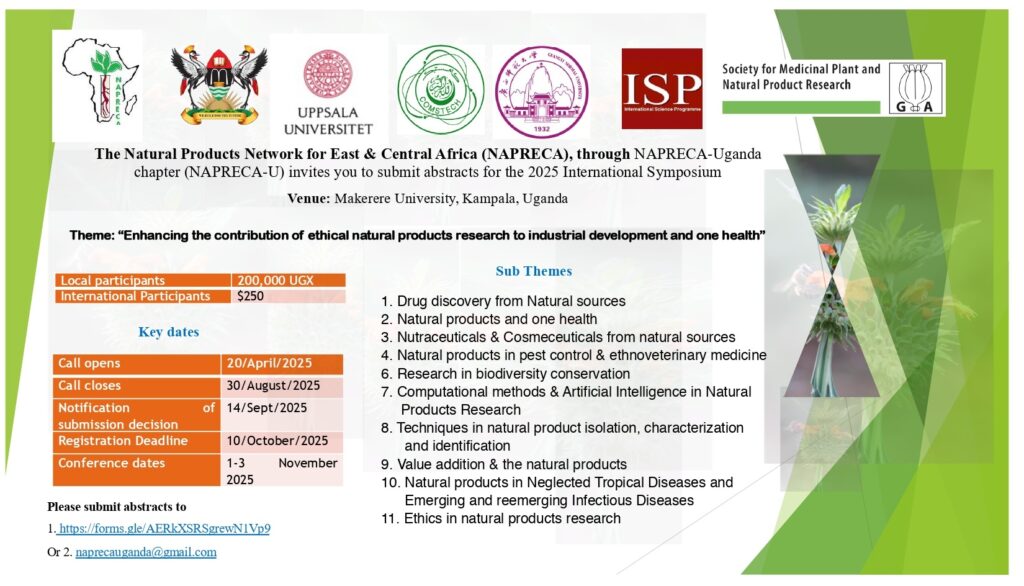
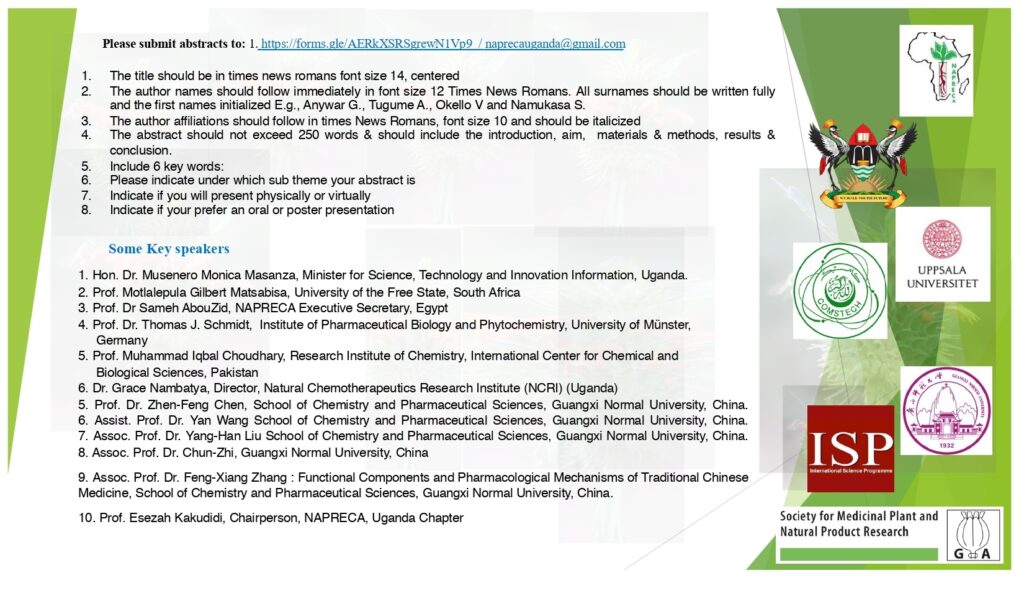
Email: pcayesha@comstech.org ; khazima@comstech.org ; comstech@comstech.orgThe Natural Products Network for East & Central africa (NAPRECA),through NAPRECA-Uganda
COMSTECH Distinguished Scholar Webinar on “Regulatory Innovation in Clinical Trials: Bridging Gaps in Pakistan’s Regulatory Ecosystem”
Date: Monday, August 4, 2025. 3:30 PM (Pakistan Standard Time)
By:
Dr. Shamsher Ali
Clinical/Regulatory Affairs Specialist at the University of Massachusetts Chan Medical School, USA.Flyer: Click Here
Introduction:
In recent years, the importance of robust clinical trial frameworks has grown significantly, particularly as global health crises and rapid advancements in medicine demand faster yet safer drug development. Pakistan, with its large and diverse patient population, holds untapped potential for clinical research. However, the regulatory environment governing clinical trials in the country remains a significant bottleneck. The approval processes managed by the Drug Regulatory Authority of Pakistan (DRAP) are often slow, which discourages both local and international research sponsors.
Despite attempts to align with international standards, Pakistan’s clinical trial regulations remain loosely harmonized with global benchmarks such as those set by the FDA, EMA, and ICH. Ethical oversight mechanisms, particularly Institutional Review Boards (IRBs), are inconsistently developed across institutions, often lacking the training and resources required to conduct timely and rigorous reviews. This adds further delays and raises concerns about compliance with Good Clinical Practice (GCP).
In addition, regulatory bodies face challenges in terms of staffing, expertise, and technological infrastructure. The absence of digital submission systems, real-time monitoring tools, and centralized databases hinders the efficiency and transparency of trial management. Legal ambiguities around participant rights, data protection, and injury compensation further complicate the regulatory landscape, contributing to an environment of uncertainty for sponsors and investigators alike.
This talk will examine the primary regulatory challenges confronting clinical trials in Pakistan today, evaluates their impact on research and innovation, and outlines actionable steps to align the country’s clinical trial framework with global best practices.
Speaker Profile:
Dr. Shamsher Ali is a highly experienced clinical and regulatory affairs professional with more than 15 years of multidisciplinary expertise spanning clinical research, regulatory strategy, scientific innovation, and trial operations. With a robust academic foundation and advanced training in biomedical research, Dr. Ali has successfully transitioned into leading global Phase I–III clinical trials in diverse therapeutic areas, including oncology (CAR-T, plasma-derived therapies), cardiology, dermatology, diabetes, autoimmune, and rare diseases.
Currently serving as a Clinical/Regulatory Affairs Specialist at the University of Massachusetts Chan Medical School, Dr. Ali oversees end-to-end regulatory operations for over 100 active clinical studies. He is responsible for regulatory submissions (INDs, CTAs, ICFs, CSRs), AE/SAE reporting, TMF and CTMS oversight, vendor management, and regulatory correspondence with the FDA, EMA, and major IRBs (WCG, Advarra, NCI CIRB). His expertise in tools such as OnCore, Advarra eReg, REDCap, Medidata, and Shared Investigator Platform (SIP) enhances trial efficiency, documentation integrity, and inspection readiness.
Dr. Ali’s industry and academic career includes leadership roles at Alliance Foundation Trials, Beth Israel Deaconess Medical Center, Dräger Medical Systems, and American International Chemical. Across these positions, he led regulatory and quality operations, vendor compliance programs, global clinical submissions, and cross-functional collaboration to meet both scientific and regulatory milestones.
Prior to transitioning into regulatory leadership, Dr. Ali conducted extensive postdoctoral research in biomedical sciences. At Harvard T.H. Chan School of Public Health, he led projects on airway remodeling and stem cell behavior using advanced biophysical and imaging techniques. At MIT/Harvard (Brigham and Women’s Hospital), he co-developed microgel-based bioengineered tissue platforms and pioneered cell-patterning technologies for regenerative medicine. At Northeastern University, he specialized in the chemical modification and structural characterization of bioactive oligosaccharides, contributing to drug development for inflammatory diseases.
Dr. Ali holds a PhD in Chemistry and a Master of Science in Regulatory Affairs from Northeastern University. His unique blend of translational science, clinical operations, and regulatory strategy positions him as a leader at the intersection of innovation, compliance, and patient-focused research. Dr. Ali has published his research in peer-reviewed journals like PNAS and Lab on a Chip
Who can attend?
Potential participants for the webinar include clinical researchers, regulatory professionals, pharmaceutical companies, healthcare policymakers, academic researchers and educators, and international research sponsors.
How to register
For registration, please fill the following form: Click Here
Zoom Link will be shared with the participants 1-2 days before the webinar.
Webinar Coordinator:
Muhammad Haseeb Ahmad
Program Officer
Haseeb.ahmad@comstech.orgCOMSTECH Distinguished Scholar Webinar on Public Health Career: Scope and Opportunities
Date: August 28, 2025, Time: 14:00-15:30 PKT
By:
Prof. Dr. Muhammad Aziz Rahman
Professor of Public Health,
Research Adviser,
Institute of Health and Wellbeing, Federation University AustraliaFlyer: Click Here
Introduction:
The webinar will showcase public health career pathway of the speaker along with scope and opportunities to contribute globally in this domain, including research, teaching, programs, collaboration, policies and advocacies.
Speaker Profile:
Professor Rahman is an experienced academic, a medical doctor, and a public health professional. He has worked in public health research and teaching for over 20 years in Australian and international settings. He has an excellent track record of providing leadership in completing different research and community projects successfully focusing on various aspects of public health, securing funding, producing high-quality research publications, supervising higher degree research students, assisting in capacity building, and providing supportive supervision to the early/mid-career researchers and collaborating successfully with experienced researchers. He has published more than 200 research papers in multidisciplinary journals with more than 125,000 citations. Due to his extraordinary track record of research citations, he has been ranked amongst the world’s top 2% scientists for the last five years (2020-24), ranking done by Elsevier BV and Stanford University, USA. He has contributed to generating over $13 million in funding in his professional career. He has extensive international research collaborations with over 25 countries and has successfully led several multi-country research projects with significant outputs.
Professor Rahman is currently working as the Professor of Public Health and Research Adviser at the Institute of Health and Wellbeing at Federation University Australia. He is also the Vice President of the Public Health Association of Australia (PHAA).
Who can attend?
Potential participants for the webinar include public health students and graduates, public health professionals, medical and healthcare practitioners, academic researchers and educators, policy makers and advocates, NGOs and community leaders, and early/mid-career researchers.
How to register
For registration, please fill the following form: Click Here
Zoom Link will be shared with the participants 1-2 days before the webinar.
Webinar Coordinator:
Muhammad Haseeb Ahmad
Program Officer
Haseeb.ahmad@comstech.orgHybrid Symposium Preventing Inherited Disorders in Consanguineous Populations: A framework for Action
Registration link: Click Here

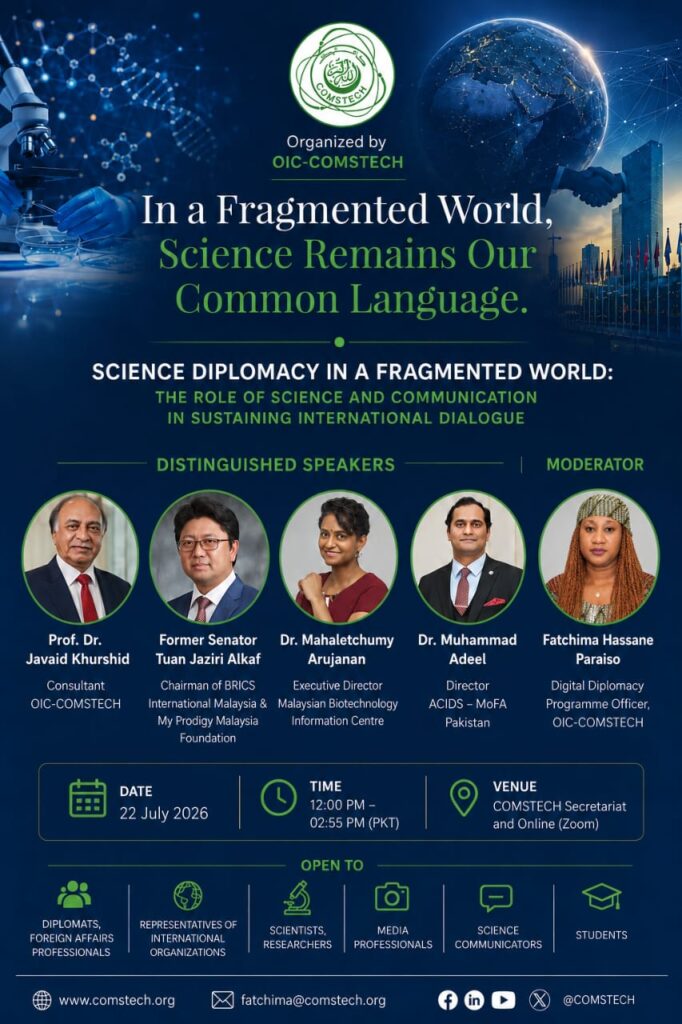
OIC-COMSTECH In a Fragmented World, Science Remains Our Common Language.
Registration link: Click Here

COMSTECH-UPM EAGLE PhD Finishing Program
A Collaboration between OIC Standing Committee on Scientific and Technological Cooperation (OIC-COMSTECH) and Universiti Putra Malaysia, under the COMSTECH Distinguished Scholars Program
Date: 13-17 July, 2026
Venue: Faculty of Design and Architecture, Universiti Putra Malaysia, MalaysiaInstructor:
Professor Ts. Dr. Rahinah Ibrahim, FTWAS, FASc, FIVMM
COMSTECH Distinguished Scholar
Faculty of Design and Architecture, Universiti Putra Malaysia,
43400 UPM Serdang, Selangor, MALAYSIA
Email: rahinah@upm.edu.myAbout the EAGLE Program:
EAGLE stands for Excellence Accelerator for Grounded Learning Environment. It is a structured academic support framework designed to help postgraduate students complete their research. By understanding their cultural and language behaviors, PhD students can be more efficient and independent to manage their PhD journey.
The EAGLE techniques and tools were developed from the founder’s first-hand experience overcoming significant challenges during her PhD at Stanford University, combined with over two decades of supervising as well as teaching research methodology at Universiti Putra Malaysia (UPM). These techniques have been successfully applied to numerous postgraduate students, including supervised graduates and external postgraduate researchers.
Unlike conventional approaches that are method-centric or language-focused, EAGLE adopts a theory-centric and content-driven approach. It prioritizes strong theoretical grounding and
logical argumentation before technical writing or methodological detail.Through EAGLE, participants learn to:
- Identify missing or weak components in their thesis;
- How to relate theory to develop research methodology;
- How to link data to theory;
- How to align results with theory;
- Reduce writing time through content restructuring;
- Identify whether thesis has potential to create intellectual property (IP) asset; and
- Develop confidence as independent scholarly researchers
Overall, the EAGLE framework accelerates postgraduate progress by strengthening critical thinking, clarifying structural impacts, and improving academic independence—key factors for timely and high-quality research completion.
About the Lead Trainer:
Professor Dr. Rahinah Ibrahim is an entrepreneurial design scientist who strives working with transdisciplinary peers especially when Arts and Humanities merge with S&T to produce an invention appropriate to serve vulnerable communities. Trained by Stanford Research Institute and Oxford University Innovations in innovations and entrepreneurship and permitted to become Co-Founder of Grounded Learning (M) Sdn. Bhd. —a startup company under UPM’s Innohub—to commercialize the EAGLE Program. Prof. Rahinah
believes that having innovation and entrepreneurship knowledge during R&D phase would improve an invention’s market acceptance later. Moreover, applying proven R&D outputs in classrooms would allow students to jump start their life-long learning before a product even hits the market. She is a strong advocate for Social Sciences and Arts & Humanities to make STEAM impacts to the world. She has graduated 33 Master/PhD students and is Principal Inventor for 23 intellectual properties (IP).Program Synopsis:
The PhD Finishing Program is an intensive, structured academic workshop designed to enable PhD candidates to consolidate, rescue, and reinforce their research work from Chapter 1 through to Chapter 6 of their thesis.
The program focuses on diagnosing weaknesses in participants’ existing research progress and systematically rebuilding a strong, defensible research foundation. Through guided lectures, applied in-class work, participants are led through a process of alignment between research questions, theoretical framing, methodology, and data.
This program is especially designed for candidates who have already started their PhD but are experiencing difficulty in progressing, maintaining coherence, or completing their thesis within the expected timeframe.By the end of the program, participants will produce:
- A working thesis draft covering Chapter 1 to Chapter 5 or 6, depending on their current research stage
- A clear research overview of their thesis
- An improved thesis structure ready for supervisor review
- A revised and defensible thesis
Objectives:
- Diagnose and evaluate each participant’s current PhD research progress
- Identify conceptual, theoretical, and methodological gaps in the thesis
- Reinforce the coherence between research questions, theory, and methods
- Guide participants in restructuring and strengthening their thesis chapters
- Enable participants to produce a working thesis draft by the end of the program depending on their current PhD progress
Program Format s Schedule:
Mode: Physical, face-to-face, participants remain on-site
Duration: 5 days (9am-5pm)
Schedule: Click here to downloadTarget Participants:
- This program is designed for:
- PhD candidates who have already started their PhD
- Candidates who have begun proposal writing, data collection, or analysis
- Candidates who are stucked, delayed, or uncertain about the quality and coherence of their thesis
Prerequisite: - PhD candidates who have already started their PhD studies.
- Have at least a draft research proposal, or draft chapters, or data collected, or ongoing thesis work.
- From an OIC Member State currently residing in Malaysia.
Registration:
For registration, please fill out the following form along with required documents: https://form.jotform.com/261059258880465
Note:
Please note that this a physical on-site training, for limited candidates from OIC Member States currently resident in Malaysia. The selected candidates will have to cover their own travel and accommodation (if from outside the city).
This program is especially designed for candidates who have already started their PhD but are experiencing difficulty in progressing, maintaining coherence, or completing their thesis within the expected timeframe.Queries
For any queries, please contact at: haseeb.ahmad@comstech.org