Registration form: Click Here

Registration form: Click Here

Delivered by “Prof. Dr. Mohammad Abdollahi”
School of Pharmacy & Pharmaceutical Sciences Research Center (PSRC)
Tehran University of Medical Sciences (TUMS)
Online Only
Date and Time: 23rd December 2024, 1500 hrs Pakistan Time
Flyer: Click Here
Abstract:
Climate change is a significant challenge for humanity in the 21st century. Global warming and air pollution are two of its most recognized sequelae. Human intervention is primarily responsible for the current alarming rate of climate change. The increasing concentration of greenhouse gases results in global warming, which can have several pathophysiological effects on the human body. It can aggravate pre-existing conditions, cause premature death, and increase the risk of various neurological disorders. Air pollution is a significant concern as it can negatively affect human health. Common air pollutants include PM, NO2, SO2, CO, and O3. Burning fossil fuels is the leading cause of elevated levels of air pollutants. PM2.5 alone contributes to 800,000 deaths yearly and can lead to neurological disorders. Air pollution is also closely linked to respiratory and cerebrovascular diseases. Tackling air pollution and global warming together is crucial for reducing harmful effects.
Brief profile of the speaker:
Prof. Dr. Mohammad Abdollahi achieved the remarkable honor of being the youngest full Professor at TUMS in 2002, a testament to his exceptional academic prowess and leadership capabilities. Throughout his career, he has taken on significant roles, including chairing the Department of Toxicology & Pharmacology and the Iranian Society of Toxicology and Poisoning. With over 900 published papers and 300 book chapters, all in collaboration with his students, he has garnered approximately 80,000 citations, boasting an impressive H-index exceeding 130. His dedicated research in Mechanistic Toxicology and Pharmacology highlights the critical effects of environmental toxicants on public health, especially within the context of climate change.
Who Should Attend?
Early stage researchers, students, relevant personnels, and public health practitioners.
Registration Link: Click Here
Registration outcome will be shared through email, therefore, please give your valid email address.
For more information, please contact:
Ms. Khazima Muazim
Program Manager COMSTECH
khazima@comstech.org
Date: December 18th, 2025
Venue: COMSTECH Secretariat, Islamabad.
Background
OIC member states face high climate vulnerability but also have large untapped renewable resources. Scaling climate-resilient development and a just energy transition (JET) across OIC countries is feasible, but will require: targeted adaptation, policy reform to derisk renewable investments, regional cooperation for technology/skills transfer, and blended public-private finance mechanisms.
In fact, access to electricity is a striking example of the country’s limited infrastructure, but also of the inequitable distribution of that infrastructure. The main sources of energy used today in remote areas in many countries are sources of deforestation in the case of biomass and a very uncertain supply in the case of fuel (which powers generators). But there are still many levers for improvement, especially if we want to ensure balanced development from a geographical point of view.
Nowadays, solar, hydro, and wind energy are growing fast enough to meet the world’s growing demand for electricity. However, it is clear that this growth is slowing down and that renewable energy capacity forecasts are “5% lower” in some OIC member states and observer states, reflecting changes in policy, regulation, and the market since 2024, according to the IEA.
The initiative to strengthen youth, and policymakers commitment for just energy transition in OIC member states align with Sustainable Development Goals 7 (Ensure access to affordable, reliable, sustainable, and modern energy for all); 8 (Promote sustained, inclusive, and sustainable economic growth); 11 (Ensure inclusive and sustainable cities, communities, and human settlements); and 13 (Take urgent action to combat climate change and its impacts).
Objectives:
Outcomes:
Target audience:
Young entrepreneurs, Applied Science students; NGOs; policymakers and technicians with experience and people without experience in the building sector who would like to improve their skills and/or specialize in the renewable energy sector.
Speaker Profile
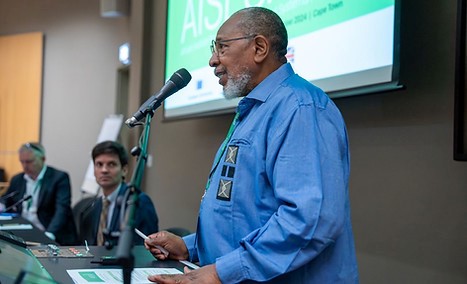
Prof. Youba Sokona has over 30 years of expertise in energy, environment, and sustainable development in Africa and has led numerous national and continental initiatives. He served as Vice-Chair of the IPCC’s sixth assessment report and Co-Chair of IPCC Working Group III for the fifth report, contributing since 1990. He received a Nobel Committee certificate in 2007 for his significant work with the IPCC. Prof. Sokona has held leadership roles, including as the inaugural Coordinator of the African Climate Policy Centre, and is affiliated with prestigious academies, including TWAS and the African Academy of Sciences. He is renowned for his technical knowledge and commitment to African-led development.

Kindly follow the link for Registration : Click Here
Zoom link: Click Here
Contact Person: akim@comstech.org

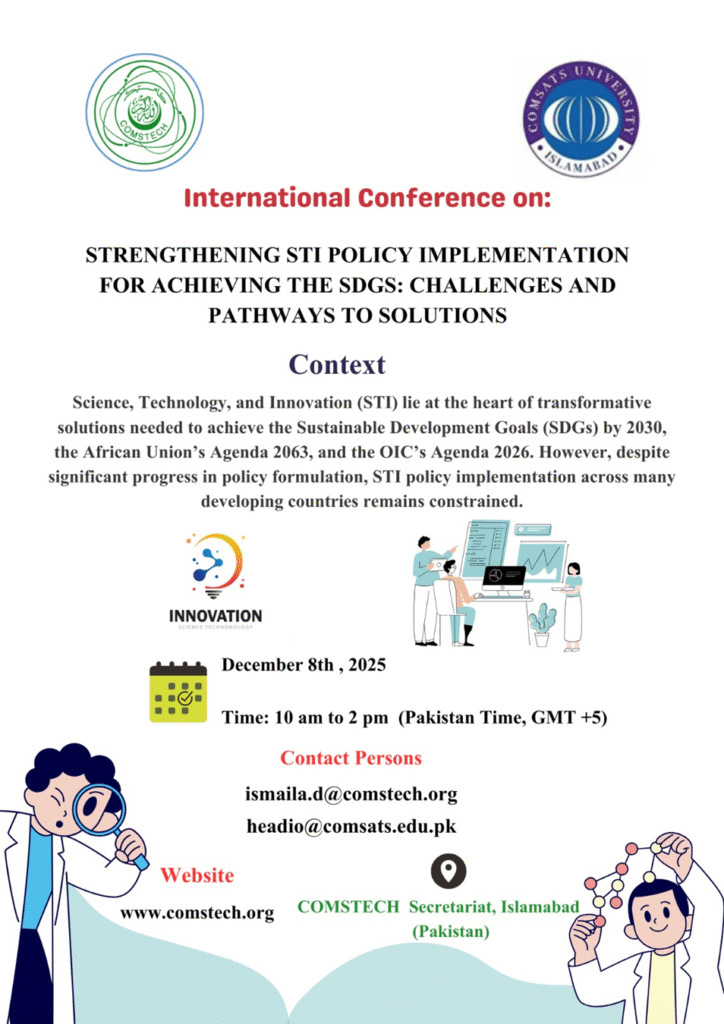
Humanity faces complex challenges: climate change, health crises, food insecurity, and social inequalities, all intensified by environmental degradation and demographic pressures. Addressing these challenges demands coordinated global efforts built upon innovation, scientific knowledge, and sustainable practices. Science, Technology, and Innovation (STI) lie at the heart of transformative solutions needed to achieve the Sustainable Development Goals (SDGs) by 2030, the African Union’s Agenda 2063, and the OIC’s Agenda 2026. However, despite significant progress in policy formulation, STI policy implementation across many developing countries remains constrained by:
Unfortunately, despite the efforts made to define STI policies here and there, it must be recognized that implementation mechanisms face constraints such as a lack of coordination, sometimes counterproductive political measures, the difficulty of measuring policy performance and the potential mismatch between short-term political interests and long-term societal objectives. Therefore, it becomes urgent to conduct a detailed analysis of the various bottlenecks for the implementation of STI policies in countries and to propose solutions that can ensure their effectiveness and alignment with the SDGs; notably the “Leave No One Behind” principle, which is a fundamental commitment to end poverty and reduce all inequalities, giving priority to the most vulnerable and marginalized people.
Faced with these persistent obstacles, COMSTECH and COMSATS University in Islamabad took the initiative to jointly organize this international conference, which aims to strengthen the capacity of policymakers, researchers and practitioners to design and implement mechanisms for the implementation of inclusive and evidence-based STI policies, in line with the SDGs.
The training aim is to strengthen participants’ capacity to develop, implement, and evaluate STI policies that are coherent with national priorities and the SDGs. Participants will analyze implementation challenges, learn from best practices, and identify actionable strategies for transparent, participatory, and inclusive policymaking.
Following are the Objectives of Training:
The training will be in the form of interactive sessions alternating theoretical presentations and discussions. Two training sessions of two hours each are proposed and structured around the basic elements (1) conceptual framework of STI policies, (2) youth innovation and entrepreneurship to respond to global challenges related to the SDGs, (3) diagnosis of constraints to the implementation of STI policies, (4) solutions and strategies for the development and implementation of effective STI policies, and (5) analysis of cases of success or failure in the implementation of STI policies.
REGIISTRATION LINK: https://forms.gle/NCoPfUWsmXzBwWmX9


| Time | Themes | Speakers |
| Opening ceremony | ||
| 10 : 00 – 10 : 10 | Recitation of Holy Quran | |
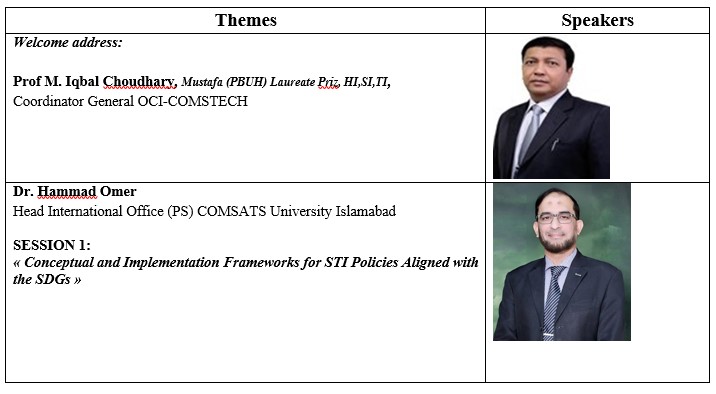
| Welcome address: Prof M. Iqbal Choudhary, Mustafa (PBUH) Laureate Priz, HI,SI,TI, Coordinator General OCI-COMSTECH | ||
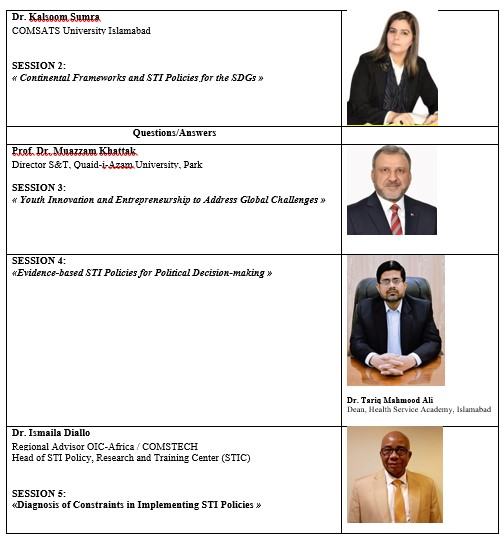
| 10 : 10 – 10 : 30 | SESSION 1: « Conceptual and Implementation Frameworks for STI Policies Aligned with the SDGs » | Dr. Hammad Omer, Head International Office (PS) COMSATS University Islamabad |
| 10 : 30 – 10 : 35 | Questions/Answers | |
| 10 : 35 – 10 : 55 | SESSION 2: « Continental Frameworks and STI Policies for the SDGs » | Dr. Kalsoom Sumra COMSATS University Islamabad |
| 10 : 55 – 11 : 00 | Questions/Answers | |
| 11 : 00 – 11 : 20 | SESSION 3: « Youth Innovation and Entrepreneurship to Address Global Challenges » | Prof. Dr. Muazzam Khattak, Director S&T, Quaid-i-Azam University, Park |
| 11 : 20 – 11 : 25 | Questions/Answers | |
| 11 : 25 – 11 : 45 | SESSION 4: «Evidence-based STI Policies for Political Decision-making » | Dr. Tariq Mahmood Ali Dean, Health Service Academy, Islamabad |
| 11 : 45 – 11 : 50 | Questions/Answers | |
| 11 : 50 – 12 : 00 | Refreshments | |
| 12 : 00 – 12 : 20 | SESSION 5: «Diagnosis of Constraints in Implementing STI Policies » | Dr. Ismaila Diallo, Advisor-COMSTECH |
| 12 : 20 – 12 : 25 | Questions/Answers | |
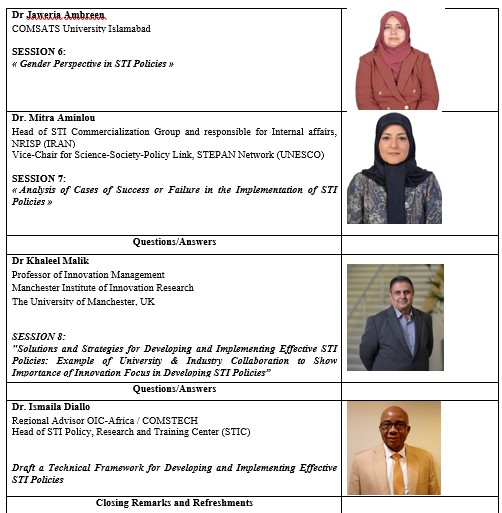
| 12 : 25 – 12 : 45 | SESSION 6: « Gender Perspective in STI Policies » | Dr Jaweria Ambreen COMSATS University Islamabad |
| 12 : 45 – 12 : 50 | Questions/Answers | |
| 12 : 50 – 13 : 10 | SESSION 7: « Analysis of Cases of Success or Failure in the Implementation of STI Policies » | Dr. Mitra Aminlou Head of STI Commercialization Group and responsible for Internal affairs, NRISP (IRAN) |
| 13 : 10 – 13 : 15 | Questions/Answers | |
| 13 : 15 – 13 : 35 | SESSION 8: “Solutions and Strategies for Developing and Implementing Effective STI Policies: Example of University & Industry Collaboration to Show Importance of Innovation Focus in Developing STI Policies” | Dr Khaleel Malik Professor of Innovation Management Manchester Institute of Innovation Research The University of Manchester |
| 13 : 35 – 13 : 40 | Questions/Answers | |
| 13 : 40 – 13 : 50 | Draft a Technical Framework for Developing and Implementing Effective STI Policies | Dr. Ismaila Diallo, Advisor-COMSTECH |
| 13 : 50 – 14 : 00 | Closing Remarks and Refreshments | |
| 14 : 00 | LUNCH | |
Registration Form: Click Here

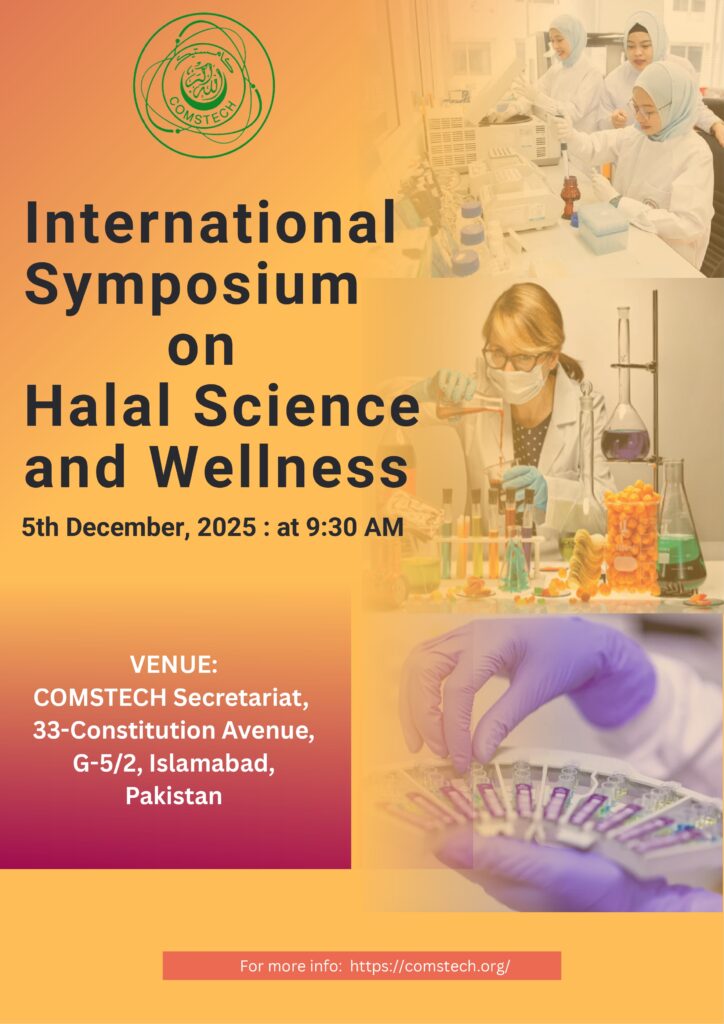
Description: Join us for the International Symposium on Halal Science and Wellness, a premier event dedicated to exploring the convergence of scientific innovation, ethical standards, and holistic well-being. This symposium will bring together leading experts, researchers, and industry professionals to discuss the latest advancements and future directions in Halal science, spanning pharmaceuticals, cosmetics, food technology, and lifestyle products. The event will be held on 5th December 2025 at the COMSTECH Secretariat in Islamabad, Pakistan.
Registration Form: Click Here
For more information and registration, contact:
Muhammad Tufail (Program Officer)
Email: mtofil@comstech.org
Phone: 03439140306
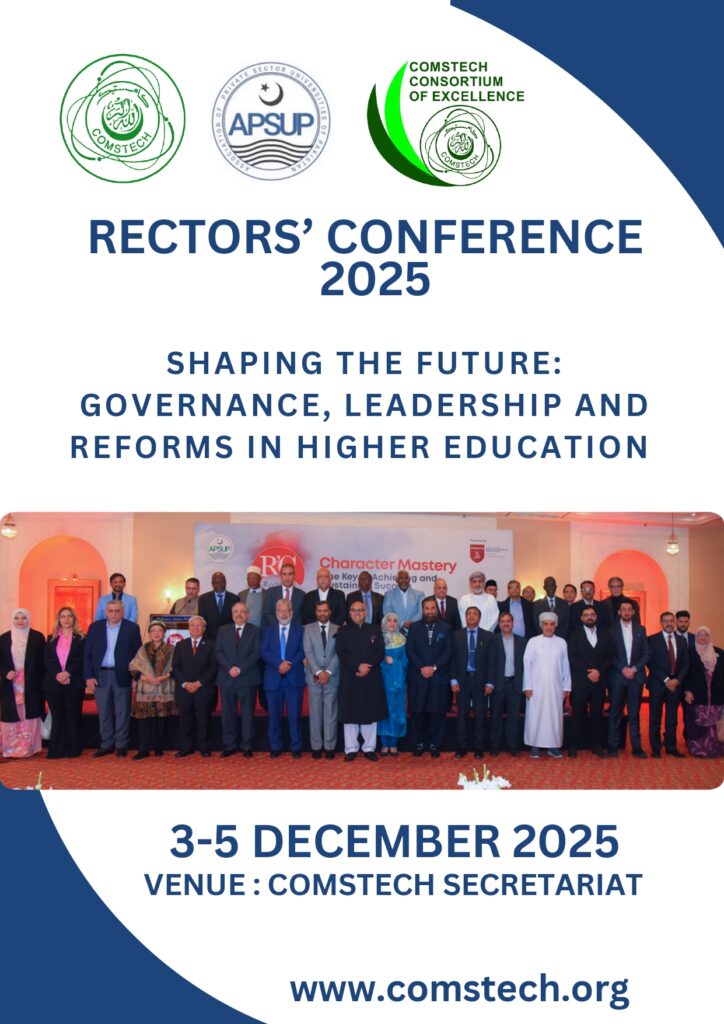
SHAPING THE FUTURE: GOVERNANCE, LEADERSHIP AND REFORMS IN HIGHER EDUCATION
Date: 3-5 DECEMBER 2025
VENUE : COMSTECH SECRETARIAT, ISLAMABAD, PAKISTAN

The higher education landscape across many OIC member states stands at a defining moment. Despite significant growth in the number of universities and student enrollment, systemic challenges continue to undermine the sector’s potential to drive scientific innovation and sustainable development. There is a dire need to improve governance structures, address critical leadership gaps, and modernize policy frameworks to meet the demands of the 21st-century knowledge economy. To truly harness higher education as a driver of collective progress for the Ummah, these deficits must be confronted with courage, clarity, and collective resolve across the Islamic world.
Objectives:
Purpose of the Conference:
The COMSTECH Rectors’ Conference 2025 provides a vital international platform for rectors, vice-chancellors, scholars, and thought leaders from OIC member states to engage in a candid dialogue. The goal is to critically examine shared challenges, including governance deficits, leadership crises, and the need for reform, while identifying practical, collaborative solutions that can transform our higher education institutions into engines of innovation, inclusivity, and sustainable nation-building for the Islamic world.
Conference Coordinators:
Murtaza Noor
Focal Person/coordinator CCoE, Media, and linkages
Mnoor@comstech.org
Muhammad Haris Akram
Program Manager, COMSTECH
haris@comstech.org
Muhammad Haseeb Ahmad
Program Officer, COMSTECH
Haseeb.ahmad@comstech.org
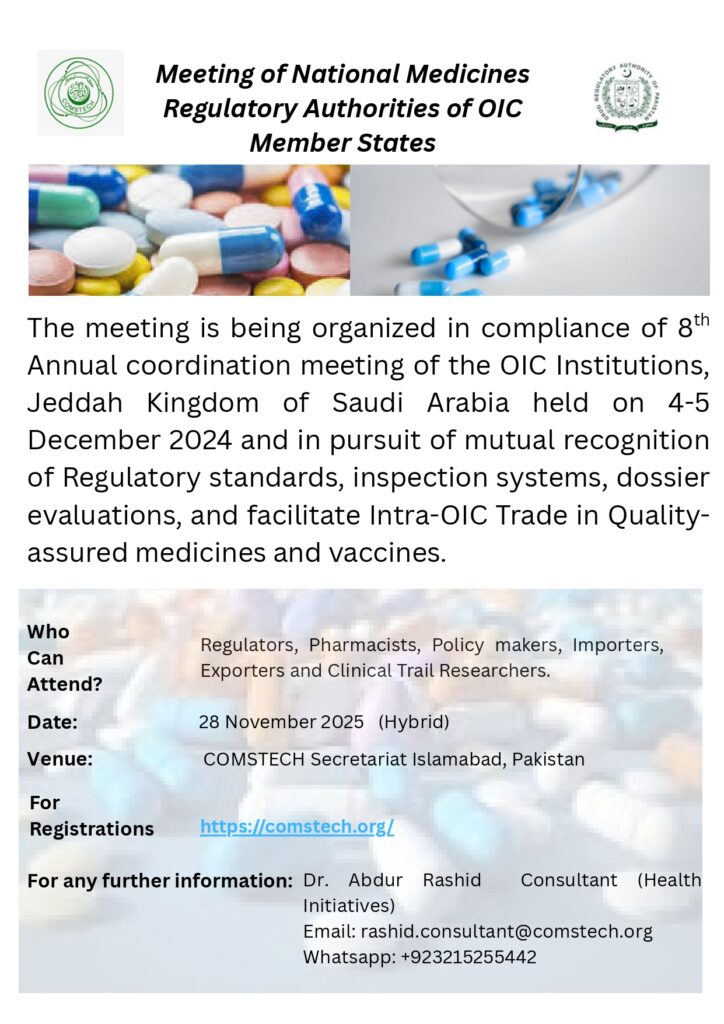
Date: 28 November 2025 (Hybrid)
Venue: COMSTECH Secretariat Islamabad, Pakistan
For Registrations: Click Here

Jointly Organized by OIC-COMSTECH and Benadir University, Somalia, in collaboration with IOFS.
Date: November 24-26, 2025
Venue: Prof. Addow Campus, Benadir University, Somalia
INTRODUCTION
This theme emphasizes the critical role of research, education, and innovation in transforming food systems to be more resilient, inclusive, and sustainable. It highlights the need for interdisciplinary collaboration and innovative approaches to address food security challenges and ensure long-term food system sustainability.
BACKGROUND OF FOOD SECURITY
Food security is a pressing global issue with significant local implications. As the world grapples with challenges such as climate change, resource scarcity, urbanization, and population growth, academic institutions have a critical role to play in generating knowledge, fostering innovation, and preparing the next generation of leaders in sustainable food systems.
Food security remains a critical global challenge, particularly in the face of climate change, population growth, conflict, and economic volatility. Millions of people around the world continue to lack reliable access to sufficient, safe, and nutritious food.
This workshop seeks to bring together students, faculty, researchers, policy makers, and practitioners to explore solutions to food security through interdisciplinary research, education, and community engagement. It aims to bring the policy-based solutions that can enhance food security at the Institutions, national, and regional levels.
OBJECTIVES
– To increase awareness of food security challenges and opportunities among universities.
– To promote interdisciplinary collaboration on food Security systems research.
– To provide a platform for students and researchers to present innovative ideas and projects.
– To build linkages between academia and government, NGOs, and private sector actors.
THEMATIC AREAS
A. Agricultural Production and Sustainability
Focuses on promoting sustainable farming practices and climate-resilient agriculture to ensure long-term productivity and environmental health.
B. Food Systems and Value Chains
Aims to strengthen local food systems through improved food processing, distribution, and reduced post-harvest losses for better access and efficiency.
C. Policy, Governance, and Institutional Frameworks
Encourages the development of national and global food security policies, including strategies for emergency response and food aid, to enhance coordination and preparedness.
D. Access and Equity
Addresses food affordability, while promoting indigenous knowledge and food sovereignty to ensure inclusive and just food systems.
E. Climate Change and Environmental Impact
Explores the impact of climate change on food production, emphasizing water and soil management as key to resilience and sustainability.
F. Innovation, Research, and Technology
Highlights the use of digital tools in agriculture, such as AI and precision farming for crop improvement and pest management through evidence-based research.
G. Trade, Economics, and Markets
Focuses on global food trade and food subsidies to empower cooperatives and agribusiness, supporting economic growth and food system stability.
WORKSHOP PARTICIPANTS
The workshop will bring together a diverse group of participants, including faculty and researchers from key academic disciplines such as agriculture, public health, environmental science, and economics. It will also engage university students at both undergraduate and graduate levels, alongside government officials, policy makers, representatives from local and international NGOs, and private sector stakeholders involved in agri-food industries. This multi-stakeholder participation ensures a rich exchange of knowledge and perspectives on food security.
FORMAT AND ACTIVITIES
The workshop will be conducted in a hybrid format, allowing for both physical and virtual participation to ensure wider accessibility and inclusivity. The event will span 2 to 3 days, featuring a variety of sessions including lectures, discussions, and interactive activities designed to promote engagement and knowledge sharing.
Registration Process:
Selected candidates will be notified through email hence; applicants are required to regularly check their emails.
VENUE AND DATE
The Food Security Workshop will be held during November 24-26, 2025, at Prof. Addow Campus, Benadir University, Somalia. The venue offers a conducive environment for learning, collaboration, and meaningful dialogue among participants.
Workshop Coordinators:
Date: 24-26 November 2025
Location: Universiti Teknologi MARA (UiTM), Malaysia
Jointly organised by:
OIC-COMSTECH and Institute for Big Data Analytics & Artificial Intelligence (IBDAAI),
Department of Research & Innovation,
Universiti Teknologi MARA (UiTM), Malaysia.
Collaborative Partners:
CyberSecurity Malaysia (CSM), and OIC – Computer Emergency Response Teams (OIC-CERT)
Flyer: Click Here
INTRODUCTION
In an era defined by rapid digital transformation, the convergence of Artificial Intelligence (AI), Cyber Security, and Disruptive Technology is not just an academic interest rather it is a critical imperative. Navigating the opportunities and challenges of this new landscape requires global collaboration, shared knowledge, and a commitment to ethical and secure innovation.
Hence, OIC-COMSTECH and Universiti Teknologi MARA (UiTM) are jointly organizing an international workshop on “Artificial Intelligence, Cyber Security and Disruptive Technology” during November 24-26, 2025, at UiTM, Malaysia. Furthermore, this workshop is being conducted in collaboration with Cyber Security Malaysia (CSM) and the Organisation of the Islamic Cooperation – Computer Emergency Response Teams (OIC-CERT).
This workshop is being organized to foster essential dialogue on the transformative impact of these technologies, addressing both their immense potential and their associated global security challenges. It will serve as a vital platform for knowledge exchange, strategic networking, and international partnership building.
OBJECTIVES
This workshop aims to:
Themes:
Target Audience
Modalities: Local hospitality, including accommodation, meals and internal transportation will be provided to a selected number of international participants.
Registration Process:
Step 1: For Physical Participation, please register at: Click Here
Step 2: For Virtual Participation, please register at: Click Here
Selected candidates will be notified through email hence; applicants are required to regularly check their emails.
Tentative List of Resource Person & Guest of Honour


Technical Focal Person:
Prof. Dr. Jasni Mohamad Zain
Director,
Institute for Big Data Analytics & Artificial Intelligence (IBDAAI),
UiTM, Malaysia
Workshop Coordinators:
Muhammad Haris Akram
Program Manager, COMSTECH
haris@comstech.org
Muhammad Haseeb Ahmad
Program Officer, COMSTECH
Haseeb.ahmad@comstech.org
Objective: To provide comprehensive, practical training to 500 selected trainers (nominated by OIC-COMSTECH) in emerging digital skill areas.
Eligibility: Trainers from OIC Member States (including Pakistan) Seats Available: 500 Participants.
Program Duration: 1 to 3 Months (online learning modules).
Google registration form: Program Completed successfully.