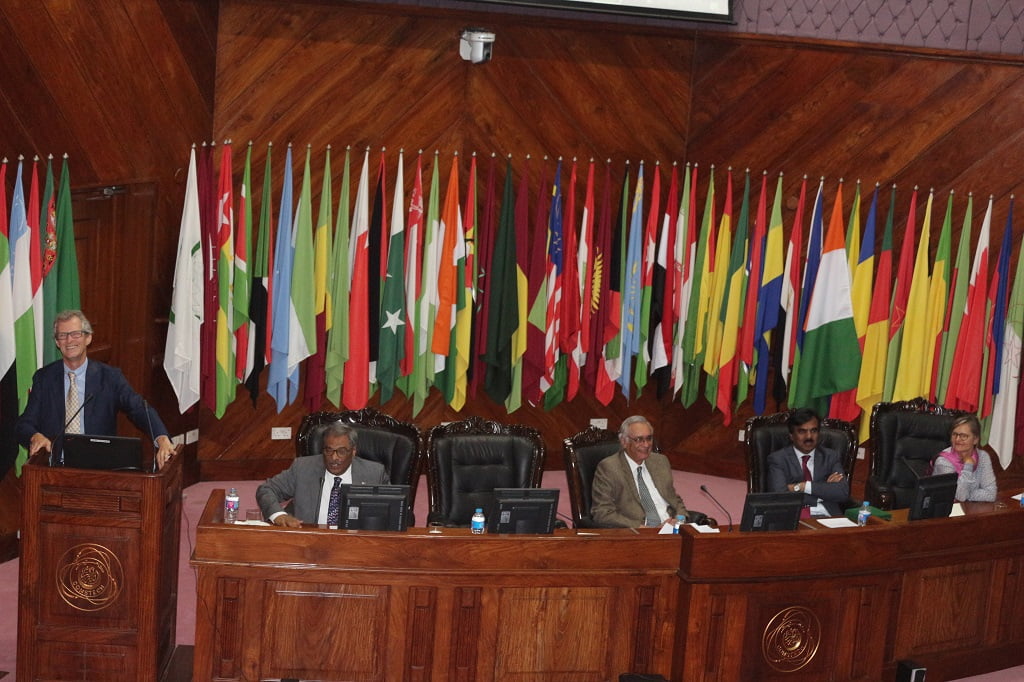
Rising populations, growing multi-sectoral needs, and increasing impacts of climate change have put Pakistan’s already limited transboundary water resources under immense stress. It is crucial to understand management of shared basins in a holistic perspective for equitable and sustainable future. Integrated Water Resources Management (IWRM) is an effective approach for managing transboundary waters which requires strong interface of science and policy. LEAD Pakistan in collaboration with Pakistan Meteorological Department (PMD) conducted a Summer School on IWRM under its Project titled ‘Using Water Resources Systems Analysis to Guide a Transboundary Kabul River Water Partnership’. The event was hosted by COMSTECH Secretariat, Islamabad. The Summer School focused on integration of technology and policy issues. The program explored water management of Kabul River Basin as a case study for IWRM. The summer school counted with 23 participants, with 44% representation from females, hailing from districts across the country.
Objectives
Developing a holistic approach for integrated water resources management through enhanced understanding of policy and technology interface.
Building capacity of water professionals to develop a critical mass of future of Water Leaders.
Forge a network of water professionals to create a community of practice aimed at sharing learnings and creating synergies in their work.
Focus Areas
This program provided an introduction to policy frameworks and modeling tools for implementing Integrated Water Resources Management (IWRM) approach in transboundary basins. The following areas were covered:
Integrated Water Resources Management (IWRM)
Hydro-meteorological modelling and simulation tools
Political economy of shared river basins
Legal frameworks for transboundary waters
Case study of Kabul River Basin
Presentations
Day 1
Climate Change – Regional Perspective by Dr Furrukh Bashir
Hydrology of Pakistan by Sohail Babar Cheema
Indus Waters Treaty by Dr Shaheen Akhtar
Introduction to Regional Climatology Burhan Ahmad
Managing Shared River Basins Supply and Demand Challenges by Pervaiz Amir
Status of Glaciers in Pakistan by Adnan Shafiq Rana
Day 2
An overview of Weather Observation Practices over Pakistan by Fayyaz Ahmed
Concepts of Integrated Water Resources Management (IWRM) by Dr. Hassan Abbas
Data challenges in Trans-boundary River Basins – Case Study of the Upper Indus Basin by Asif Khan
Observation through Remote Sensing by M Athar Haroon
Water Resources Management in Pakistan by Hassan Abbas & Asghar Hussain
Day 3
Climate Modelling Overview by Dr. Jehangir Ashraf Awan
Legal Instruments in International (freshwater) Law by Ahmad Rafay Alam
Methods and Application of Downscaling by Dr. Jehangir Ashraf Awan
Pakistan Biological Safety Association (PBSA) in collaboration with Fogarty International Center (FIC) hosted a five day Wet Workshop in COMSTECH Islamabad from July 1 to July 5. Participants were trained in biorisk management by Sean Kaufman, founder of Safer Behaviors. The participants were exposed to different scenarios in the lab such as evacuation, needle stick injuries, and dealing with an unconscious individual. The participants were also told to present on different topics on the last day, which also enhanced their communication skills while dealing with mental noise, disturbances caused by participants, and workshop scenarios. The number of participants was 30 and there was representation from all the provinces of Pakistan. It was concluded successfully, and eligible participants of this wet workshop will become trainers in their institutions and future PBSA workshops.
Arab Society of Fungal Conservation (ASFC), COMSTECH, Egyptian Syndicate of Scientific Professions, and the National Academy of Science & Research Technology (ASRT), in collaboration with Mohamed bin Zayed Species Conservation Fund (MBZ), Suez Canal University (SCU), and Convention on Biological Diversity (CBD) organized the 2nd International Conference on Mycology in the Middle East and North of Africa (MENA) on 16–18 October 2018 at the Suez Canal University Conference main Hall in Ismailia.
Click here to download Abstract Book
The International Conference on Mycology in MENA (ICM-2018) is the 2nd in an ongoing series of international conferences on Mycology, Fungi and Fungal Biology of Arab Society for Fungal Conservation. The conference aims to bring together leading academic scientists, researchers and research scholars to exchange and share their experiences and research results about all aspects of Mycology, Fungi and Fungal Biology. This conference is dedicated to the Memory of the late. Professor Abdel-Aal H. Moubasher (Botany and Microbiology Department, Faculty of Science, Assiut University) the God father of mycology in Egypt and Arab world. The conference dedicated two wooden trophies one for the name of late professor Abdel-Aal H. Moubasher and the other to the professor Waseem ElSeesy.
Over 250 participants (200 registered full delegates and around 50 accompanying persons) from 11 different countries, representing all regions of the world attended the ICM-2018, including Bangladesh, Brazil, Germany, India, Iraq, Italy, Malta , Pakistan, Switzerland, USA and Egypt. The theme was “Fungi in a changing World”, encompassing topics such as Bacterial-fungal interactions, beneficial and harmful effects, climate changes, clinical mycology, enzymes and their types, food mycology, fungal biotechnology, fungi and cultural heritage, fungal diversity and conservation, fungal identification and quantification, fungal immunology, fungal pathogens, fungi and ecosystem functioning, industrial mycology, lichens, medical mycology, mycotoxicology, structure and mode of nutrition, Systematics, phylogeny and evolution, and veterinary mycology.
The main conference consisted of one keynote lecture, six plenary lectures, and nearly 5 invited papers. There were 40 oral presentations and 25 scientific posters. The keynote lecture was by Waseem ElSeesy (Egypt) and entitled “Medicine in ancient Egypt”. The Six plenary speakers were: Ahmed Abdel-Azeem (Egypt), Andreas Bruder (Switzerland), Bhim Singh (India), Cristina Giovanna Varese (Italy), Michael Weiß (Germany), and Zakaria Baka (Egypt). In addition, Cristina Giovanna Varese (Italy) gave a workshop on the Thursday morning titled” Marine Fungi: the missing tile in the Ocean Biodiversity mosaic”.
The conference programme achieved its aim of encouraging ongoing international exchange and regional networking, especially among countries in Mediterranean, fostering exchange of expertise and learning through active participation, and stressing the relevance of mycology to current issues.
Additional information and conference abstract book can be downloaded at the ICM-2018 website
Six prizes were awarded during the conference as follow:
1- Best ASFC’s poster prize.
2- Best ASFC’s research by undergraduate Student prize.
3- Best MBZ’s bioprospecting & sustainable conservation prize.
4- Young Mycologist Award in Comstech’s awarded to outstanding mycologists early in their career.
5- BEST Al-Khafagy’ Prize (Fungal Biotechnology in Food Production).
6- BEST Al-Khafagy’ Prize (Fungal Biotechnology in DRUG Production).
The RSC Pakistan 1st International Conference on Medicinal Chemistry and Drug Discovery was successfully co-organized by the Royal Society of Chemistry and COMSTECH. The Quaid-i-Azam University, Abdul Wali Khan University, Punjab University and Women’s University, Swabi, also supported the Conference. The Conference was held between 18-19 October 2018 at the COMSTECH Secretariat in Islamabad. It was participated in by a team of 13 renowned scientists from Oxford University and other UK institutions (University College London, Bristol University, and Liverpool John Moores University). The conference was also attended by twelve scientists from eight OIC countries besides Pakistan. These included Algeria, Egypt, Indonesia, Malaysia, Nigeria, Oman and Palestine. Over two hundred local academics, researchers and students from 13 cities and 40 institutions actively participated and presented oral talks and poster presentations.
Muhammad Azam Khan Swati
Federal Minister for Science
and Technology, Pakistan.
Sir John Holman
Immediate Past President,
The Royal Society of Chemistry, UK.
The Inaugural reception ( Click here for Inaugural photographs ) of the Conference was graced by the Federal Minister for Science and Technology Mr. Muhammad Azam Khan Swati as the Chief Guest. The honourable Minister appreciated the commitment shown by the foreign faculty from European and OIC countries to attend the conference. He expressed his keen desire to be presented with tangible proposals from this Conference that may help promote medicinal research in Pakistan.
The Conference had a total of 6 sessions that focussed on various aspects of latest research in medicinal chemistry and drug discovery. A total of 32 oral presentations, and 74 poster presentations were made. (Click here for Conference Programme ). Speakers from UK, Pakistan and other OIC countries described their most recent work in the area.
Dr. Khurshid Hasanain
Adviser COMSTECH
Dr. Amjad Khan
Program Chair
Prof. Dr. Micheal McDonough
FRS, Oxford University, UK.
Prof. Dr. Grant Churchill
Oxford University, UK.
Prof. Dr. Tim Claridge
Oxford University, UK.
Prof. Dr. Michael Heinrich
University College London, UK.
Dr. Rana Sanyal
Bogazici University, Turkey.
These talks also focussed on the challenges faced by scientists as well as by societies in providing affordable medicines to the world’s burgeoning population in the wake of the emerging anti-microbial resistance and newly emerging diseases. ( Click here for Speakers’ photographs) (Click here for posters session photographs)
Prof. Chas Bountra, Pro-Rector (Innovation) of Oxford University, identified the key priorities in medicinal research viz. need for novel effective treatments, increasing the affordability and safety of medicines and treatments. It was also highlighted that the cost of producing new drugs is becoming unaffordable particularly so due to the secrecy features inherent in commercial research.
This frequently leads to duplication of commercial research and ensuing costs. More collective and socially organized efforts for new drug discovery were suggested as an urgent need of the times. University-Industry linkages and the impediments to the same in Pakistan and other OIC countries were also discussed in detail.
Sir John Holman, the Recent Past President of the Royal Society spoke on the occasion and stressed the need for continued scientific collaborations between the scientists in OIC countries and their counterparts in Europe. He lauded the serious work that was presented by Pakistani scientists at the Conference and the promise it displayed for actual medicines. He lauded the efforts of COMSTECH (Click here for Members of COMSTECH Organizing Committee) for providing an excellent atmosphere and hospitality for the Conference.
On the side lines of the main conference a discussion was held between OIC participants (Click here for OIC speakers and participants pictures) and COMSTECH on the need to expand mutual collaborations and activities in this field. It was decided that an informal network of OIC scientists in Medicinal Chemistry and Drug Discovery would be formed with the goal of forging collaborations, promoting exchange visits, and provision of analytical support facilities at the more advanced OIC centres. Various steps for promoting University Industry linkages were also discussed. COMSTECH would prepare the Minutes of the said Meeting and share the same with the participants. COMSTECH would also follow up on the various proposals suggested by the participants with regards to establishing the agreed informal network.
COMSTECH in collaboration with International Centre for Genetic Engineering and Biotechnology (ICGEB) and National Institute for Biotechnology and Genetic Engineering (NIBGE), Pakistan organized a three-day workshop on Genome Editing and Other New Breeding Technologies for Global Food Security. It was held on 08-10 April 2019 at the COMSTECH Secretariat, Islamabad.
This initiative is part of COMSTECH efforts to fulfill the expectations voiced in the 1st OIC S&T Summit in Astana 2017 for helping member states to address food security concerns in the face of rising populations and global climatic changes. Pakistan, Saudi Arabia and Turkey, who are leaders in the Islamic World in the new breeding technologies, have already formed a working group. This group collaborates actively in research and manpower development in these cutting edge technologies e.g. genome editing, speed breeding and development of crop varieties for saline and drought conditions. One of the goals of this workshop was to extend this group to include other member states and to move onwards for greater on-ground impact of these activities.
The Inaugural Session of the workshop was addressed by Prof. Mark Tester, Leader of The Salt Lab, King Abdul Aziz University of Science and Technology (KAUST), Dr. Munir Ahmed, Chairman Pakistan Agriculture Research Council (PARC), and Dr. M. Azeem Khan, Member Planning Commission, Government of Pakistan and Dr. Shahid Mansoor, Director NIBGE. Prof. Tester highlighted the challenges being faced in providing sustainable food security and the opportunities provided by the new breeding stories including the success stories for various new crops. Dr. S. K. Hasanain, Advisor COMSTECH, explained the OIC initiatives being undertaken for capacity building of member states. Other keynote speakers highlighted the efforts of the Government of Pakistan in improving the agriculture sector productivity and the use of S&T for this purpose. They extended their full support in forging collaboration with OIC member states in agriculture.
The technical sessions of the workshop were addressed by 12 foreign speakers and Resource Persons from Australia, China, Germany, Turkey, Kenya and India. 19 participants from OIC states viz. Oman, Malaysia, Nigeria, Benin, Iraq, Azerbaijan, Cameroon, Jordan, Egypt, Sudan, Oman and Palestine attended the workshop. A total of 125 participants attended, including local participants from academia and research institutions. The workshop provided introduction and application of genome editing and new breeding technologies to researchers and students working on crop improvement or genomic selection of livestock. The workshop had a mix of interactive sessions, lectures and hands on training sessions.
A special session chaired by COMSTECH was held on the sidelines of the workshop and attended by representatives of the participating OIC member states. The meeting resulted in agreement from all participating countries to become part of the working group which would be led by NIBGE. A second major outcome of this meeting was agreement on the scope and goals of a proposal to be submitted to the Islamic Development Bank (IsDB) and OIC for providing support to the activities of the working group for promotion of new breeding technologies. The proposal would be prepared by NIBGE (Pakistan), KAUST (Saudi Arabia) and NOH University (Turkey) and coordinated by COMSTECH.
The healthcare industry is developing rapidly with large volumes of data and increasing challenges in cost and patient outcomes. Artificial Intelligence (AI) with its wide applications in the healthcare systems for e.g. internet of things (IoT) for healthcare, gathering of data for AI applications, Intelligent health platform, intelligent hospital management, diagnostic and predictive systems, health care programming paradigms and software architecture, smart medical devices, and security & privacy for medical health care. The developed countries are already reaping the benefits of AI by integrating it into their healthcare systems. However, in low resource settings, its applications are very limited. In such settings, AI can play a tremendous role in improving the efficiency of healthcare systems.
Realizing the importance of AI in the healthcare systems, COMSTECH has planned a three-day workshop focusing on the subject in November 2020.
Venue:
The workshop will be held at the COMSTECH headquarters in one of the most modern and scenic capital cities of the world, Islamabad. The city was purpose-built as the capital of 6th largest globally and 2nd most populous (in OIC) country Pakistan in the year 1966. Pakistan, according to the Forbes magazine, is a hidden treasure for tourists. with rich cultural diversity, ancient history, diverse landscape, cuisines, modern cities, and locally produced items
Objectives of the Workshop:
The objective of this International Workshop on “Artificial Intelligence in Health Care” is to bring together the researchers, industrials partners, and practitioners interested in the specification, design, and development of AI to cultivate smart healthcare systems that will improve personal healthcare in a better way.
Key Contents:
The workshop will cover the following topics:
Intelligent Hospital Management
Health Software Architecture, Framework, Design & Engineering
Internet of things for healthcare
Intelligent technologies for healthcare (smart homes, cloud-based, etc.)
Programming paradigms and tools for health applications
Automated Diagnosis and Prediction
Data discovery
Workshop Organizing Committee:
Patron:
Prof. Dr. Atta-ur-Rahman (FRS., N.I., H.I., S.I., T.I.) Chairman Prime Minister Task Force on Information Technology
Chair:
Prof. Dr. Iqbal Chaudhary (H.I., S.I., T.I.) Coordinator General COMSTECH/Director ICCBS/ Distinguished National Professor
Co-Chair:
Prof. Dr. Shoab A. Khan FOUNDER CARE, Islamabad
Technical Focal Person:
Dr. Shafaat A. Bazaz Vice Chancellor, Sir Syed CASE Institute of Technology, Islamabad
2. Prof Amir Hussain Edinburgh Napier University, Scotland, UK Founding Head of the Data Science and Cyber Analytics (DSCA) Research Group Founding Head of the Cognitive Big Data and Cybersecurity (CogBiD) Research Lab Profile of the speaker is available here
3. Dr. Atif Mashkoor Senior Researcher, LIT Secure and Correct Systems LAB Institute for Software Systems Engineering, Johannes Kepler University, Linz, Austria Profile of the speaker is available here
4. Dr. Usman Akram Associate Head of Department, College of Electrical and Mechanical Engineering, National University of Sciences and Technology, Islamabad, Pakistan.
5. Dr. Ahmad Raza Shahid Assistant Professor COMSATS University, Islamabad, Pakistan
6. Dr. Muhammad Salman Khan Assistant Professor, University of Engineering and Technology, Peshawar, Pakistan
7. Dr. Sadia Shakeel Assistant Professor, Institute of Space Technology, Islamabad, Pakistan
Healthcare professionals, students, researchers, young entrepreneurs and policymakers from the OIC countries are encouraged to apply.
Travel & Local Hospitality:
COMSTECH will arrange complete local hospitality, internal transportation, gala dinner and sightseeing visits for all registered participants. Travel support will be provided to the speakers/resource persons only. Participants are expected to get their travel funding from their parent organizations/country of origin.
Step 2: Read instructions in the application form carefully and submit a properly filled form along with your CV. Foreign participants must submit a scanned copy of the first three pages of their passport along with the application form.
Step 3: Selected candidates will be notified through email; hence, applicants are required to check their emails regularly.
The workshop Comprises of the four following major activities
Poster Presentations
Technical Talks (Plenary Sessions)
Training Program (Python etc.)
Exhibition of Products/Services in AI for Health
Participations in above three categories are invited to show case your contribution in the above mentioned or relevant fields of Research and Development. The workshop would be a good forum to get your research appreciated
Poster Presentations
To participate in poster presentation activity or to showcase your research work and projects, please email your four page draft at muhammad.saleem@case.edu.pk according to the guidelines for poster presentations and poster templates. The best three posters will be awarded after the judgment procedure. The last date for the submission of posters is October 25th 2020.
The event will be open for all participants for technical talks, discussions, presentations etc.
3. Training Program
To participate as trainer or trainee, please email your Expression of Interest and theme of training (as trainer, maximum one page) latest by October 25th 2020 at adeel@case.edu.pk
4. Exhibition of Products/Services in AI for Health
Young entrepreneurs are encouraged to display their research products/services in field of AI applications for healthcare industry. Please email your Expression of Interest and details of your product/services latest by October 25th 2020 at haris@comstech.org.
Workshop Coordinators:
Muhammad Haris Akram Programme Manager, COMSTECH Tel: +92-51-9220681-3 Fax: +92-51-9205264, +92-51-9220265 Email: haris@comstech.org
Dr. Saman Riaz Assistant Professor Sir Syed CASE Institute of Technology, Pakistan Email: saman.riaz@case.edu.pk
COMSTECH in collaboration with International Centre for Genetic Engineering and Biotechnology (ICGEB) and National Institute for Biotechnology and Genetic Engineering (NIBGE), Pakistan organized a three-day workshop on Genome Editing and Other New Breeding Technologies for Global Food Security. It was held on 08-10 April 2019 at the COMSTECH Secretariat, Islamabad.
This initiative is part of COMSTECH efforts to fulfill the expectations voiced in the 1st OIC S&T Summit in Astana 2017 for helping member states to address food security concerns in the face of rising populations and global climatic changes. Pakistan, Saudi Arabia and Turkey, who are leaders in the Islamic World in the new breeding technologies, have already formed a working group. This group collaborates actively in research and manpower development in these cutting edge technologies e.g. genome editing, speed breeding and development of crop varieties for saline and drought conditions. One of the goals of this workshop was to extend this group to include other member states and to move onwards for greater on-ground impact of these activities.
The Inaugural Session of the workshop was addressed by Prof. Mark Tester, Leader of The Salt Lab, King Abdul Aziz University of Science and Technology (KAUST), Dr. Munir Ahmed, Chairman Pakistan Agriculture Research Council (PARC), and Dr. M. Azeem Khan, Member Planning Commission, Government of Pakistan and Dr. Shahid Mansoor, Director NIBGE. Prof. Tester highlighted the challenges being faced in providing sustainable food security and the opportunities provided by the new breeding stories including the success stories for various new crops. Dr. S. K. Hasanain, Advisor COMSTECH, explained the OIC initiatives being undertaken for capacity building of member states. Other keynote speakers highlighted the efforts of the Government of Pakistan in improving the agriculture sector productivity and the use of S&T for this purpose. They extended their full support in forging collaboration with OIC member states in agriculture.
The technical sessions of the workshop were addressed by 12 foreign speakers and Resource Persons from Australia, China, Germany, Turkey, Kenya and India. 19 participants from OIC states viz. Oman, Malaysia, Nigeria, Benin, Iraq, Azerbaijan, Cameroon, Jordan, Egypt, Sudan, Oman and Palestine attended the workshop. A total of 125 participants attended, including local participants from academia and research institutions. The workshop provided introduction and application of genome editing and new breeding technologies to researchers and students working on crop improvement or genomic selection of livestock. The workshop had a mix of interactive sessions, lectures and hands on training sessions.
A special session chaired by COMSTECH was held on the sidelines of the workshop and attended by representatives of the participating OIC member states. The meeting resulted in agreement from all participating countries to become part of the working group which would be led by NIBGE. A second major outcome of this meeting was agreement on the scope and goals of a proposal to be submitted to the Islamic Development Bank (IsDB) and OIC for providing support to the activities of the working group for promotion of new breeding technologies. The proposal would be prepared by NIBGE (Pakistan), KAUST (Saudi Arabia) and NOH University (Turkey) and coordinated by COMSTECH.
COMSTECH, in collaboration with Food and Agriculture Organization of the United Nations (FAO) and the Pakistan Agriculture Research Council (PARC) held a consultation Workshop for Development of a multi-national Project proposal on “Promotion of Plant Genetic Resources: Use, Varietal Development and Integration in the Seed System” on 11th of April, 2019 at the Food and Agriculture Organization (FAO) representative office, NARC in Islamabad.
Representatives from governments from five OIC Member countries, namely Pakistan, Iraq, Jordan, Oman and Azerbaijan participated in the workshop. The meeting was also attended by the Deputy Country Representative of FAO, the Chairman PARC, the DG NARC and Adviser COMSTECH. One of the outcomes of the meeting was the offer from Pakistan to provide access to OIC countries to store up to 5000 germplasm at its own gene bank, as safety duplicates.
This activity is an expression of COMSTECH efforts to address food security, farm productivity and preservation of plant biodiversity as key priorities under OIC STI agenda 2026, through cooperation between Member States and development of human and technical capacity. Currently few of the OIC member states have the adequate facilities and manpower to address the vital concern of preserving the germ plasm and seed varieties of their exiting crop varieties and for exchanging and integrating new crop varieties into their own agricultural systems. This activity was held to find practical ways to address these needs led by the OIC countries that are more advanced in this domain. This effort was initiated during a meeting organized by COMSTECH in March 2018 where an OIC Working Group on Plant Genetic Resources was formed. After thorough deliberations and consultations between members of this group, led by PARC, a Concept Note for a project proposal has been developed in consultation with the FAO that outlines the goals, activities and required resources for these purposes.
In this expert level meeting presentations were made on the status of plan genetic resources’ preservation, development, and integration in the seed system of each participating country. The technical, human resource and legislative needs for these purposes were identified. In the 2nd session of the workshop the Concept Note for the Project prepared by FAO and PARC was shared with the participants. The main objective of the proposed project is to enhance technical capacity and performance of concerned institutions of both the public and private sectors to broaden their collaboration in plant genetic resource use and crop variety development facilitated by rapid flow of newly developed crop varieties in the seed system, to enhance farm productivity and ensuring food and nutritional security. Consensus was established on the basics of the proposed project and technical details such as costing, modes and sources of funding, and timelines were discussed in detail. The project proposal would be developed by the PARC in consultation with FAO and COMSTECH. Azerbaijan offered to host the next meeting of the Working Group later this year.
Prof Mark Tester, a world renowned authority on Food security explained how the twin challenges of meeting food requirements of a rapidly growing world population and very limited availability of fresh water are being addressed by the development of crop varieties that are resistant to saline water. He was speaking as a guest of COMSTECH, the OIC Ministerial Standing Committee on Science & Technology, to talk about the “Advances in Increasing the Salinity Tolerance of Crops”.
Prof. Tester’s research group on Salinity at the King Abdul Aziz University of Science and Technology (KAUST) in Saudi Arabia is actively addressing this serious problem by using the science of Genomics to identify the genes that enable plants to survive in saline conditions. These genes are then incorporated within existing plant varieties such as barley, tomatoes etc to develop new crop varieties that can flourish in stressful, saline conditions.
An immediate application of this technology is that sea water or brackish water that constitutes 97% of the world’s water resources can be utilized for agriculture thereby satisfying the food demands of countries like Pakistan that have rapidly depleting fresh water resources. According to a 2008 report, crop yield losses in Pakistan due to water-logging and salinity are estimated to be over Rs880 million ($28.5 million) per annum, while total annual economic damage is estimated at $300 million. Hence addressing the problem of salinity is crucial for ensuring food security. Prof. Tester also described other parallel efforts whereby existing saline resistant wild plants are being modified to make them suitable for food consumption.
Prof. Mark Tester has an ongoing collaboration in this area with scientists at Pakistan’s National Institute for Biotechnology and Genetic Engineering (NIBGE) and he complimented their efforts in developing 254 transgenic wheat varieties using the techniques pioneered by Prof. Tester’s team.
Prof. Tester was introduced by Dr. Yusuf Zafar, the Chairman of Pakistan Agricultural Research Council (PARC), who lauded his passion and commitment for unlocking sea water for agriculture by developing a new economically viable agricultural system. Dr. Shaukat Hameed Khan, the Coordinator General of COMSTECH, thanked the speaker and emphasized the serious threat posed to Pakistan’s agriculture by the depletion of its aquifer system. This is especially relevant because the Indus Basin Water Treaty assumed 75% cropping intensity whereas it has crossed 156% by 2016..
The lecture at COMSTECH Secretariat in Islamabad was attended by a large audience including academics, students and professionals from the fields of biotechnology, and plant sciences