
Online Course Theme: Prospects for Climate Resilient Development and Just Energy Transition in OIC Regions
Date: December 18th, 2025
Venue: COMSTECH Secretariat, Islamabad.
Background
OIC member states face high climate vulnerability but also have large untapped renewable resources. Scaling climate-resilient development and a just energy transition (JET) across OIC countries is feasible, but will require: targeted adaptation, policy reform to derisk renewable investments, regional cooperation for technology/skills transfer, and blended public-private finance mechanisms.
In fact, access to electricity is a striking example of the country’s limited infrastructure, but also of the inequitable distribution of that infrastructure. The main sources of energy used today in remote areas in many countries are sources of deforestation in the case of biomass and a very uncertain supply in the case of fuel (which powers generators). But there are still many levers for improvement, especially if we want to ensure balanced development from a geographical point of view.
Nowadays, solar, hydro, and wind energy are growing fast enough to meet the world’s growing demand for electricity. However, it is clear that this growth is slowing down and that renewable energy capacity forecasts are “5% lower” in some OIC member states and observer states, reflecting changes in policy, regulation, and the market since 2024, according to the IEA.
The initiative to strengthen youth, and policymakers commitment for just energy transition in OIC member states align with Sustainable Development Goals 7 (Ensure access to affordable, reliable, sustainable, and modern energy for all); 8 (Promote sustained, inclusive, and sustainable economic growth); 11 (Ensure inclusive and sustainable cities, communities, and human settlements); and 13 (Take urgent action to combat climate change and its impacts).
Objectives:
- Strengthen youth skills in climate change resilience;
- Reinforce training in renewable energy sector for agricultural and industrial production;
- Establish appropriate policies for suitable just energy transition (JET).
Outcomes:
- Enhanced Climate-Resilient Development Pathways;
- Promotion of energy access and equity, ensuring that vulnerable populations are not left behind.
- Investment in research, innovation, and training for climate resilience and renewable energy.
Target audience:
Young entrepreneurs, Applied Science students; NGOs; policymakers and technicians with experience and people without experience in the building sector who would like to improve their skills and/or specialize in the renewable energy sector.
Speaker Profile
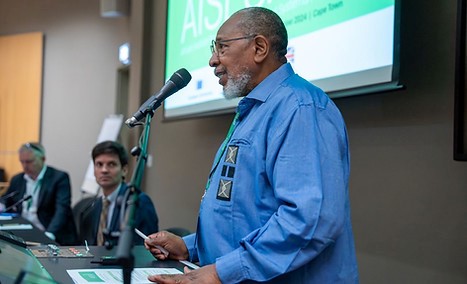
Prof. Youba Sokona has over 30 years of expertise in energy, environment, and sustainable development in Africa and has led numerous national and continental initiatives. He served as Vice-Chair of the IPCC’s sixth assessment report and Co-Chair of IPCC Working Group III for the fifth report, contributing since 1990. He received a Nobel Committee certificate in 2007 for his significant work with the IPCC. Prof. Sokona has held leadership roles, including as the inaugural Coordinator of the African Climate Policy Centre, and is affiliated with prestigious academies, including TWAS and the African Academy of Sciences. He is renowned for his technical knowledge and commitment to African-led development.
Kindly follow the link for Registration : Click Here
Zoom link: Click Here
Contact Person: akim@comstech.org