Uncategorized

  • Coordinator-General COMSTECH Meets with Foreign Secretary of Pakistan

    June 04, 2020: H.E. Prof. Dr. M. Iqbal Choudhary, Coordinator General COMSTECH met with H.E. Ambassador Sohail Mahmood, Foreign Secretary of Pakistan in his office on Thursday, 4th June, 2020.  Mr. Muhammad Kamran Akhtar, Director General (ACDIS) and Mr. Tariq Karim, Director General (EC & OCI), Ministry of Foreign Affairs (MoFA) were also present in the meeting.

    The Coordinator General COMSTECH discussed with the Foreign Secretary, new programs and activities of COMSTECH initiated after assumption of Charge of the office of Coordinator General COMSTECH and sought support of the Foreign Office.  The matters related with regards to COMSTECH – MoFA collaboration in Science Diplomacy initiative and Capacity Building Programs across the OIC region were also discussed.  The Foreign Secretary assured the Coordinator General COMSTECH of his full support in launching of new initiatives.

  • Adviser COMSTECH

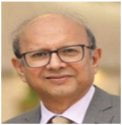
    Dr. S. Khurshid Hasanain

    Adviser COMSTECH
    Address: COMSTECH Secretariat, 33 Constitution Avenue, G-5/2, Islamabad.
    Tel: (+92 51) 9220681-3
    Fax: (+92 51) 9211115, 9205264
    E-Mail: adviser_skh@comstech.org

    Dr. S. Khurshid Hasanain is Adviser of the OIC Standing Committee on Scientific & Technological Cooperation (COMSTECH), Islamabad. Prior to his current service he has served as the Dean of Natural Sciences and as the Chairman of Physics Department at Quaid-I-Azam University (QAU) Islamabad and most recently as Distinguished Scientist at the National Centre for Physics, Islamabad.He obtained his PhD in Physics from Tufts University, Massachusetts, USA and did post doctoral work in US at the University of Virginia and the University of Rhode Island, respectively. During this period he spent time at the National Magnet Lab MIT, Brookhaven National Lab and the National Bureau of Standards Labs in the US. He joined the Quaid-I-Azam University in 1986 and became a full Professor in 2000. For the period 2010-2013 he was Chairman of Physics, and 2013-2014 he served as Dean of Science at QAU where he initiated the 4 year BS program in Natural Sciences

    In 2005 he was awarded a major research based development grant to establish the Magnetic Nanostructures Laboratories at the Physics Department of QAU, for the training of manpower in nanosciences and for the development of magnetic nanomaterials.

    Between 2014 and 2016 he served at the National Centre for Physics (NCP) where he developed the Physics Education Program for in-service teachers; was Scientific Secretary for NCP annual science conference (ISS) and worked on the development of photovoltaic and energy storage systems.  

    In research his main area of concentration is the effect of disorder and finite size on magnetic and superconducting transitions. In recent years he has focused on magnetic and ferroelectric transitions and their interplay in both bulk and nanostructured systems.  He has over 105 publications in impact factor journals, with over 1500 citations to his work; has supervised 11 PhDs and is a referee for several international journals of Physics.

    He has been a visiting scientist at the University of Delaware USA (2003, 2005, 2007 and 2010) and Senior Associate of International Center for Theoretical Physics (Trieste). He was awarded the Salam Prize in Physics (1989), Young Scientist of the Year (1993), and Presidential Award of Pride of Performance (2001), and the Sitara-e-Imtiaz (2014) from the Government of Pakistan.

    In addition to his research activity he has interacted strongly with the physics community and the Higher Education Commission (HEC) with regards to problems of education and the strategies for improvement of higher education. He  continues to serve as a member of various HEC Committees on higher education.

    He was script writer for a 13 part TV serial on Education and contributed to several other TV documentaries on Science Popularization.

  • 34 Khwarizmi International Award (KIA)

    https://comstech.org/images/Call%20for%20Participation_34th%20KIA.jpg

  • How to deal with the COVID-19 panic situation and mental stress

    https://events.hec.gov.pk/event/international-center-for-chemical-and-biological-sciences-iccbs-university-of-karachi-onlineworkshop-how-to-deal-with-the-covid-19-panic-situation-and-mental-stress-3/

  • About OIC

    The Organisation of Islamic Cooperation (OIC) is the second largest organization after the United Nations with a membership of 57 states spread over four continents. The Organization is the collective voice of the Muslim world. It endeavors to safeguard and protect the interests of the Muslim world in the spirit of promoting international peace and harmony among various people of the world.

    The Organization was established upon a decision of the historical summit which took place in Rabat, Kingdom of Morocco on 12th Rajab 1389 Hijra (25 September 1969) following the criminal arson of Al-Aqsa Mosque in occupied Jerusalem.

    In 1970 the first ever meeting of Islamic Conference of Foreign Minister (ICFM) was held in Jeddah which decided to establish a permanent secretariat in Jeddah headed by the organization’s secretary general. Amb. Hissein Brahim Taha is the 12th Secretary General who assumed the office in November 2021.

    The first OIC Charter was adopted by the 3rd ICFM Session held in 1972. The Charter laid down the objectives and principles of the organization and fundamental purposes to strengthen the solidarity and cooperation among the Member States. Over the last 40 years, the membership has grown from its founding members of 30 to 57 states. The Charter was amended to keep pace with the developments that have unraveled across the world. The present Charter of the OIC was adopted by the Eleventh Islamic Summit held in Dakar on 13-14 March 2008 to become the pillar of the OIC future Islamic action in line with the requirements of the 21st century.

    The Organization has the singular honor to galvanize the Ummah into a unified body and have actively represented the Muslims by espousing all causes close to the hearts of over 1.5 billion Muslims of the world. The Organization has consultative and cooperative relations with the UN and other inter-governmental organizations to protect the vital interests of the Muslims and to work for the settlement of conflicts and disputes involving Member States. In safeguarding the true values of Islam and the Muslims, the organization has taken various steps to remove misperceptions and has strongly advocated elimination of discrimination against Muslims in all forms and manifestations.

    The Member States of the OIC face many challenges in the 21st century and to address those challenges, the Third Extraordinary Session of the Islamic Summit held in Makkah in December 2005, laid down the blue print called the Ten-Year Program of Action. It successfully concluded with the close of 2015. A successor programme for the next decade (2016-2025) has since then been adopted.

    The new programme OIC-2025 is anchored in the provisions of the OIC Charter and focuses on 18 priority areas with 107 goals. The priority areas include issues of Peace and Security, Palestine and Al-Quds, Poverty Alleviation, Counter-terrorism, Investment and Finance, Food Security, Science and Technology, Climate Change and Sustainability, Moderation, Culture and Interfaith Harmony, Empowerment of Women, Joint Islamic Humanitarian Action, Human Rights and Good Governance, among others. 

    Among the OIC’s key bodies: the Islamic Summit, the Council of Foreign Ministers (CFM), the General Secretariat, in addition to the Al-Quds Committee and three permanent committees concerned with science and technology, economy and trade, and information and culture. There are also specialized organs under the banner of the OIC including the Islamic Development Bank and the Islamic Educational, Scientific and Cultural Organization, as well as subsidiary and affiliate organs that play a vital role in boosting cooperation in various fields among the OIC member states.
Back to top button