Virtual Events

  • COMSTECH Webinar; Co-Combustion of Coal and Biomass for Clean Electricity Generation

    COMSTECH Webinar
    Co-Combustion of Coal and Biomass for Clean Electricity Generation

    Date: Friday, 11th August 2023
    Time: 03:00 pm (Pakistan Standard Time)
    Online participation only.

    Flyer attached,

    Speaker/Convener
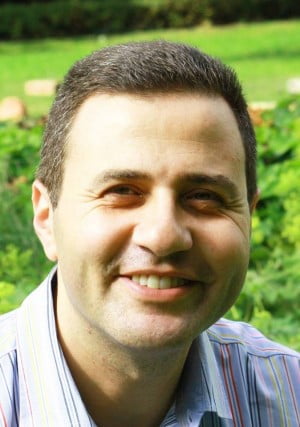
    Prof. Dr. Shahid Munir
    Chairperson
    Punjab Higher Education Commission

    Speakers Profile:

    Prof. Dr. Shahid Munir did his BSC Chemical Engineering and MSC Chemical Engineering from the Institute of Chemical Engineering & technology, University of the Punjab, Lahore. He won gold medal by securing first position in MSc Chemical Engineering. He has 10 years of industrial experience on his credit. He obtained outstanding performance award from Punjab University in 2005. He did his PhD from University of Leeds, UK. His area of research in Biomass-Coal Co-Combustion and his research work has been published in international and national journals of high impact factor.

    He worked as controller Examination, University of the Punjab from 2014 to 2018. He served as Director Centre for Coal Technology, University of the Punjab form 2011-2018. He secured funding of around Rs.2.0 billion in the projects and launched many academic programs including those that were not being taught in the country. He transformed centre for coal technology into Institute of Energy and Environmental Engineering in Punjab University. He has been member of panel of experts of Punjab Power Development Board for the Establishment of Coal Fired Power Plants in Punjab. He was first one who challenged the Thar coral underground coal gasification project of Dr. Samar Mubarakmand and suggested open pit mining in that coal field. Now, according to his proposed technology coal is being mined at Thar and power generation is going on.

    Prof. Dr. Shahid Munir served as a Vice Chancellor of the University of Jhang from 2018-2022. Keeping in view his outstanding performance, he was appointed as Vice Chancellor on additional charge at, University of Mianwali from July 2020 to February 2021 to initiate that university from scratch that he did in similar fashion in Jhang. Moreover, he assumed the additional charge of the post of Vice Chancellor, University of Sargodha from 18 June 2021 to 17 September 2021. He worked hard to de-politicise the University of Sargodha and implemented meritocracy. He has been member of more than 100 statutory bodies/committees of different organizations keeping in view his visionary and dynamic leadership. He is appointed as Chairperson Punjab Higher Education commission in June 2022.

    Who Should Attend?

    Early stage researchers, students, relevant personnel from the research Laboratories and industries.

    Abstract of the webinar Attached

    Registration Form: https://forms.gle/wb6KhQ9zsZbKdNGw8

    For more information please contact:

    Khazima Muazim
    Program Manager COMSTECH
    khazima@comstech.org

    Maham Yamin
    Program Officer COMSTECH
    maham.yamin@comstech.org

  • Workshop (Hybrid) on Time Management

    28th Novemeber 2022
    10.00 – 12.00 Hrs

  • PCMD-Royan Institute Webinar Series (Hybrid)

    Jointly organized by

    Dr. Panjwani Center for Molecular Medicine and Drug Research
    Royan Institute
    COMSTECH
    Mustafa(pbuh) Science and Technology Foundation
    Sindh Innovation, Research, and Education Network (SIREN)

    Introduction:
    Dr. Panjwani Center for Molecular Medicine and Drug Research (PCMD), International Center for Chemical and Biological Sciences (ICCBS), University of Karachi, in collaboration with Sindh Innovation, Research, and Education Network (SIREN) and COMSTECH regularly organizes popular lectures on the topics of general interest and need.
    PCMD-Royan Institute Webinar Series (Hybrid) is being jointly organized by Dr. Panjwani Center for Molecular Medicine and Drug Research, Royan Institute, Iran, COMSTECH, MSTF, and SIREN. The webinar series is based on the current topics of Biomedical Sciences. The series will provide basic as well as advanced knowledge, skills and academic connections and expert opinions from renowned researchers of both institutes.

    PCMD:
    The Panjwani Center for Molecular Medicine and Drug Research (PCMD) is a constituent center of the International Center for Chemical and Biological Science (ICCBS). The main objective of the Center is to is to develop an understanding regarding common diseases in Pakistan in order to develop effective diagnostic tools and affordable treatments by using molecular medicinal, chemical and computational methods and to train highly qualified manpower in the emerging new fields of molecular medicine and drug development.

    Royan Institute:
    The Royan Institute is an Iranian clinical, research and educational institute dedicated to biomedical, translational and clinical researches, stem cell research and infertility treatment. It is a public non-profitable organization affiliated to Academic Center for Education, Culture and Research. It was established in 1991 by the late Dr. Saeid Kazemi Ashtiani as a research institute for Reproductive Biomedicine and infertility treatments. In 1998 this institute was approved by Ministry of Health as Cell Based Research Center with over 46 scientific members and 186 lab technicians.

    Seventh Webinar:
    The seventh webinar of the series is entitled: ” Applications of Computational Methods in Drug Screening and Design”

    Who Should Attend?
    All undergraduate and graduate students as well as scientists and researchers working in the fields of molecular biomedicine, stem cells and regenerative medicine, tissue engineering and other biomedical disciplines.

    Speaker’s Profile:
    Prof. Dr. Zaheer Ul Haq is currently serving as the head of Computational Medicinal Chemistry group at the Dr. Panjwani Center for Molecular Medicine and Drug Research. In 2002, he received his PhD in Natural Product Chemistry under the supervision of Prof. Dr. Atta-ur-Rahman. Dr. Ul-Haq obtained his post-doctoral training in theoretical chemistry from University of Innsbruck, Austria. He is a recipient of OeAD Fellow, Austria, a Senior Fulbright Fellow, USA and Alexander von Humboldt Fellow, Germany. He has more than 20 years of research experience in Computational Chemistry and Computer Aided Drug Design. His research areas include: quantitative structure-activity relationship (QSAR); virtual screening; molecular dynamics simulations; and quantum mechanics. Dr. Ul-Haq has published over 200 research articles and has co-edited a book-series entitled, “Frontiers in Computational Chemistry”. Currently, he is serving as editorial board member of the Journal of Molecular Graphics and Modelling, and Current Computer-Aided Drug Design.

    Program Schedule: November 23, 2022
    Day and Time: Wednesday 11.30 am Pakistan time: 10.00 am Tehran time
    For registration (free): bit.ly/3ACMDSD-SIREN
    Register by: November 20, 2022
    Venue for physical participation: L.E.J. National Science Information Center, International Center for Chemical and Biological Sciences (ICCBS), University of Karachi, Karachi-75270.
    For more information: Email: siren.lej@gmail.com; Call: 021-111-222-292 Ext: 267, 275.
    Room No. 202, 2nd floor, L.E.J. National Science Information Center, International Center for Chemical and Biological Sciences (ICCBS), University of Karachi, Karachi-75270.

     [postexpirator]
  • ONLINE-WORKSHOP ON SCIENTIFIC WRITING

    Date: 17-19th March 2022

    Time: 13:30 pm – 17:00 pm Pakistan Standard Time

    Background:

    A 3-day Online Workshop on Scientific Writing is going to be jointly organized by COMSTECH, International Center for Chemical and Biological Sciences (ICCBS), and Sindh Innovation Research and Education Network (SIREN) during March 16-18, 2022 at Latif Ebrahim Jamal National Science Information Center (International Center for Chemical and Biological Sciences) University of Karachi, Karachi-Pakistan.

    The workshop will consist of lectures by renowned expert Prof. Dr. Rafat Ali Siddiqui (Senior Investigator at the Methodist Research Institute, Indiana University Health and Professor of Cellular Biochemistry, Department of Medicine, Indiana University School of Medicine, USA), followed by extensive exercises, tutorials, and discussion sessions.

    Target Audience:

    Early career students, experienced investigators, postdoctoral fellows, and faculty members from the OIC member states and other countries who wish to develop their writing skills, are invited to participate

    Profile of the Speaker: Detailed profile is attached.

    Registration Link: https://forms.gle/gQUakn8w5ttJsMsj6

    Prof. Dr. Rafat Ali Siddiqui: Indiana University School of Medicine, USA.

    Register at:

    Zoom link for participation will be shared with selected participants.

    Address: COMSTECH Secretariat, 33-Constitution Avenue, G-5/2, Islamabad

    Phone No. : 92 51 9220681-3
    Email: Khazima@comstech.org

  • CAPACITY BUILDING PROGRAM ON MANAGEMENT OF INTELLECTUAL PROPERTY RIGHTS

    Jointly organized

    by

    Intellectual Property Rights Office (IPRO), International Center for Chemical and Biological Sciences,
    OIC Standing Committee on Scientific and Technological Cooperation (COMSTECH), and
    Sindh Innovation, Research, and Education Network (SIREN)
    Venue: LEJ National Science Information Center
    (March 14, 2022, Time: 11.30 AM)

    Intellectual Property Rights Office (IPRO), ICCBS is launching a capacity building program on management of intellectual property rights, in collaboration with COMSTECH and Sindh Innovation, Research, and Education Network (SIREN).

    The series of lectures under the Capacity Building Program on Management of Intellectual Property Rights will be conducted by Intellectual Property Organization, Pakistan. Ms. Saima Kanwal, Assistant Controller of Patents at Patent Office, Karachi, Pakistan will deliver the first lecture of the series entitled, “Introduction to Intellectual Property Rights & Understanding the Patent System in Pakistan”. This lecture will cover following basic aspects of patent system.

    • Concept of intellectual Property and its various forms
    • Patent protection and its rationale 
    • Significance of patent for the researchers
    • Fundamentals of patents system
    • Common misconceptions about patents
    • Case study
      • Introduction to Patent system in Pakistan
      • Patent filing trend in Pakistan
      • Enforcement of patents in Pakistan

    Ms. Saima Kanwal, has been associated with Intellectual Property Organization, Pakistan since 2006. Ms. Kanwal had her M. Phil in Biotechnology from Quaid-e-Azam University, Islamabad and LLM in Intellectual Property from Ankara University, Turkey. During her fifteen years career,

    she has served at multiple positions in IPO HQs and its field offices. She has practical experience of patent examination especially in the field of Biotechnology and Pharmacy. She has been dealing with technical, legal, and policy matters of patents, industrial designs, and geographical indications. She is also serving as national coordinator to establish Technology and Innovation Support centers (TISCs) Network in Pakistan with the collaboration of Higher Education Commission (HEC) and World Intellectual Property Organization (WIPO) to educate the faculty and student on use of patent information.

    Date: 14th March, 2022
    Day: Monday
    Time: 11.30 AM
    Registration outcome will be shared through email, therefore, pl. give your valid email address.
    Participants will receive E-certificates.

    Contact persons:
    Ms. Khazima Muazim                                      Ms. Maham Yamin
    Programme Manager                                      Programme Officer

    COMSTECH Secretariat, Islamabad     
    E-mail: khazima@comstech.org
    E-mail: maham.yamin@comstech.org

  • COMSTECH Virtual Innovation Lab “Detection of Metabolic Disorders in Neonatals”

    By Prof. Dr. Farzad Kobarfad

    Professor of Medicinal and Pharmaceutical Chemistry, School of Pharmacy, Shaheed Beheshti University of Medical Sciences, Tehran, Iran.

    Date: March 16th, 2022

    Time: 2:00 PM Pakistan Standard Time

    Metabolic disorders in babies affect how infants digest food and convert it into fuel for the body. These infants may lack certain digestive enzymes that allow people to use certain nutrients. As a result, babies may become weak, be lethargic, and experience digestive issues.

    In this live interactive session, Dr Farzad Kobarfad will present his innovative laboratory to the participants followed by a virtual tour of his Laboratory giving a demonstration of the techniques they use for detection of metabolic disorders in neonatal. This will be followed by an interactive session with the participants at the end.

    About the speaker: Dr Farzad Kobarfad did his PhD in Medicinal Chemistry from University of Philadelphia (USP), PA, USA and is currently working as an Associate professor, Department of Medicinal Chemistry at Shaheed Beheshti School of Pharmacy, Tehran, Iran. He has 5 books and 2 patents and several research articles to his name. In addition, he is also serving as a Technical Director of Iran Doping Control Laboratory, Tehran, is member of editorial board of Iran Pharmacopoeia and also a member of editorial board of Iranian Journal of Pharmaceutical Research (IJPR). He has won several prestigious awards during his academic career too.

    Detailed profile of speaker attached: link

    Flyer of the event: Attached

    Programme: Attached

    Target Audience:This webinar is open to academics, scientists and general public from all OIC states. 
    Register with us to attend this meeting:https://forms.gle/EHhxBace4tzz7t1e7
    Contact us for further details:
    khazima@comstech.org;  maham.yamin@comstech.org

  • COMSTECH – UNESCO Webinar on open science

    Date: 10th March 2022

    Time: 12:00 pm – 14:00 pm Pakistan Standard Time

    Background:

    Open Science is about global scientific collaboration. This collaboration needs to be conducted under the principles of trust, equity, transparency and responsible research conduct at a global scale. It is an enabler of collaboration without borders.  It involves both human values and technological considerations.

    This collaboration is achieved and facilitated by sharing the outputs of research, which should be open and freely accessible. Sharing is performed either directly – by accessing and reusing the outputs, or indirectly – when reuse adapts these outputs to produce knowledge in domains not imagined by those who produced them, maybe decades later. Global collaborators come from many cultures,  speak thousands of languages and live and work under a wide variety of administrative, legal and financial frameworks. In the open science ecosystem, science knows no borders – geographical, temporal nor cultural.

    Target Audience:

    The webinar is open to students, researchers, young scientists, and academicians from the OIC member states and other countries.

    Profile of the Speaker: Detailed profiles are attached.

    Prof. Dr. Zabta Khan Shinwari : Pakistan Academy of Sciences, Islamabad, Pakistan.

    Prof . Dr. Shahbaz Khan: Director and UNESCO Representative to the People’s Republic of China, the Democratic People’s Republic of Korea, Japan, Mongolia and the Republic of Korea.

    Prof. Dr. Claudia Bauzer Medeiros: Institute of Computing, University of Campinas (UNICAMP), Brazil and Brazilian Academy of Sciences (ABC), Brazil

    Flyer of webinar:  Attached

    Register at : https://forms.gle/kqjauapbmsmdvRJW8

    Zoom link for participation will be shared selected participants.

    Address: COMSTECH Secretariat, 33-Constitution Avenue, G-5/2, Islamabad 
    Phone No. : 92 51 9220681-3
    Email: Khazima@comstech.org ; maham.yamin@comstech.org ;comstech@comstech.org

  • 1st COMSTECH International Virtual Conference of Neuroscience

    Date: February 9-10, 2022

    Venue: COMSTECH Secretariat, Islamabad, Pakistan.

    Introduction to the Field of Neuroscience:

    Neuroscience is one of the most important components of science which covers structure and functioning of the whole nervous system. The field of neuroscience includes basic scientists, neuro-immunologists, neurologists, neurosurgeons, psychiatrist, neuropsychologists, neuro-radiologists, neuro-rehabilitation, and so forth. There are more than 5 million neuroscientists across the globe, mostly located in developed countries. Furthermore, neurosciences contribute to 10% of all research and 20% of all health sciences research; hence, making it a key area of focus.

    Objective:

    The OIC region is vast and diverse, comprising of many developing and under-developed countries which are still in need of skills and knowledge in scientific research for the healthcare sector. This international conference of Neuroscience aims to build capacity of health professionals in neurological care, and to promote networking among experts of OIC countries especially the least developed African countries.

    Target Audience:

    Scientists, researchers, academicians, graduate students, neuroscientists, neurologists, neurosurgeons, psychiatrist, neuro-psychologists, neuro-radiologists from the OIC countries are encouraged to participate.

    Key topics to be covered:

    The workshop will cover the following thematic areas:

    1. Stroke
    2. Epilepsy
    3. CNS infections
    4. Environment and brain
    5. Diagnosis and approach to neurological diseases
    6. OIC collaboration for research network

    Registration Process:

    1. Registration for virtual participation: https://forms.gle/M4neTYtg9wjjtneg8  
    2. Read instructions in the application form carefully and submit a properly filled form.
    3. Selected candidates will be notified through email; hence, applicants are required to check their emails.

    List of Speakers:

    The tentative list of speakers will be uploaded shortly.

    Technical Focal Person:

    Prof. Dr. Muhammad Wasay

    Section of Neurology, Department of Medicine

    Agha Khan University

    Karachi, Pakistan.

    Workshop Coordinators:

    Muhammad Haris Akram

    Program Manager, COMSTECH

    Tel: +92-51-9220681-3

    Email: haris@comstech.org

    Muhammad Haseeb Ahmad

    Program Officer, COMSTECH

    Tel: +92-51-9220681-3

    Email: haseeb.ahmad@comstech.org

  • COMSTECH Webinar On “Metabolomics Gateway for Milestone Discoveries in the Prehistoric and Post Genomic Era”

    Prof. Dr. Mohamed Ali Farag
    Alexander von Humboldt Fellow
    TWAS fellow from Africa
    Professor, Faculty of Pharmacy,
    Pharmacognosy department
    Cairo University, Egypt.

    Date and Time: 7th January, 2022 from 16:00-17:30 Pakistan Standard Time

    Overview:

    The ability to sequence the whole plant and human genomes has established that our knowledge with respect to gene function is rather limited. Functional genomics analyses include investigations at the level of gene expression (transcriptomics), protein translation (proteomics) and more recently the metabolite network (metabolomics). Metabolomics is the study of global metabolite profiles in a system (cell, tissue, or organism) under a given set of conditions. The analysis of the metabolome is particularly challenging due to the diverse chemical nature of metabolites in a cell and the massive number of molecules detected which warrants the use of bioinformatics for its analysis.

    The lecture will provide an overview of metabolomics and will discuss its complementary role within system biology. It will highlight how metabolome analyses are being conducted using different spectroscopic techniques, and how the highly complex data generated are analyzed using bioinformatics tools. Specific examples will then be presented to illustrate how metabolomics can lead to valuable information relative to natural products biosynthesis, herbal medicines quality control analysis and  lastly analysis of ancient Pharaonic food.

    Target Audience:

    The webinar is open to students, researchers, scientists, and academicians  from the OIC member states, and other countries.


    For Registration please visit: https://forms.gle/7eFuxgUh6v1DfcFD7

    Procedure to Join: Zoom link will be shared with registered participants.

    Profile of Speaker:

    Prof. Dr. Mohamed Ali Farag completed his PhD at Texas Tech University, USA, in 2003. In 2005, after spending time as a postdoctoral fellow at The Samuel Noble Foundation, USA, and the James Graham Brown Cancer Center, USA, he became assistant professor at the Faculty of Pharmacy, Cairo University, Egypt.

    Currently, Prof. Farag works as a Professor at the Chemistry Department, American University in Cairo (AUC) where his research work focuses primarily around applying innovative biochemical technologies (metabolomics) to help answer complex biological questions in medicine, herbal drugs analysis and agriculture.   

    Furthermore, Prof. Farag works as a Visiting Professor at the Technical University of Munich, Germany, to participate in teaching plant metabolomics and chemomterics modelling for master students, and in 2009–2010 he held the Alexander von Humboldt Fellowship in Germany.
    Prof. Farag has been recognized with several awards, including Abd el Hameed Shoman award (2016), Egypt Higher State Incentive Award (2012), Cairo University Incentive Award (2009), TWAS award in Science Diplomacy (2014), and the Mass Spectroscopy Performance Award, TTU, USA (2004).  For his highly cited publications with close to 8000 citations and an H index of 40, Prof. Farag was selected as a top researcher in the field of plant biology in Africa by the American society of plant biology, USA.  Prof. Farag is also a TWAS Fellow in Agriculture from Egypt.

    Webinar Coordinator:

    Muhammad Haseeb Ahmad
    Program Officer
    COMSTECH, Islamabad.
    Email: Haseeb.ahmad@comstech.org
    Phone: +92 51 9220681

  • Higher Education in the Arab World: New Priorities in the Post COVID-19 Era

    The 19th International Conference of the Arab Academy of Sciences

    24 – 25, November, 2021

    More details

Back to top button