Background: With reference to the COMSTECH Consortium of Excellence (CCoE) set up by The Ministerial Standing Committee on Scientific and Technological Cooperation (COMSTECH) of the Organization of Islamic Cooperation (OIC) comprising of leading science, technology, and engineering academic and research institutions of Pakistan, under the “Science Diplomacy Initiative” of the Ministry of Foreign Affairs (MoFA).
The Islamia University of Bahawalpur (IUB) being the founding member of the CCoE, through its Department of International Relations offers to jointly organize an international event with COMSTECH on “Academic Collaboration, Science Diplomacy and OIC: Challenges and Opportunities” in March 2021.
Objective: To bring stakeholders from academic management and diplomatic circles together to address bottleneck and create opportunities for international academic collaboration through science diplomacy.
Nature of participation: International & National participants will join online at Zoom & local may join in-person at venue given below and online as well.
Zoom link, ID and Passcode will be shared with registered participants.
Venue for in-person participation: Main Auditorium, The Islamia University of Bahawalpur
A natural hazard is a natural occurrence that may adversely affect humans, and animals or the environment. It is possible to classify natural hazard occurrences into two different categories: Geophysical/Geological, Meteorological or Climate, Hydrological, Biological and multiple hazards.
Geophysical/Geological hazards involves Avalanche, Earthquake, Coastal erosion, Landslide, Sinkhole and Volcanic eruption. Earthquakes occur along tectonic plates, which exists in the uppermost portion of the earth, when ample elastic strain energy is accumulated to drive the propagation of fractures along a fault. Around 500,000 earthquakes are expected to occur every year, observable with current instrumentation. Around 80% of the world’s earthquakes takes place in the 40,000-kilometer-long (25,000 mi), horseshoe-shaped region called the circum-Pacific seismic belt, known as the Pacific Ring of Fire. Minor earthquakes occur almost regularly across the world in areas such as California and Alaska in the U.S., Indonesia, Iran, Pakistan, Turkey, Mexico, Guatemala, Chile, Peru, Philippines, Portugal, and New Zealand. Major earthquakes often appear to occur along other plate boundaries, such as along the Himalayan Mountains. According to some studies, Seismologists/ Geologists/ Geophysicists are of the view, that global warming is one of the reasons for increased seismic activity. In addition, the equilibrium of pressure on Earth’s tectonic plates is disrupted by melting glaciers and increasing sea levels, thus causing an increase in the frequency and intensity of earthquakes.
Most of the Member States of the Organization of the Islamic Conference (OIC) are in the world’s most Earthquake disaster-prone regions, and have suffered a large number of Earthquakes in the past. These earthquakes caused both human casualties and economic losses e.g. the 7.6 Mw October 8, 2005 earthquake in parts of western Kashmir, Pakistan and 7.0 Mw October 30, 2020, in Izmir, Turkey, and Iran, brought along a lot of misery and devastation. These earthquakes have raised the general awareness about earthquake related hazards, and efforts are underway towards an effective earthquake risk reduction program, especially in hazard prone areas of these countries. This challenging task facing the OIC countries must incorporate the existing expertise on earthquakes for integration into its natural hazards mitigation program.
Objectives
The “COMSTECH – QAU International Seminar on “Seismicity, Seismotectonic, Seismic Hazards Including Geological & Geophysical Aspects is a Joint Activity under the COMSTECH Consortium of Excellence.
The main aim of this seminar is to provide a forum and scientific discussion related to causes, consequences of, and responses to Earthquakes. This seminar will help bringing together relevant professionals from the OIC Member States to address the afore mentioned challenges. Topics to be addressed are:
Thematic Areas
• Ground Shaking
• Soil Liquefaction
• Human Impacts
• Landslides and Tsunami
• Earthquake Laboratories
• Prediction and Preparedness
• Earth System Physics
• Geological /Geophysical Aspects
• Computational Seismology
• Civil Structures
• Seismic Hazard
• Virtual OIC Earthquake Seismology Group Formulation
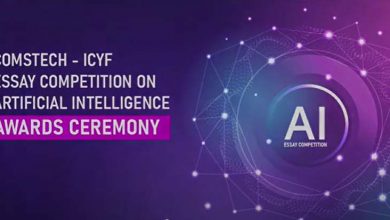
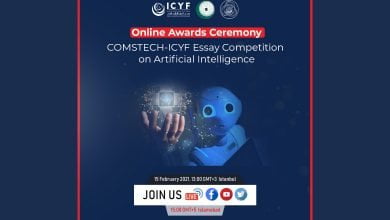
COMSTECH and ICYF announced the results of the 1st Essay Competition on Artificial Intelligence in an online ceremony with H.E. Ambassdor Askar Massinov, the Assistant Secretary General (S&T) of the OIC as the Chief Guest. The Chief Guest complimented COMSTECH, the OIC Ministerial Standing Committee on Scientific and Technological Cooperation and
ICYF, the Islamic Cooperation Youth Forum, for organizing an essay competition on Artificial Intelligence (AI) for the youth of OIC countries. Speaking at the online Prize Distribution ceremony of the event he emphasized the need for member countries to invest in forefront technologies, and in particular for the youth to become familiar with AI as it would profoundly affect the employment landscape of the near future.
he Coordinator General of COMSTECH, Prof. Dr. Muhammad Iqbal Choudhary highlighted COMSTECH efforts to promote scientific cooperation between member states for coordinating efforts in fighting COVID-19 as well as keeping abreast of frontiers in science and technology. He identified several recent initiatives of COMSTECH for enabling capacity building of member states in the field of AI.
The President of ICYF Taha Ayhan highlighted ICYF efforts to motivate OIC youth towards emerging technologies and the opportunities that they present for future careers.
Dr. S. Khurshid Hasanain, Adviser COMSTECH, described the event as open to participants from all OIC countries and consisting of two categories viz. students (18-25 years) and young professionals (25-35 years). The essays could be in any of the three official OIC languages (English, Arabic or French) and were required to be original and unpublished.
An international Jury of four experts from different OIC countries assessed the entries on the basis of the structure and organization, technical mastery of the selected topic, novelty 2 of the idea being proposed, and finally, realistic potential of the proposed theme for application. Possible themes for the essays were identified as AI in Health/Education, AI for Technology Frontiers, AI in E–Governance, Ethical & Regulatory Issues in Applications of AI and AI for Social Development.
A total of 110 participants from 22 different OIC countries applied for the competition. On the basis of their 300-500 word abstracts, 43 participants were shortlisted for the two categories. Each essay was evaluated independently by several Jury members. The following winners were announced by the ASG OIC in the two categories: Professional/Advanced Student Category: 1st Prize was awarded to Mr. Beltus Nkwawir Wiysobunri of Cameroon for his essay titled A Deep Learning Automatic Tactile Pavement Detection System for the Visually-Impaired 2nd Prize was awarded to Mr. Ousman Touray of Gambia for his essay titled Monitoring Health: Monitoring Diabetes and Hypertension Using AI 3rd Prize was awarded to Mr. Selahattin Bingol of Turkey for his essay titled Do Judges and Prosecutors Need to Be Worried? (AI Control on Laws).
Students Category:
1st Prize was awarded to Ms. Sara Marhoon Al-Ghafri from the College of Engineering, National University of Science and Technology, Oman for her essay titled, SANAD: A learning tool for the visually impaired. 2nd Prize was awarded to Ms. Joanna Gomez of the School of Arts and Sciences, Division of Humanities and Social Sciences, University of the Gambia (UTG), Gambia for her essay titled, Certification and Auditing as Tools for Effective Data Regulation and Oversight in Artificial Intelligence.
3rd Prize was awarded to Ms. Samawia Rizwan of the National University of Science and Technology (NUST) (RCMS), Islamabad, Pakistan for her essay titled, Integrated machine learning and bioinformatics approaches for the Development of potential therapeutics against pandemic diseases.
First prize winners would be entitled to a prize money of US$500, second prize winners US$300 and third prize winners would receive US$200 as a token of appreciation for their efforts. The ten best essays would be compiled together as a publication.
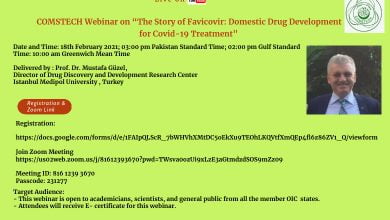
Director of Drug Discovery and Development Research Center, Istanbul Medipol University, Turkey
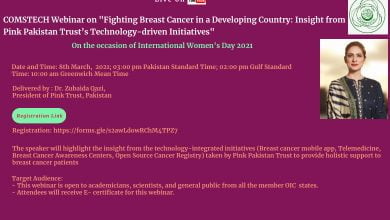
Date and Time: 18th Februray 2021; 03:00 pm Pakistan Standard Time; 02:00 pm Gulf Standard Time: 10:00 am Greenwich Mean Time
Short Abstract: As the world shaken by pandemic Covid-19, small molecule inhibitors have previously been heavily investigated in different studies as possible therapeutics in the treatment of SARS-CoV-2. In Turkey we began investigating potential treatment options and decided to collaborate with a local pharma company named Atabay. Within a short period of time, we have successfully completed full lab and industrial scale of three molecules that have been vastly used for Covid-19 treatment such as Favipiravir (Fav), Hydroxychloroquine (HCQ), Remdesivir (Rem). The coronavirus disease-2019 (COVID-19) outbreak all over the world has led the researchers to strive to develop drugs or vaccines to prevent or halt the progression of this culprit.
As the literature supports, Favipiravir is approved by some countries, including India, for COVID-19 treatment. Favipiravir has shown rapid viral clearance and faster clinical improvement. Various treatment recommendations include Favipiravir for COVID-19 treatment we began to investigate and immediately started synthetic strategy for these medicines. To minimize and reduce the external dependency we as a group of 12 researchers started local synthesis and isolated our lab and stayed in the hotel during the entire project term. During our study we have established cost effective route to expedite the process and filed a domestic patent and currently preparing manuscript for publication. During the seminar, the short time success story and local licensing adventure will be highlighted.
Target Audience: This webinar is open to academicians, scientists, and general public from all the member OIC states.
Profile of Speaker: Dr. Guzel graduated from Hacettepe University School of Engineering with a B. Sc degree in Chemistry in 1987 and completed his M. Sc. and Ph. D. Degrees on Organic/Medicinal Chemistry at Clemson University, Clemson, SC in 1996 and 2001 respectively. He worked as organic lab coordinator at Northeastern University and later joined to ArQule Inc.as Sr. Synthetic Organic Chemist upon his graduation. He then joined to TransTech Pharma Inc, in High Point, NC and assumed various positions in Medicinal Chemistry Department between 2001 and 2014. In 2014 he started working as an Assistant Professor at International School of Medicine in Department of Medical Pharmacology at Istanbul Medipol University. In 2017 he was promoted to Associate Professor in medical pharmacology acting as a chair. In 2019 he was appointed as the department chair of Molecular Medicine and Biotechnology. In January 2020, he then became the director of Drug Discovery and Development Research Center in newly established Health Sciences and
Technologies Research Institute, currently leading two critical drug development projects for Covid-19 with a local pharma company as well as several domestic and European granted drug discovery projects in Molecular Discovery and Development laboratories of the university.
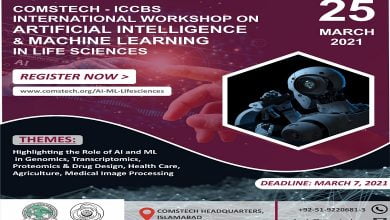
« Artificial Intelligence & Machine Learning in Life Sciences »
March 25, 2021
Venue: COMSTECH Secretariat, Islamabad-Pakistan
Deadline for Applications: March 07, 2021
Introduction
The Islamic world is very diverse, comprising many developing countries, which are still in need of awareness and knowledge regarding the latest scientific research techniques. As science progresses, the current research topics touch many fields of expertise requiring interdisciplinary expertise. In this scenario, researchers, scientists working in all fields of natural sciences have to indulge themselves in research techniques from other disciplines to produce authentic and reliable research.
High throughput genomic and proteomic techniques have revolutionized the pace of scientific discovery while pouring tons of data into the databases. Use of technologies like Next Generation Sequencing (NGS) and Molecular docking paved the way for DNA to phenotype investigations in quite a less time and resources.
Realizing the importance of Artificial Intelligence and Machine Learning in Life Sciences, COMSTECH in collaboration with International Center for Chemical and Biological Sciences (ICCBS), karachi has planned a one-day workshop focusing on the subject in March 2021.
Objective
The objective of this COMSTECH – ICCBS International Workshop on « Artificial Intelligence & Machine Learning in Life Sciences » is to highlight the role of modern-day Artificial Intelligence (AI) and Machine Learning (ML) techniques in life sciences research and product development. It will benefit researchers from life sciences such as; Medical sciences, Biosciences, Chemistry, Physics, Statistics, Bio-Medical engineering, Computer Sciences and Bioinformatics. This conference will provide a strong foundation on the theoretical and practical aspects of data sciences with reference to life sciences research. This international workshop will bring together the researchers, scientists, industrials partners, and practitioners interested in the analysis, design, and development of AI and ML techniques to be applied in life sciences research and development.
Target Audience:
Scientists, researchers, medical professionals involved in life sciences, computer scientists and young entrepreneurs from the OIC countries.
Key Contents:
The workshop will cover the following topics highlighting the role of AI & ML in:
Genomics
Transcriptomics
Proteomics and drug design
Health care
Agriculture
Travel & Local Hospitality:
COMSTECH will arrange local hospitality, for all selected participants. Travel support will be provided to the speakers/resource persons only. Participants are expected to get their travel funding from their parent organizations/country of origin.
Step 2: Read instructions in the application form carefully and submit a properly filled form along with your CV.
Step 3: Selected candidates will be notified through email; hence, applicants are required to check their emails regularly.
Venue:
The workshop will be held at the COMSTECH headquarters, Islamabad. The city was purpose-built as the capital of sixth largest globally and second most populous (in OIC) country Pakistan in the year 1966. Pakistan, according to the Forbes magazine, is a hidden treasure for tourists with rich cultural diversity, ancient history, diverse landscape, cuisines, modern cities, and locally produced items.
Technical Focal Persons
Dr. Waseem Haider
Assistant Professor Computational Biology and Bioinformatics Group (CBBG) COMSATS University Islamabad
Dr. Reaz Uddin
Associate Professor Computational Biology ICCBS, University of Karachi
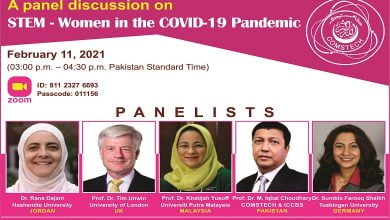
Dates & Time: 11th February 2021 (03:00pm – 04:30pm Pakistan Standard Time)
On the occasion of International Day of Women and Girls in Science this year, COMSTECH brings together a panel of illuminating scientists and champions of women in STEM to shed light on new opportunities & challenges that have risen due to emergence of COVID-19 pandemic.
Themes
Theme areas to be covered
Shift in research & academic models due to COVID-19
Impact of COVID-19 on open science and global research collaboration
Contribution of Women scientists in the covid-19 pandemic
Policy shifts required to increase women’s participation in national and sub-national decision-making processes related to STEM
Format: Panel discussion with 15-20 minutes to each panelists and 15 minutes for Q/Ans session.
Participation: This event is open to science policy makers, academicians, scientists and general public globally.
Participants can be part of this thought provoking discussion by giving their feedback and suggestions on the questionnaire link below. Participants will receive E-certificates.
H.E. Prof. Dr. Muhammad Iqbal Choudhary Coordinator General COMSTECH, Director International Centre for Chemistry and Biological Sciences (ICCBS), university of Karachi,Pakistan
A member and fellow of many prestigious societies including Fellow of the Third World Academy of Sciences, Islamic Academy of Sciences, Chemical Society of Pakistan, Royal Society of Chemistry (London) and LEAD-International.
The recipient of the 1st Khawarizmi International Award and Prize from the President of Islamic Republic of Iran, Economic Cooperation Organization (ECO) Award in Education by the President of Azerbaijan and COMSTECH Award in Chemistry by the Prime Minister of Pakistan.
Won several national and international awards such as Hilal-e-Imtiaz, Sitara-e-Imtiaz and Tamgha-e-Imtiaz by the President of Pakistan, Pakistan Academy of Sciences Gold Medal, National Book Foundation Prize on best book and the Third World Academy of Sciences Young Scientist Prize.
Received the prestigious title of “Distinguish National Professor” from the Higher Education Commission in 2004.
Prof. Dr. Tim Unwin
Honorary Professor at Lanzhou University in China.
Co-Founder of TEQ together (an initiative to change men’s attitudes and behaviors towards women and technology), Chair of the Intellectual Leadership Team of the DFID-World Bank technology for Education Hub.
A Distinguished Fellow of the Globalization, Ageing, Innovation and Care Network at Tilburg University in the Netherlands.
Prof. Dr. Khatijah Yusoff
First woman being selected as Deputy Vice-Chancellor for Academic and International Affairs at Universiti Putra Malaysia (UPM).
A highly respected academician and a much-acclaimed virologist who has distinguished herself through her extensive work on the Newcastle Disease Virus (NDV), a poultry virus.
Worked for Office of the Science Advisor to the Prime Minister of Malaysia, establishing the National Science and Research Council, the Nanotechnology Directorate, the National Bioethics Council, and the National Institutes of Biotechnology.
Elected as a Fellow of the Academy of Sciences Malaysia in 2007 and a Fellow of the Islamic World Academy of Sciences in 2008 and The World Academy of Sciences (TWAS) in 2010.
The second Asian scientist ever to win the UNESCO Carlos Finlay Prize in 2005 for her outstanding work in the field.
Dr. Rana Dajani
Palestinian-Jordanian molecular biologist, professor of biology and biotechnology at Hashemite University.
Member of the United Nations Women Jordan Advisory Council
Recipient of the Jordan’s Order of Al Hussein for Distinguished Contributions of the Second Class.
Recipient of Library of Congress Literacy Award Best Practices
Recipient of A Stars Impact Award,
Recipient of The Synergos Arab World Social Innovators award 2009
Recipient of A WISE Award
Dr. Sumbla Farooq Sheikh
Dr. Sheikh is currently working at the Department of Neuroradiology, University Hospital, Tuebingen University, Germany.
She has also been working as an Adjunct Professor at HEJ Research Institute of Chemistry, University of Karachi, Pakistan since 2017.
Her research primarily focuses on the design and development of contrast agents for the early detection of cancer with a special focus on glioblastoma and prostate carcinoma.
COMSTECH Secretariat, Islamabad in Collaboration with the International Center for Chemical and Biological Sciences (ICCBS) Karachi, Pakistan
March 11-12, 2021
High-performance liquid chromatography (HPLC), is a technique in analytical chemistry used to separate, identify, and quantify each component in a mixture. It relies on pumps to pass a pressurized liquid solvent containing the sample mixture through a column filled with a solid adsorbent material. Each component in the sample interacts slightly differently with the adsorbent material, causing different flow rates for the different components and leading to the separation of the components as they flow out of the column. Because of this versatility, HPLC is used in a variety of industrial and scientific applications, such as pharmaceutical, environmental, forensics, and chemicals. This two-day online certificate course comprised of lectures followed by training sessions on “Basic concepts and techniques in HPLC”. The course is designed to teach the basic skills of HPLC to participants from all scientific disciplines those have little or no previous experience in HPLC hands on work. It is also an ideal course for those who would like to consolidate their current, basic skill level and to further polish their handling skills.
WHO SHOULD ATTEND?
The course is designed for the large group of audience including graduate students, scientists, research scholars, and medical doctors those have interest to work on HPLC in related fields. People from variety of disciplines and academic backgrounds including chemistry, pharmacy, pesticide science, environmental science, forensics, archeology, etc., can get benefit from this workshop.
WORKSHOP CONTENT
The program includes a series of online lectures and hands-on sessions on the following topics;
Introduction of HPLC (online lectures)
Working examples of analytical HPLCs (online lectures)
Optimum use of analytical HPLCs (hands-on sessions)
Optimum use of preparative HPLCs (hands-on sessions)
VENUE
Zoom Meeting
Topic: Online Certificate Course on Optimum use of Analytical and Preparative HPLCs
Time: Mar 11, 2021, 12:00 PM Islamabad, Karachi, Tashkent
Dr. Shakil Ahmed, Senior Research Officer, In charge Industry Analytical Center, H. E. J. Research Institute of Chemistry, International Center for Chemical and Biological Sciences, University of Karachi, Pakistan. Dr. Shakil has years of experience in the field of analytical chemistry. His current interests includes 1) Petrochemical industrial troubleshooting; 2) Pharmaceutical industrial troubleshooting; 3) Forensic support to law enforcement agencies; 3) Environmental protection agencies; 4) Residual pesticide analysis on the latest in the shortest time; 5) Narcotic analysis with regularity aspect; etc.
Dr. Jian-hua Huang, Assistant Professor, Hunan academy of Chinese Medicine, Changsha, Hunan province, China. Dr. Huang was elected as Excellent Young Innovators of Changsha City in 2018. His Supervisor is Prof. Yi-zeng Liang, a famous Chemometrics professor, who obtained « Lifetime Achievement Award in Chemometrics » in 2016, Barcelona. His major research focus on three parts: (1) Machine learning algorithm development and application in Metabolomics, bioinformatics and pattern recognition; (2) Quality control and new quality estimation methods development for Traditional Chinese Medicine; (3) Comprehensive application of herb resources.
Dr. Yan Wang, Assistant Professor, H. E. J. Research Institute of Chemistry, International Center for Chemical and Biological Sciences, University of Karachi, Pakistan. She got Ph. D. in Pharmaceutical Chemistry from Institute of Materia Medica, Chinese Academy of Medical Sciences and Peking Union Medical College, China in 2014. She has over 40 research publications in reputed international journals with total scientific impact factor of 125, with citations 509, and h-index 14 (google scholar). Dr. Wang also has 21 publications in Chinese journals, 6 books and 8 patents. Her current research interest includes natural product chemistry, biotransformation and metabolomics.
WORKSHOP PROGRAM (Pakistan Standard Time)
Day One
12:00-12:05 Inauguration Ceremony
12:05-12:10 Recitation of the Holy Quran
12:10-12:20 Welcome Address by Prof. Dr. M. Iqbal Choudhary
12:20-13:30 Lecture 1 entitled, “Introduction of Analytical HPLC” (Dr. Shakil)